
Reviewed · SURFING
Jeffreys Bay: Learn to Surf Group Lesson
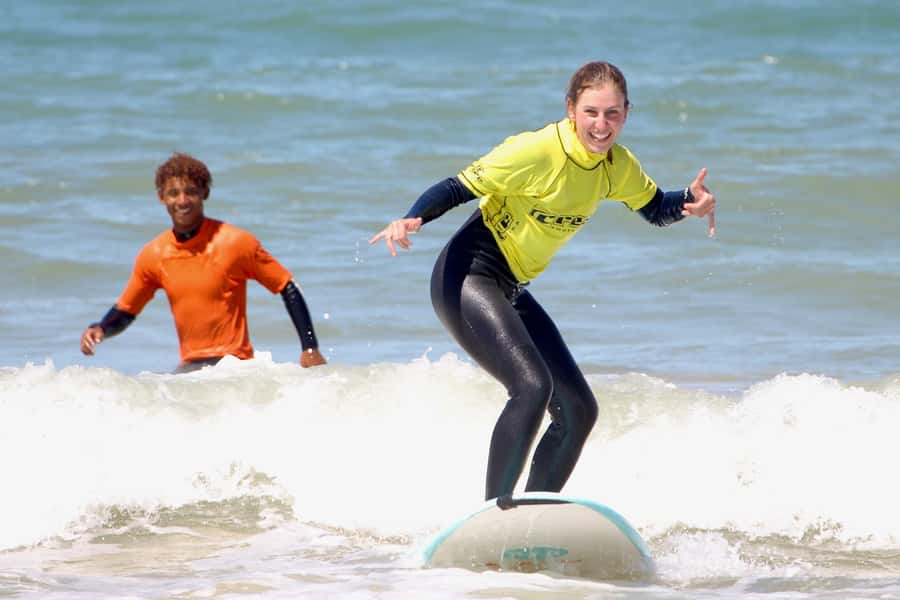
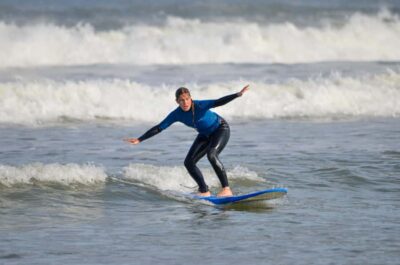
Jeffreys Bay is one of those places where surfing is part of the town’s identity, not just a beach activity. This beginner lesson gives you a practical way into the sport, starting with the basics on shore before moving into waist-deep water. The goal is simple: paddle, catch a wave, stand up, and ride it toward the beach.
I like the small-group format, since a first surf lesson can quickly become confusing without close coaching. I also like that the school has operated since 2000 and sits within walking distance of surf stores. Coaches such as Lorenzo and Angelo focus on clear instructions, and children can join as well.
The main consideration is that surfing depends on the weather and ocean conditions. A rough sea or extreme weather can force a reschedule or cancellation, so do not build your entire day around a fixed surf time.
Key points before you book
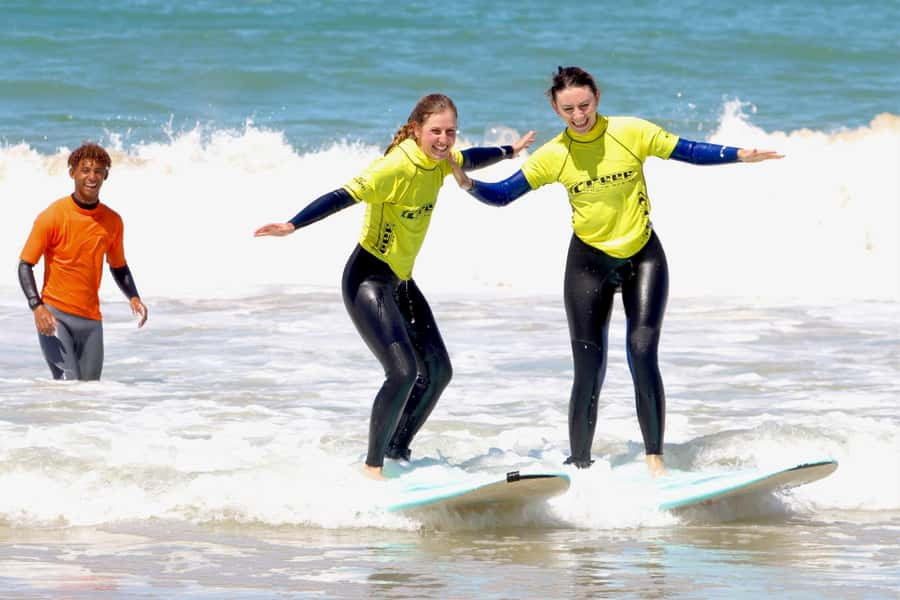
- Five-step beginner plan: Learn each part of the process in order, from paddling to riding toward shore.
- Beach instruction first: The opening techniques are explained and shown on land before you enter the water.
- Waist-deep practice: You work on the first skills in manageable water rather than being sent straight into deeper surf.
- Small groups: The format is designed to give each learner personal help and correction.
- Equipment included: A surfboard and wetsuit are supplied, along with changing rooms and storage.
- Flexible booking: You can reserve now and pay later, with a full refund available if you cancel at least 24 hours ahead.
Starting at Jeffreys Bay Surf School
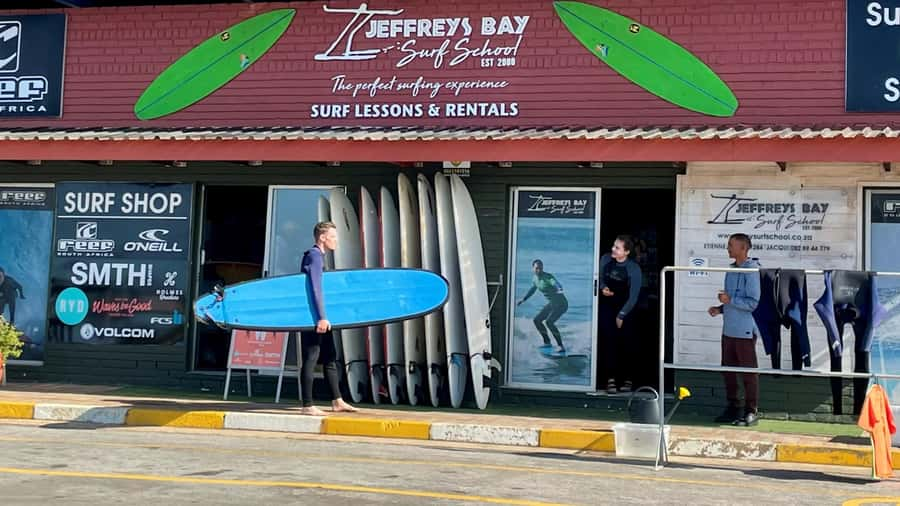
You begin at Jeffrey’s Bay Surf School, the meeting point for both the start and finish of the activity. There is no hotel pickup or drop-off, so you need to make your own way there.
That fixed meeting point is useful if you are already spending time in Jeffreys Bay. The school is within walking distance of the town’s surf stores, which makes it easy to browse boards, clothing, and other surf gear before or after your lesson. You do not need to buy equipment for this activity, though, since the board and wetsuit are supplied.
The school has been teaching since 2000. That matters for a first lesson because beginners benefit from a clear routine. You are not simply handed a board and told to copy someone else. The class follows a set progression, with time to practice each part before moving on.
Bring swimwear, a towel, and sunscreen. A bathing costume is not included, and food and drinks are also your responsibility.
More Surfing lessons around Addo & the Eastern Cape:
- Jeffreys Bay: Private Surfing Lesson for Beginners
★ 4.8 · 43 reviews - 2 Hour Surf Lesson Jeffreys Bay
★ 4.6 · 4 reviews - Muizenberg Cape Town: Private Surf Lesson
★ 5.0 · 37 reviews
The five steps to your first wave
The lesson is built around a five-step plan. That structure gives you a useful target without making the experience feel like a test. You are working toward one complete action: getting onto the board and riding a wave toward the beach.
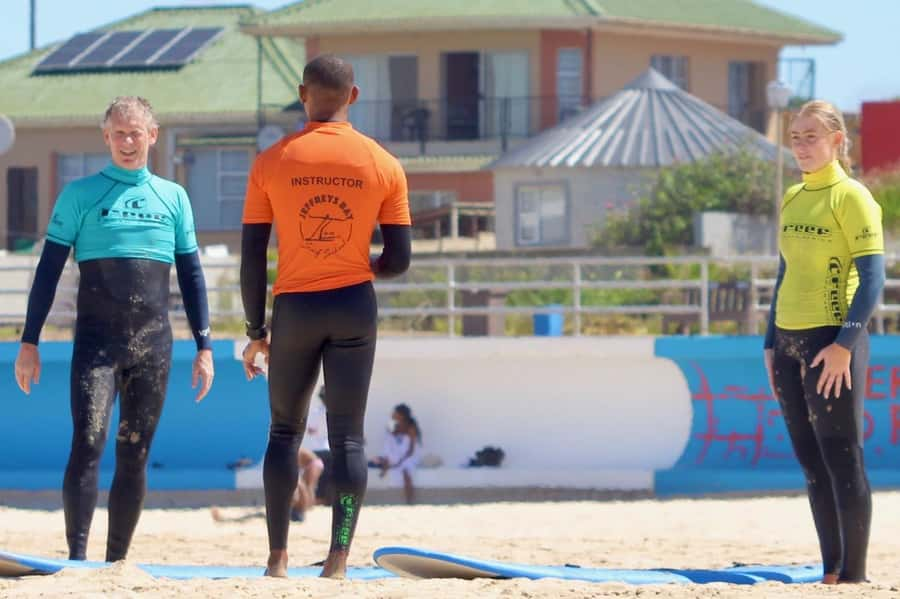
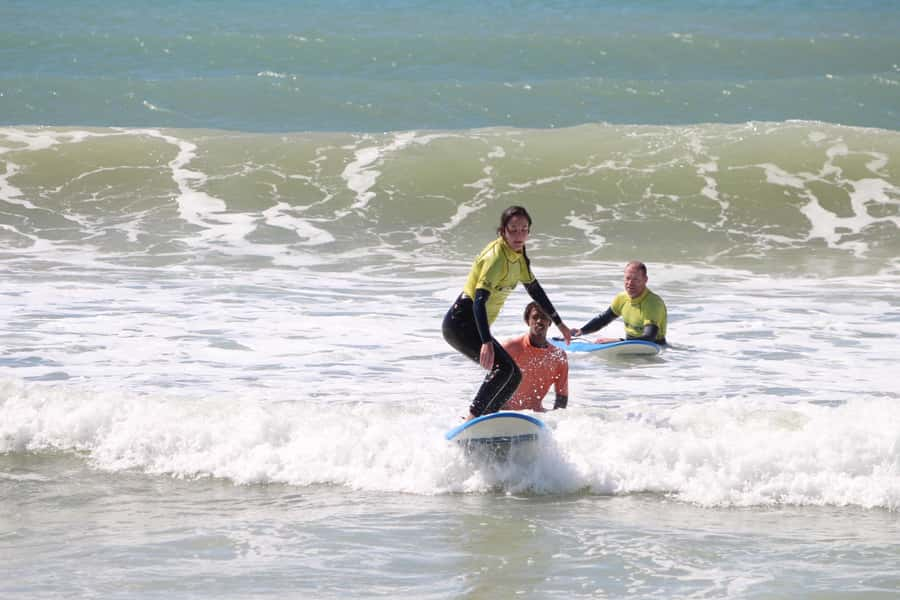
The first three steps are explained and demonstrated on the beach. This is where you learn the body position and basic movements before dealing with moving water. For a beginner, that order makes sense. You can watch the coach, ask questions, and try the motions without also worrying about current, timing, or balance.
Once those first steps are clear, you move into the ocean with the instructor. Practice takes place in waist-deep water, which keeps the early part of the session focused on technique. You work on paddling and catching a wave while the coach watches and gives corrections.
This is also the point where patience matters. You may understand the movement on the sand and still need several tries in the water. The small-group setup helps here, since the instructor can give you the attention needed to adjust your timing or position.
After practicing the first three steps, you return to the beach. The instructor then explains the final two steps, which lead to standing and riding. That short return to shore is useful because you get another clear demonstration before trying the harder part.
You then go back into the water to practice the full sequence. The aim is not just to stand on a stationary board. You are trying to paddle, catch a wave, rise to your feet, and travel toward the beach. Even if you only manage part of that sequence, you leave with the basic skills needed to keep practicing.
What the coaching feels like for a first-timer
A good beginner lesson depends heavily on the instructor. The named coaches connected with these sessions include Lorenzo and Angelo, and both are described as giving close attention and clear guidance.
Lorenzo is especially useful if you want an encouraging introduction. He has taught first-timers who found the time passed quickly, and children have also enjoyed his lessons. Angelo’s approach includes careful attention to each person and practical corrections. That matters when three people are sharing a session and each person is likely to make different mistakes.
You should expect instruction in English. The coach demonstrates each stage, watches you practice, and helps you correct your position. The aim is to give you enough basic skill to continue surfing on your own after the lesson, rather than leaving you dependent on a coach for every attempt.
The quality of attention will still depend on the group size and ocean conditions on your day. The program keeps groups small, but no exact maximum group size is given. If you want the most individual help possible, ask about the group when booking.
Why waist-deep water helps
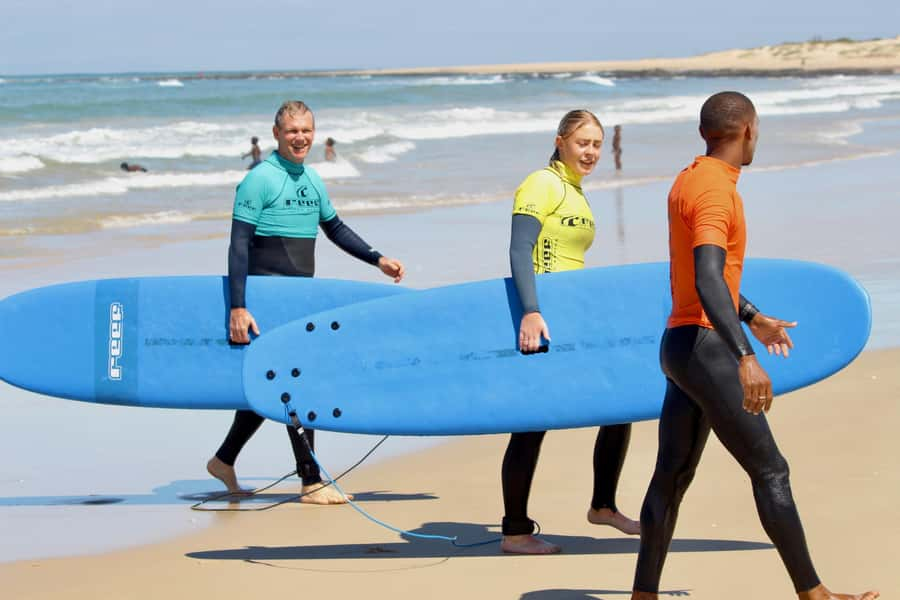
For a first lesson, waist-deep water provides a sensible middle ground. You are close enough to the beach for the coach to explain what to do, yet you can still practice with small waves and a moving board.
The water depth also makes the early skills less intimidating. You are learning how to paddle and catch a wave without being pushed immediately into a more demanding setting. The experience is designed around gradual progress, and that may suit you if the thought of open-water surfing feels daunting.
Still, the ocean is not a controlled classroom. Conditions change, and the lesson may be rescheduled or canceled in extreme weather or poor ocean conditions. This is not a fault in the program, but it is a real part of booking a surf activity.
Keep some flexibility in your Jeffreys Bay plans. The reserve-and-pay-later option helps, since you can secure a place without paying immediately. A full refund is available when you cancel at least 24 hours in advance, subject to the booking terms.
A few more Addo & the Eastern Cape days worth comparing
- Addo Elephant National Park All Inclusive Full-Day Safari
★ 4.8 · 872 reviews - Full-Day All Inclusive Safari with Traditional Braai Lunch
★ 4.8 · 345 reviews - Port Elizabeth: Schotia Game Reserve Safari with Port Pickup
★ 4.5 · 263 reviews - Addo Elephant National Park All Inclusive Full-Day Safari
★ 5.0 · 256 reviews
Equipment, changing, and practical comfort
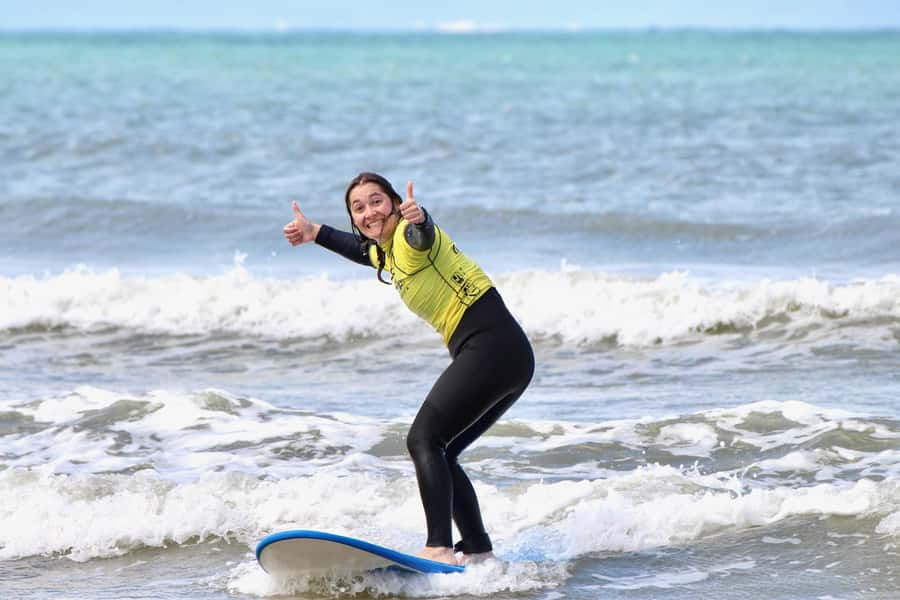
The price includes a surfboard and wetsuit, which is a strong part of the package for a visitor. Surf equipment can be awkward to transport and expensive to rent separately, so having it ready at the school keeps the lesson simple.
Changing rooms are available, as is storage for your belongings. You should still bring only what you need. Leave valuables at your accommodation when possible, and use the provided storage for the essentials you bring to the beach.
Card facilities are available, so you do not need to plan around cash for the school’s basic payment arrangements. The listed price is $28 per person. Since that covers the instructor, board, wetsuit, changing facilities, and storage, it offers fair value for a first attempt, particularly if you are not ready to invest in your own equipment.
The cost is less attractive if you already own a board and wetsuit and only want access to the water. For a visitor who needs instruction and gear together, the package is easier to justify.
Who will get the most from this lesson
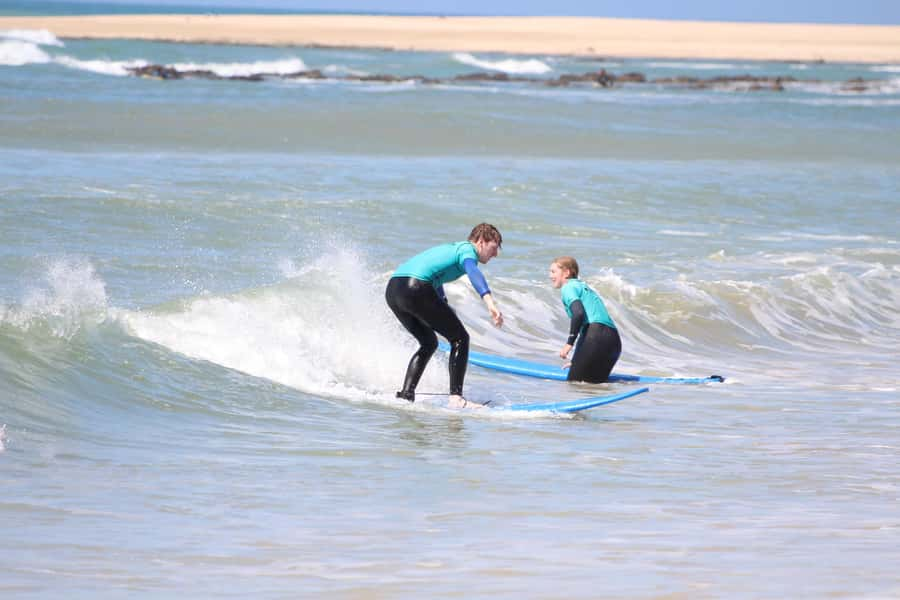
This activity is made for complete beginners. You do not need to know how to paddle, catch a wave, or stand on a board before arriving. The lesson starts with those fundamentals and builds them in order.
It also works for families. Children have enjoyed the session, and the activity is described as suitable for all ages. Since the coach works in small groups, you can expect a more supported introduction than you would get from trying to teach yourself from the beach.
I would also recommend it for couples or friends who want to try something active together. You can share the excitement of a first successful stand, while still receiving individual corrections from the instructor.
This may not be the right choice if you want advanced surf training, private coaching, or a long independent session. It is a beginner program, and its strength is the clear progression from basic movements to a first ride.
How much progress can you expect?
Your main goal should be learning the sequence, not guaranteeing a perfect ride. The experience is designed to help you reach the point where you can paddle, catch a wave, stand, and move toward shore, but ocean conditions and individual balance will affect the result.
Some people stand on the board during the lesson. One three-person session reached that point after about an hour, while another booking involved two hours of instruction. Those examples show what may be possible, but they should not be treated as a promise.
You might spend much of the session practicing one part of the process. That is normal. Catching a wave at the right moment, keeping your weight centered, and standing smoothly all take coordination.
The best measure of success is whether you understand what to practice next. By the end, you should have the basic skills to continue surfing on your own. You may ride your first wave, or you may leave knowing exactly why your next attempt has a better chance.
The Jeffreys Bay setting
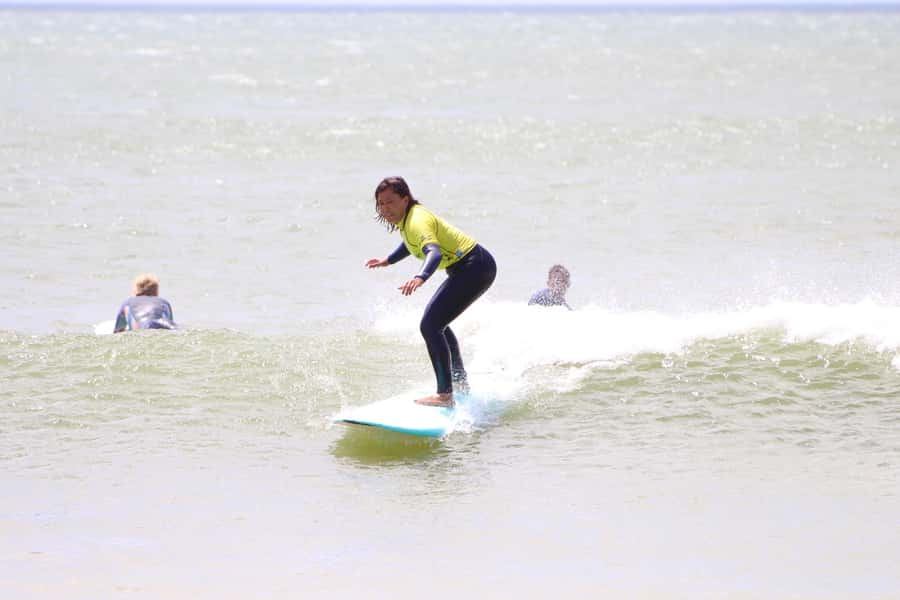
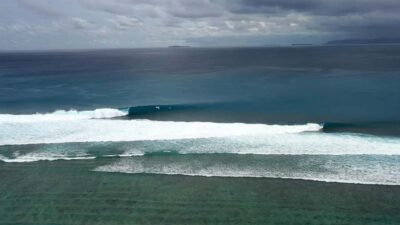
Jeffreys Bay is a natural place to try surfing. The lesson takes place at one of South Africa’s well-known surf beaches, with the practical benefit of surf stores close to the school.
For you, the biggest advantage is convenience. You can reach the meeting point, change into the supplied wetsuit, collect your board, and begin without arranging transport to a distant beach. The lesson ends back at the same meeting point, so there is no separate return transfer to organize.
The setting also gives the session a stronger sense of place than an indoor introduction or a generic pool lesson. You are learning the basic skills at a real surf destination, even though the program keeps the early practice close to shore.
A few things to know before arriving
Wear swimwear under your clothes and bring a towel for afterward. Sunscreen is essential, even on a cooler day, since you will be outside near reflective water.
Arrive ready to listen before entering the ocean. The beach demonstration is not filler. It is where you learn the movements that make the water practice more useful.
Do not schedule an important event immediately afterward if you can avoid it. The ocean can affect timing, and you may want a little time to change and collect your belongings. The activity ends back at the school, but no hotel transfer is provided.
The lesson is conducted in English. If you are booking for children or for anyone nervous about the water, consider asking the school about the group and the day’s conditions before the session begins.
Should you book the Jeffreys Bay surf lesson?
I would book this if you want a straightforward first surf lesson with equipment included and a coach close by. The five-step plan, waist-deep practice, small groups, and instructors such as Lorenzo and Angelo give the experience a useful structure.
The $28 price is reasonable for a visitor who needs both a board and wetsuit, especially with changing rooms and storage included. The main risk is not the teaching but the ocean. Weather can change the plan, so keep your schedule flexible.
Book it if your goal is to learn the basics and chase that first ride toward the beach. Skip it if you want advanced coaching, private instruction, or a guaranteed time on the water regardless of conditions.
FAQ
Where does the surf lesson start?
The lesson starts at Jeffrey’s Bay Surf School in Jeffreys Bay, South Africa.
Where does the activity finish?
The activity ends back at the same meeting point.
What is included in the price?
The price includes a surfboard, wetsuit, qualified instructor, changing rooms, and storage for belongings.
What does the lesson cost?
The listed price is $28 per person.
Do I need to bring a surfboard?
No. A board is included with the lesson.
What should I bring?
Bring swimwear, a towel, and sunscreen.
Is hotel pickup included?
No. Hotel pickup and drop-off are not included.
Is the lesson suitable for children?
The lesson is suitable for all ages, and children can take part.
What language is the lesson taught in?
The lesson is taught in English.
Can the lesson be changed because of weather?
Yes. Surfing lessons depend on weather and ocean conditions and can be rescheduled or canceled in extreme conditions.
Can I pay later?
Yes. You can reserve your place and pay later.
What is the cancellation policy?
You can cancel at least 24 hours in advance for a full refund.
Just added around Addo & the Eastern Cape
- Sunrise Safari – through Addo Park to Schotia reserve★ 4.5 · 6 reviews
- Schotia Private Game Reserve Safari★ 4.7 · 35 reviews
- Schotia: Open Safari Jeep – Full Day Safari with Lunch★ 5.0 · 5 reviews
- Sandboarding Jeffreys Bay★ 4.0 · 19 reviews
- Safari into Schotia Full Day Tour★ 4.3 · 3 reviews
- Safari into Schotia Half Day Tour★ 4.9 · 13 reviews
- Private Addo & Schotia Full Day Tour★ 5.0 · 3 reviews
- Private Addo Elephant National Park Half Day Tour★ 5.0 · 4 reviews
Surfing, compared.
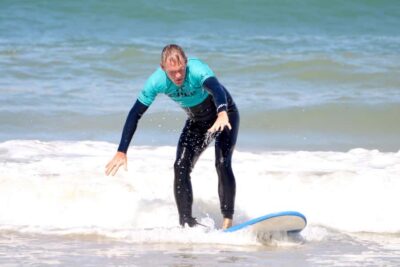
Jeffreys Bay: Private Surfing Lesson for Beginners
Read our review →
Learn to surf with the best view of Table Mountain
Read our review →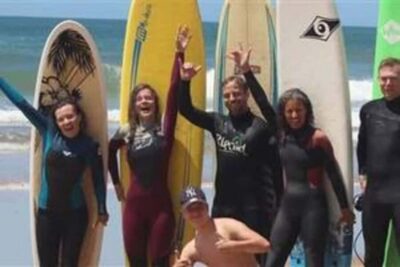
Browse the lists this tour appears in