
Reviewed · HIKING & TREKKING
Jonkershoek Nature Reserve: Guided Panorama Trail Hike
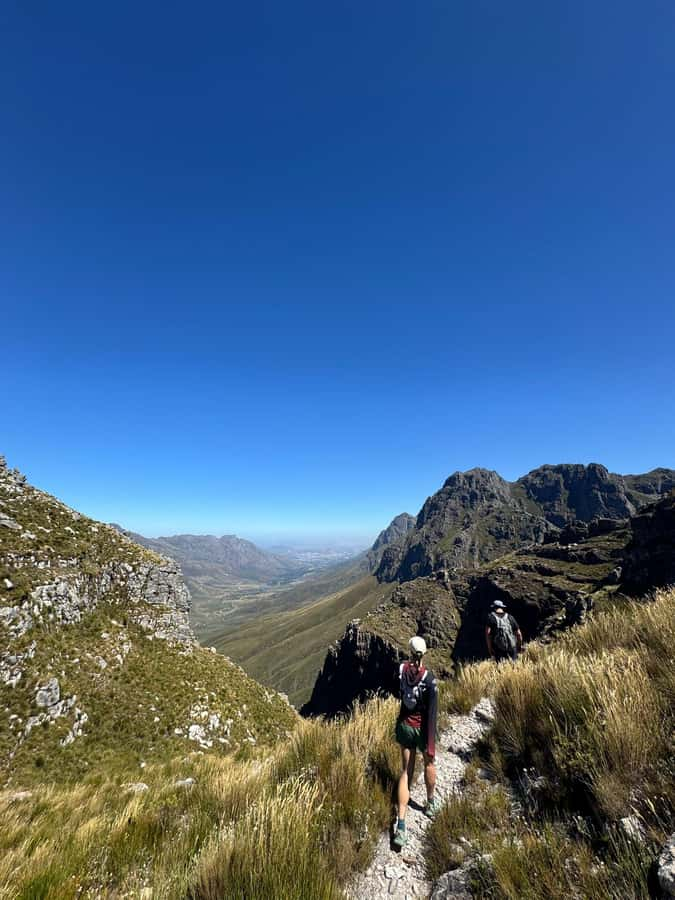
The Jonkershoek Panorama Trail gives you a real mountain day, not a gentle stroll with a view at the end. You climb more than 1,000 meters on rocky ground, then reach high ridges with broad views over the valley, craggy peaks, and the Berg River Saddle.
I like the small groups, limited to six, and the guide-led pace. I also like the range of scenery packed into one loop: protea-covered slopes, grassy ridges, cliffs, forest, streams, and high mountain country. The catch is clear: this is a strenuous hike, and the steep ascent will test anyone with only a modest fitness level.
Key points to know before you book
- A serious 14-kilometer mountain loop: Expect steep, rocky sections and 1,000 meters of elevation gain.
- Panoramas begin above the tree line: High ridges open to views of Jonkershoek, the Stellenbosch mountains, and deep gorges.
- Berg River Saddle is the scenic prize: The route looks into the Assegaibos Kloof Valley, where the Berg River runs.
- The scenery keeps changing: Fynbos, proteas, forest, grassy slopes, cliffs, waterfalls, and clear streams all feature along the route.
- Small groups make a difference: Up to six people can hike with an English or German speaking guide.
- Bring your own fuel: Water, food, sun protection, a jacket, and proper hiking shoes are essential.
A hard climb with a big scenic payoff
The main reason to choose this hike is the climb. The route gains over 1,000 meters in a fairly short stretch, often on steep and rocky ground. That makes it far more demanding than a typical half-day walk around Stellenbosch, but it also puts you high above the valley, where the views become the reward for every slow step.
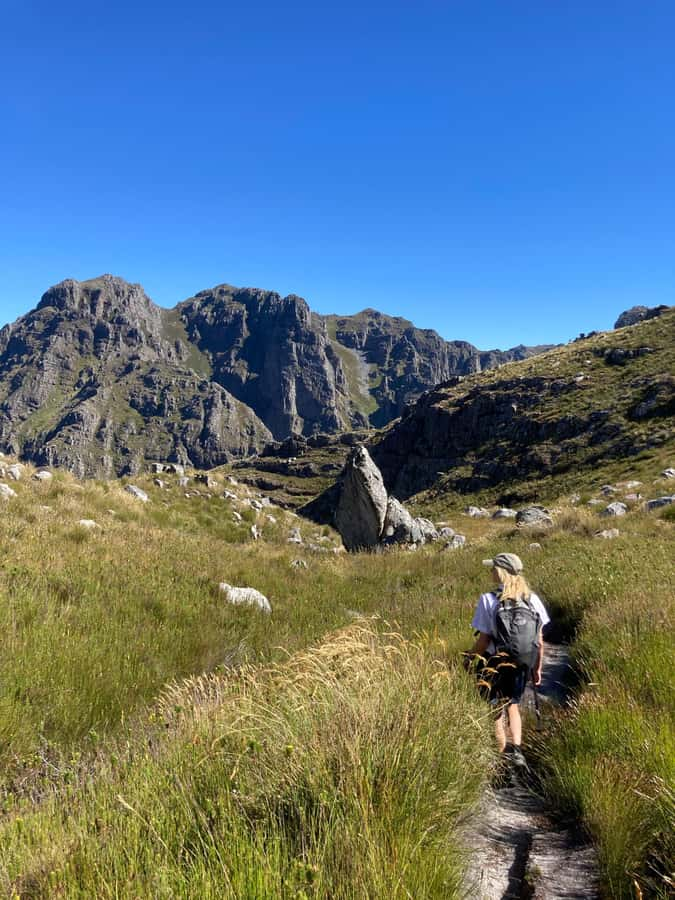
I like hikes that let the scenery change as you work upward, and this one does. Lower sections can include forest, waterfalls, and clear streams. Higher ground brings open fynbos, proteas, grassy ridges, exposed rock, and wide views into the surrounding mountains.
The route covers about 14 kilometers in a circular loop. Depending on your pace, fitness, and the weather, allow five to seven hours for the full experience. The advertised duration is six hours, but you should not book a tight afternoon appointment immediately afterward.
This is not a route for children under 12, people with mobility impairments, anyone afraid of heights, or anyone with a low level of fitness. You need to be comfortable with steep slopes and rocky footing. The guide can set a sensible pace and schedule rest stops, but no guide can remove the physical work.
More parks and reserves around Stellenbosch:
- From Johannesburg: Pilanesberg Nature Reserve Game Safari
★ 4.8 · 1,327 reviews - Addo Elephant National Park All Inclusive Full-Day Safari
★ 4.8 · 872 reviews - Kruger National Park Full Day Private safari
★ 5.0 · 799 reviews
Meeting at Jonkershoek Nature Reserve
You meet at the entrance gate of Jonkershoek Nature Reserve. From there, the group travels about five kilometers along a gravel road to the trail start. You may use your own vehicle or ride with the guide, depending on the arrangement for the day.
This transfer is short, but it is worth planning for. The listed price does not include transport to Jonkershoek, so you need to arrange your own way to the reserve entrance. The reserve entrance fee is included once you are on the tour.
At the start, your guide gives a route and safety briefing. Guides lead in English or German, and the small group size allows the guide to keep an eye on pace, footing, and general comfort. Dominic is named as a guide associated with this experience, and his regular guests particularly value his approach and company on the trail.
The route can be walked clockwise or counter-clockwise. That flexibility lets the guide choose the better direction for the conditions and the group. The exact order of sights may therefore change, but the main ingredients remain the same: a steep ascent, high mountain views, Berg River Saddle, and a return through the valley.
The first climb: rocky ground and steady effort
The beginning of the hike sets the tone. You start climbing through rugged terrain, and the steady uphill soon becomes a steep ascent through a rocky gully. This is where the route earns its strenuous rating.
A good guide will keep the pace sustainable rather than rush the strongest person in the group. You should expect pauses to catch your breath, drink water, and take in the views as the valley drops away. Those stops are useful, not wasted time. A 1,000-meter climb is easier to manage when you treat it as a series of short sections instead of one giant wall.
The footing is important. Proper hiking boots or sturdy hiking shoes are necessary, especially on loose or uneven rock. Comfortable clothing helps, but this is not a place for casual sneakers with smooth soles.
You may also pass waterfalls and clear streams along the route. The supplied information describes the streams as crystal clear, and one recent experience included the chance to swim in water of drinking-water quality. Bring swimwear if that appeals to you, but do not count on a long swimming stop as a fixed part of the outing. The core experience is the hike.
Fynbos, proteas, and changing mountain country
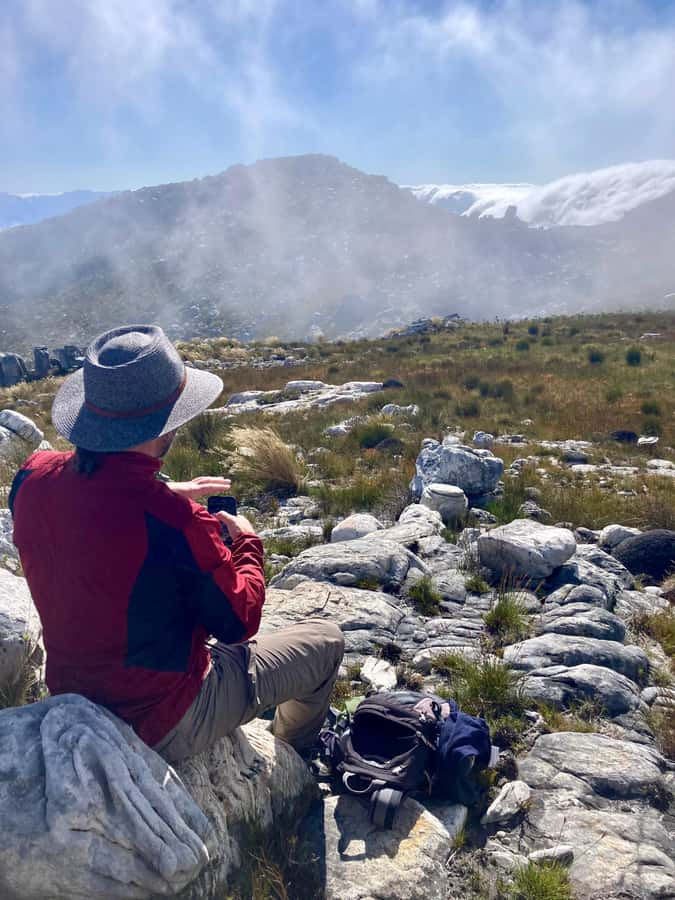
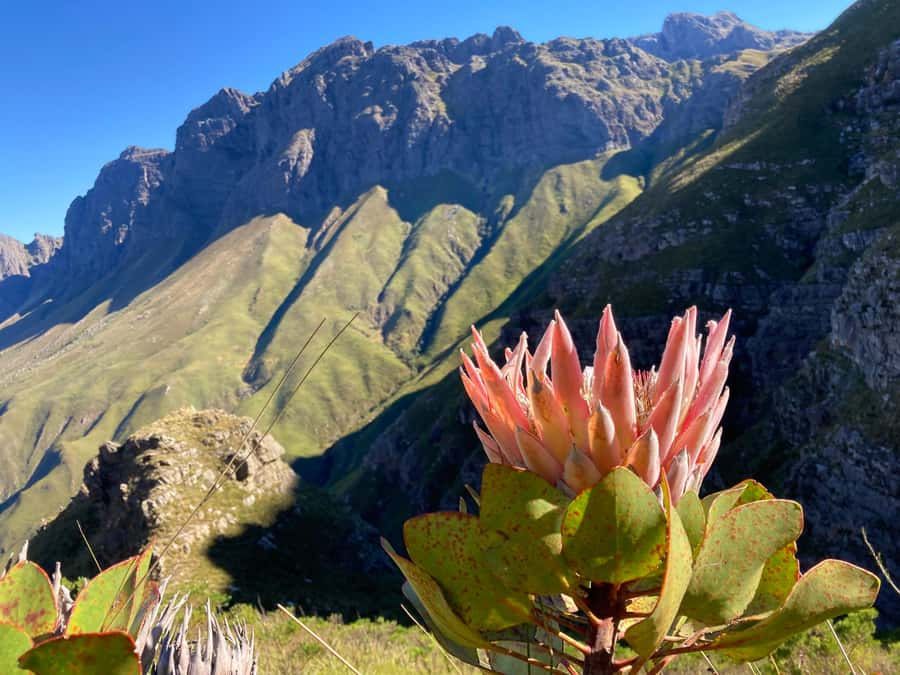
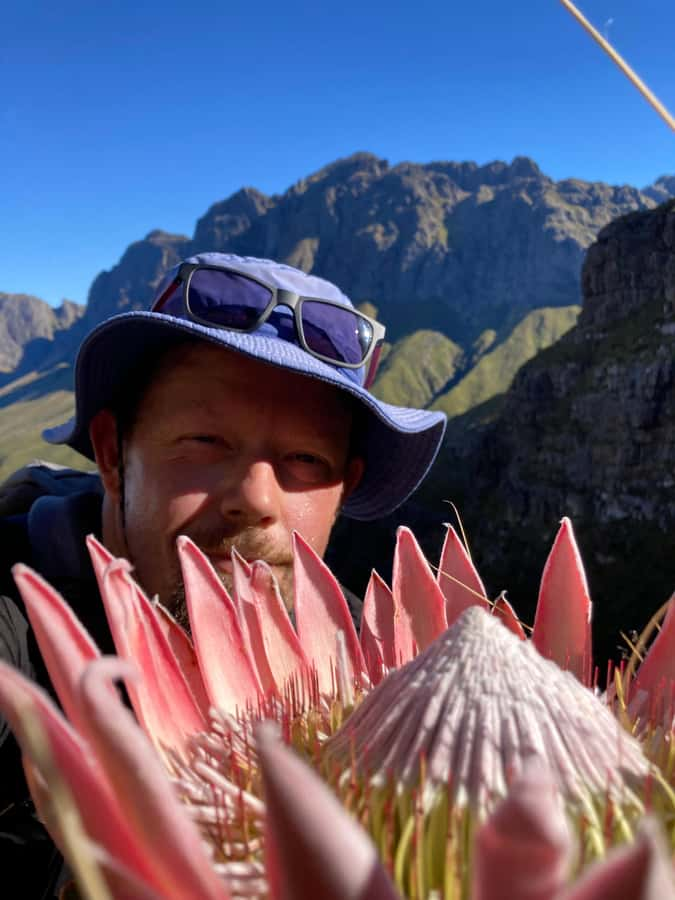
Jonkershoek is part of the Cape’s fynbos region, and the plant life is one of the pleasures of this route. Protea-covered slopes add color and texture to the open hillsides, while the higher sections shift toward grassy ridges and more alpine-looking ground.
One useful tip is to leave room on your phone or camera. The scenery changes often enough that you may want to stop repeatedly for photographs. The route moves from fynbos to woodland, then toward exposed high country, so you are not looking at the same view for six hours.
That variety also gives the hike a stronger sense of progress. In the lower valley, the mountains feel close and enclosed. As you climb, the views widen. From the ridges, you can look across Jonkershoek Valley, toward the Stellenbosch mountains, and into steep gorges cut between the peaks.
The scenery is a major part of the value here, but it does not arrive without effort. You are paying for access to a demanding route and for a guide who handles navigation, pacing, and safety. If you want an easy walk with lots of scenery and little exertion, this is the wrong choice.
More Hiking & Trekking in Stellenbosch:
- E-Bike & Hike Jonkershoek
★ 5.0 · 12 reviews - Stellenbosch: Guided Vineyard Hike and Wine Tasting
★ 5.0 · 9 reviews - Stellenbosch: Half-Day Guided Nature Hike and Wine Tasting
★ 5.0 · 3 reviews - Cape Town: Lion’s Head Sunrise or Sunset Hike
★ 5.0 · 1,084 reviews
The high ridge and wide-open views
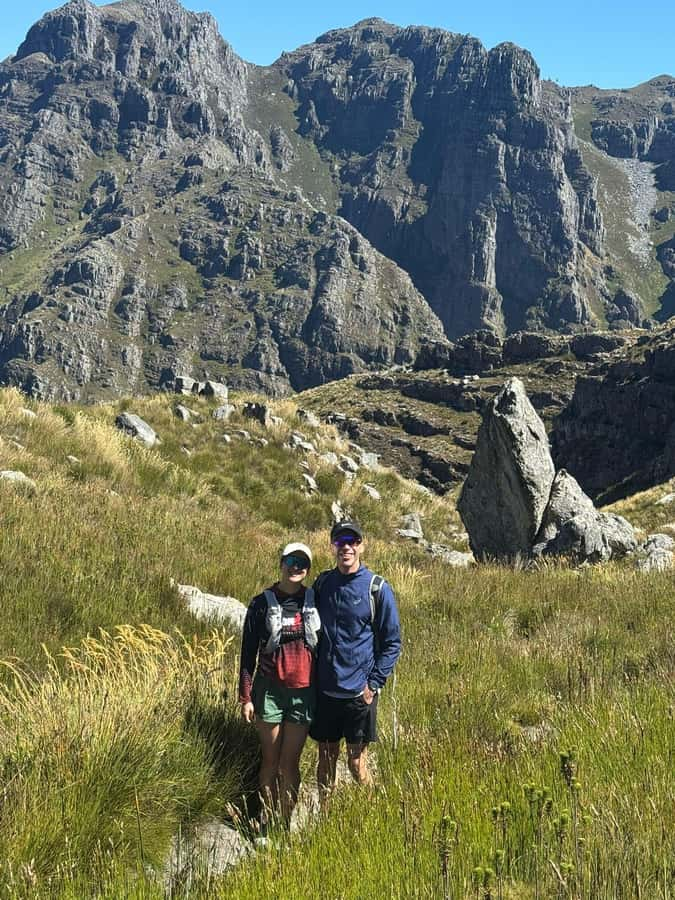
Once you gain the upper ridge, the hike changes character. The tight feeling of the rocky ascent gives way to open mountain views in several directions. Grassy ridges, fynbos, craggy cliffs, and distant peaks create the kind of setting that makes a hard climb feel worthwhile.
This is the best place to slow down. Your guide can point out the shape of the valley and help you understand the route you have covered. You can also see why the Panorama Trail has such a strong reputation among day hikes in the area: the reward is not one lookout, but a long stretch of high ground with repeated views.
You should still watch your footing. Exposed ridges and steep slopes are part of the route, and the activity is not suitable for anyone afraid of heights. The phrase panoramic view can sound gentle, but here it comes with real mountain exposure and uneven terrain.
Weather matters too. The tour information allows for changes in timing based on conditions, and your guide may adjust the pace or route direction. A jacket belongs in your pack even on a warm day, along with sunscreen and a sun hat.
Berg River Saddle and Assegaibos Kloof
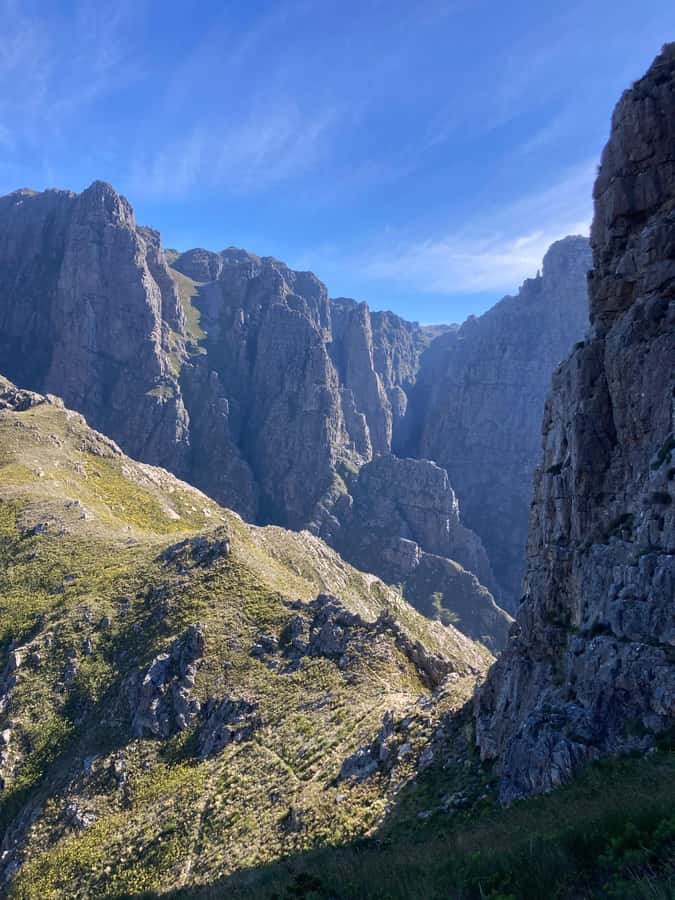
The descent leads toward Berg River Saddle, one of the strongest scenic points on the route. From here, you look into the Assegaibos Kloof Valley, a pristine mountain valley through which the Berg River flows.
This section gives photographers a fresh angle after the high ridge views. Instead of looking broadly across the main Jonkershoek Valley, you get a more enclosed view into a deep valley and its surrounding slopes. Nature lovers will appreciate the sense of distance and quiet that comes with the saddle.
It is also a good reminder that the route is not just an uphill challenge. The descent has its own demands, especially after several hours on your feet. Rocky ground can be harder on tired legs than on fresh ones, so keep your pace controlled and use your poles if you normally hike with them.
The route then bends back toward the main valley. Because it is circular, you do not simply retrace the full climb. That makes the day feel more like an exploration than an out-and-back walk, with different angles and terrain on the return.
What the guide adds to the experience
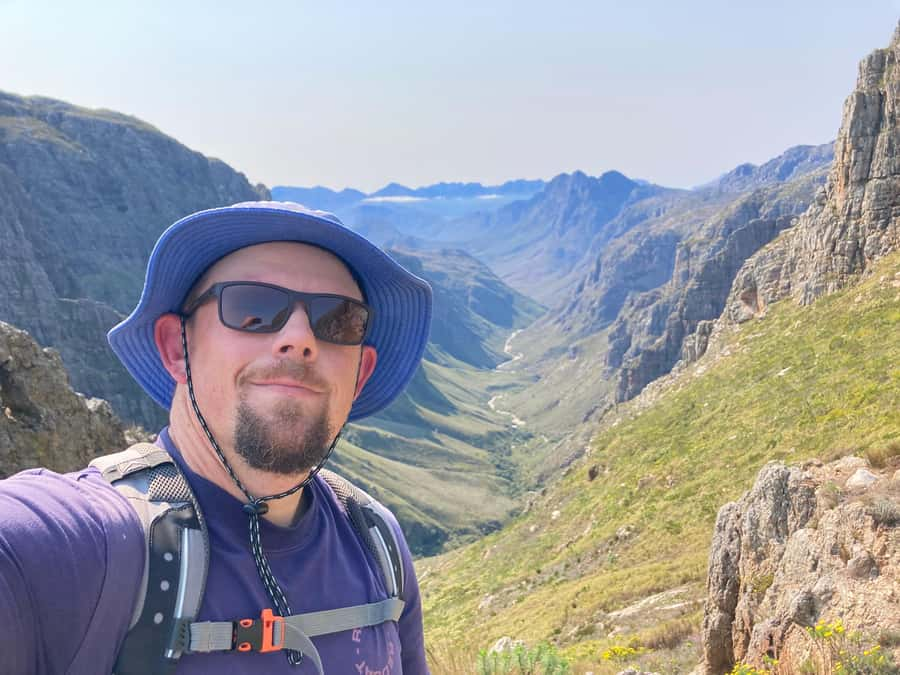
A guide is especially useful on a trail with steep rocky sections, changing weather, and two possible directions. The practical benefit is navigation and safety. You can concentrate on your footing and the scenery instead of constantly checking whether you are on the right path.
The guide also controls the rhythm of the day. A strong group can be tempted to move too fast early on, while a less experienced hiker may worry about slowing everyone down. With a maximum of six people, it is easier to find a workable pace and stop at sensible points.
Dominic is specifically connected with the tour, and the experience is available in English or German. If language matters to you, confirm the guide language when booking.
Do not expect a private guide by default. The group is small, but it can include up to six participants. That is a useful middle ground: more personal than a large hiking group, but usually less costly than hiring a guide only for yourself.
What to pack for a six-hour mountain day
The water requirement is not a suggestion. Bring at least 2.5 liters per person, and carry more if you know you drink heavily in heat. There are streams along the route, but you should not depend on them for your drinking supply.
Pack food and snacks because they are not included. A simple lunch and compact energy foods are more useful than relying on a late meal after the hike.
Your basic packing list should include:
- Proper hiking shoes or boots
- At least 2.5 liters of water
- Food and snacks
- Sunscreen and a sun hat
- A jacket
- Comfortable hiking clothes
- Swimwear if you want the option of swimming
The reserve does not allow smoking, littering, or making fires. Those rules matter in a dry mountain environment, so carry out anything you bring in.
A charged phone or camera is worthwhile. The route includes waterfalls, streams, plant life, high ridges, the saddle, and valley views. One practical tip from the experience itself is to bring enough camera battery. You may use it more than expected.
Is the $112 price good value?
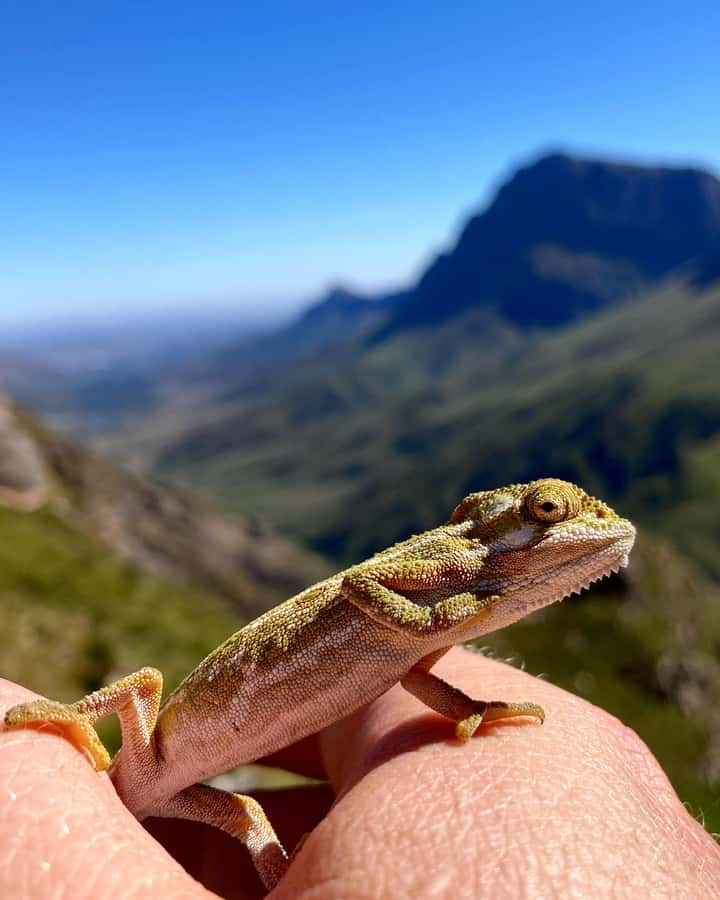
At $112 per person, this is not a bargain-priced walk, but the price is reasonable for a small guided mountain outing if you want support on a demanding route. It includes the expert mountain guide and reserve entrance fee, as well as the guided experience through one of the area’s major day-hike routes.
You still need to pay for or arrange your transport to the reserve entrance, and you must bring your own drinks, snacks, and food. That keeps the included list fairly simple, so the value depends on what you need.
I would consider the price fair for someone who wants a guide, prefers a group of no more than six, and does not want to handle route planning alone. It is less attractive if you already know Jonkershoek well, have strong mountain experience, and only want access to the trail.
The best value comes from the combination of navigation, pacing, safety support, and access to a strenuous route with major viewpoints. You are not paying for refreshments or transport. You are paying for a well-managed mountain day.
Who should book this hike?
I would choose this experience if you:
- Regularly hike steep trails
- Want a full mountain day near Stellenbosch
- Enjoy fynbos, waterfalls, streams, and high ridges
- Prefer a small group
- Want an English or German speaking guide
- Are comfortable with 1,000 meters of climbing
- Like photography and can carry your own food and water
I would skip it if you want a relaxed outing, dislike exposed slopes, or have limited fitness. The distance is manageable for a fit hiker, but the elevation gain is the real test.
You should also allow flexibility in your day. The hike may take five hours, but it may run to seven depending on pace and weather. Free cancellation is available up to 24 hours before the activity, and you can reserve now and pay later, which helps if your schedule depends on mountain conditions.
Should you book the Panorama Trail?
Book it if you want one of the area’s most demanding and scenic day hikes, and if you are ready to work for the views. The combination of high ridges, fynbos, cliffs, waterfalls, clear streams, Berg River Saddle, and Assegaibos Kloof gives the day real variety.
The deciding question is not Can I walk 14 kilometers? It is Can I climb 1,000 meters over steep rocky ground and still descend safely? If the answer is yes, the small group and guide support make this a strong choice. Bring 2.5 liters of water, proper shoes, food, a jacket, and a fully charged camera.
FAQ
Where does the hike start?
You meet at the entrance gate of Jonkershoek Nature Reserve. The group then travels about five kilometers on a gravel road to the trail start.
How long does the hike take?
The hike generally takes five to seven hours. The stated activity duration is six hours, but your pace and weather can affect the total time.
How difficult is the Panorama Trail?
It is a strenuous hike with steep rocky sections and more than 1,000 meters of elevation gain. A good to strong fitness level is recommended.
How far is the route?
The trail is a 14-kilometer circular route. It can be walked clockwise or counter-clockwise.
What languages does the guide speak?
The guide service is available in English or German. Dominic is one of the guides associated with the experience.
Is transport to Jonkershoek included?
No. Transport to the reserve entrance is not included. After meeting at the gate, you travel five kilometers on a gravel road in your own vehicle or in the guide’s vehicle.
What should I bring?
Bring at least 2.5 liters of water, food, snacks, hiking shoes, sunscreen, a sun hat, comfortable clothes, and a jacket. Swimwear is also suggested because swimming may be possible in clear streams.
Just added around Stellenbosch
- E-Bike Stellenbosch Winelands – Full Day Private Tour★ 5.0 · 6 reviews
- Stellenbosch wine tour, all inclusive of lunch and tastings.★ 5.0 · 32 reviews
- Stellenbosch Winelands downhill gravity Scooter★ 3.1 · 4 reviews
- Stellenbosch North Guided Wine Safari (Tastings Included)★ 4.9 · 16 reviews
- Stellenbosch: Stellenbosch E-Bike & Wine Tour (Shared Tour)★ 5.0 · 9 reviews
- Stellenbosch: Hop-On Hop-Off Northern Route Wine Tour★ 4.6 · 49 reviews
- Stellenbosch: Half-Day Guided Nature Hike and Wine Tasting★ 5.0 · 3 reviews
- Stellenbosch: Horse Riding Wildlife Safari★ 4.9 · 14 reviews
Hiking & Trekking, compared.
Hike Table Mountain or Lions Head in Cape Town Like a Local
Read our review →
Hike Table Mountain with a Guide – Choose Route
Read our review →
Browse the lists this tour appears in