
Reviewed · FOOD & DRINK
African Food and Storytelling Tour Cape Town City Centre
Cape Town’s food culture makes more sense when you follow it through the city streets. This two- to three-hour walking tour links Somali tea, Cape Malay snacks, and Malian food with public squares, old buildings, informal trade, and the daily work of African-owned businesses.
I like two things in particular. First, the food is served in small local places you may not find on your own. Second, the tour gives real space to stories about entrepreneurship, migration, and gentrification rather than treating Cape Town as a pretty backdrop. The main consideration is that this is a walking history and food tour, not a sit-down restaurant crawl, so come ready to walk, listen, and eat several small servings.
Key points at a glance
- Eight city-centre stops: Church Square, the Old Post Office, Grand Parade, the Mandela balcony, the flower market, Greenmarket Square, a West African food stop, and the Methodist Mission.
- Three main food experiences: Two warm shared meals, one Cape Malay or Creole snack tasting, plus warm and cold drinks.
- A genuinely small group: The maximum is 10 people, which suits a tour built around conversation and questions.
- Guides with strong local voices: Dennis, Tawanda, Sifiso, and Fez are among the guides associated with the experience.
- A useful first-day activity: The food stops can help you choose restaurants, markets, spices, and neighbourhoods to revisit during your stay.
- A practical city walk: The tour begins at Church Square and ends at Greenmarket Square, with no return transport included.
Why this is more than a Cape Town food tour
The food is the hook, but the subject is really who gets to make a living in the city, where people gather, and how Cape Town’s past still shapes its present. You move through squares and markets while your guide explains how public space is used by vendors, traders, business owners, worshippers, and visitors.
That wider angle gives the experience more weight than a simple tasting route. You are not just sampling food from Somalia, Cape Malay kitchens, and West Africa. You are also hearing how those food traditions survive, adapt, and find customers in Cape Town’s inner core.
This matters because the city centre can be easy to admire from a tour bus or a tidy restaurant table. Walking between food stops shows you a more ordinary side of Cape Town. You see the places where people buy, sell, meet, work, and pass through every day.
The tour also addresses gentrification and urban change. That can be a difficult subject, but it is useful context if you want to understand why some small businesses thrive, why others struggle, and why certain public spaces matter so much to local communities.
More City Tours in Cape Town
- Cape Town Hop-On Hop-Off City Tour with Optional Cruise
★ 4.5 · 1,793 reviews - Cape Town: 12-Minute City Scenic Helicopter Tour
★ 4.8 · 853 reviews - Cape Town City Pass: Save Over 50% on 80+ Top Attractions
★ 4.5 · 348 reviews
Starting at Church Square and getting oriented
Meet at the statue of Jan Hendrik Hofmeyr on Church Square, across from McDonald’s where Parliament and Spin Street meet. Pay close attention to the location. There is another Church Square in Woodstock, and going to the wrong one will put you far from the group.
Church Square is a fitting opening point. It is South Africa’s second-oldest public square, and the guide uses it to introduce the city’s layers of power, memory, and public life. This first stop lasts about 15 minutes, so expect a welcome, introductions, and an explanation of how the walking route fits together.
This is also the point where you can settle into the tone of the experience. The guide may ask questions and invite discussion rather than delivering a nonstop lecture. If you enjoy connecting food with social issues and local stories, that conversational approach should suit you well.
Somali food and the first warm meal
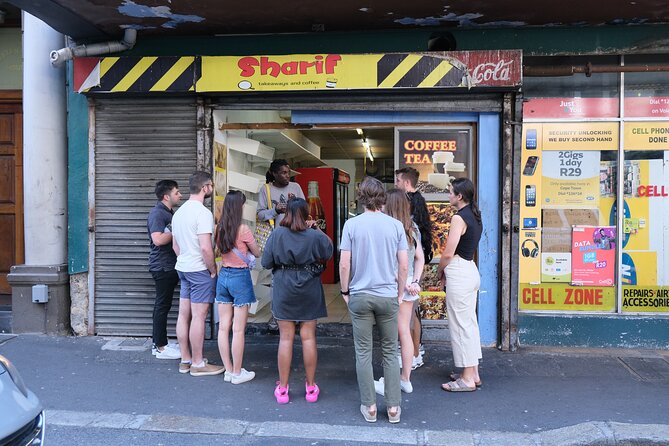
The first shared meal introduces Somali food culture. You can expect signature Somali dishes and spiced tea, with about 20 minutes at the stop. The exact rhythm depends on the size of the group and how much discussion develops.
This is one of the tour’s strongest features because it gives you a direct taste of East African food traditions in a local setting. Instead of simply naming dishes and moving on, the guide explains the flavours and customs behind the meal.
Come hungry. The portions are described as shared warm meals, not token samples, and the food continues at several later stops. People who book a food tour and then plan a full dinner immediately afterward may find themselves overfed. One practical tip is to schedule this experience early in your Cape Town visit and leave your evening meal flexible.
The Old Post Office, Cape Malay bites, and used books
At the Golden Acre Shopping Centre, the route turns toward the historic Old Post Office. Here, the guide discusses colonial history and the changing role of public space before introducing local vendors.
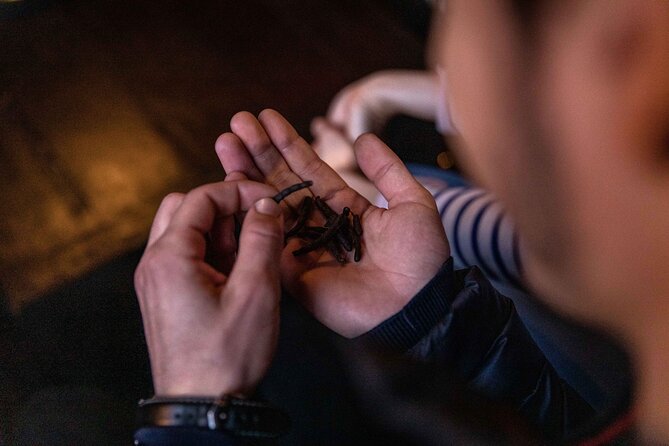
You also get a Cape Malay or Creole snack tasting, along with a chance to browse second-hand books. This combination gives the stop a pleasant sense of place. Food is part of it, but so are reading, trade, memory, and the small businesses that keep older city spaces useful.
The stop lasts roughly 20 minutes. You should not expect a long shopping session, but you may find something worth buying, especially if you enjoy cookbooks, local reading, or unusual second-hand titles. Past participants have also picked up spices during the wider route, so bring a little room in your bag if you like to take edible souvenirs home.
More Food & Drink in Cape Town
- The Cape Town Essentials Food Tour
★ 5.0 · 385 reviews - Cape Town: V&A Waterfront Gin Voyage Cruise
★ 4.6 · 238 reviews - Authentic African Cuisine Cooking Experience
★ 5.0 · 236 reviews - The 10 Tastings of Cape Town With Locals: Private Food Walking Tour
★ 4.5 · 169 reviews
Grand Parade and the Mandela balcony
Grand Parade is South Africa’s oldest public square. The group pauses at Cape Town City Hall, looking toward the balcony where Nelson Mandela gave his first public address after his release from prison.
The guide connects this famous political setting with the everyday lives of informal food vendors who work in and around the square. That contrast is important. Grand Parade is not only a place for major public speeches. It is also a working urban space where people trade, meet, and earn a living.
The stop takes about 15 minutes. It is short, but the setting carries plenty of meaning. If you want a tour focused only on food, this pause may feel like a detour. If you want to understand the city through its public spaces, it adds useful depth.
The flower market on Adderley Street
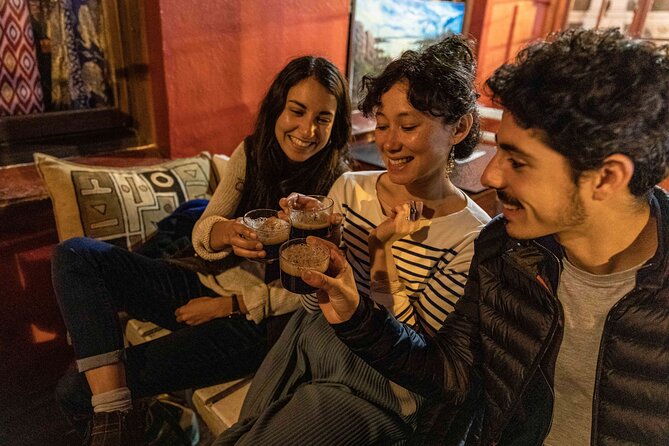
The walk continues along Adderley Street to one of Southern Africa’s oldest open-air flower markets. You greet vendors and see a market that has served the city for generations.
This stop is less about tasting and more about observing the way commerce works in the centre. It breaks up the meals with a quick look at a long-running local trade. You should expect around 15 minutes here, enough to see the market and hear why it matters, rather than enough time for an extended market visit.
The flower market also helps keep the route varied. A food tour made up entirely of restaurants can become repetitive. Here, the city itself becomes part of the experience.
Greenmarket Square and Cape Town’s West African community
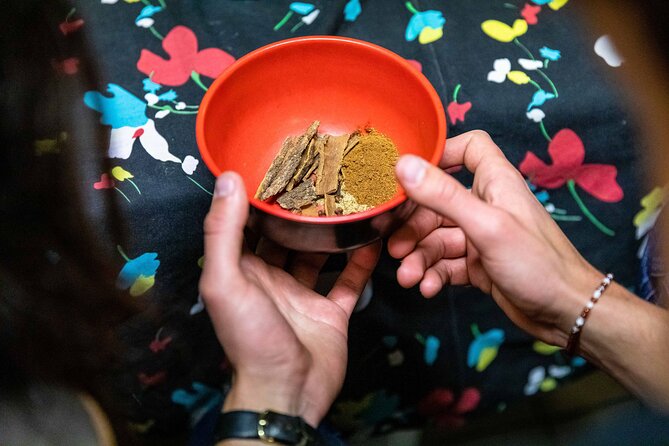
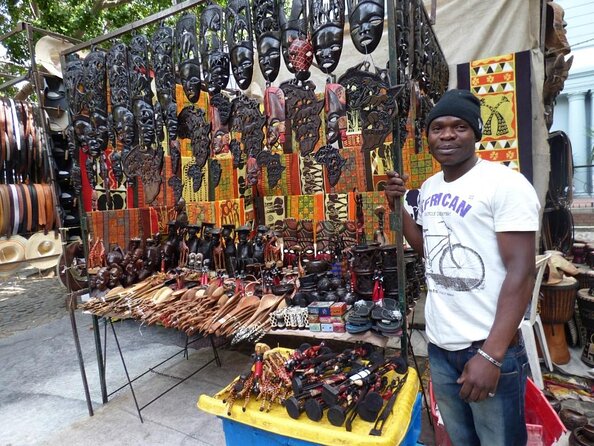
Greenmarket Square is the tour’s final area and its end point. It is Cape Town’s third-oldest public square and a meeting place for informal African traders and entrepreneurs from across the continent.
You can browse for souvenirs if you wish, although purchases are optional. The route may also pass a Senegalese tailor known for African textiles. If fabrics interest you, this is a useful opportunity to look closely at the work and talk about the businesses that serve Cape Town’s African communities.
The square is also where the tour begins to focus more directly on West African life in the city. That shift prepares you for the second warm meal and makes the route feel like a journey through several food traditions rather than a collection of unrelated tastings.
Since the tour ends here, take note of your surroundings before you set off. Greenmarket Square is a convenient place to continue exploring on foot, but the experience does not provide return transport. An Uber is recommended because parking in the city centre is limited.
West African food from Mali
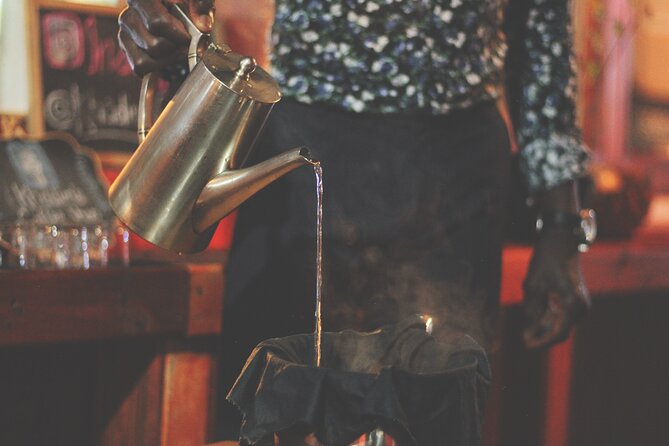
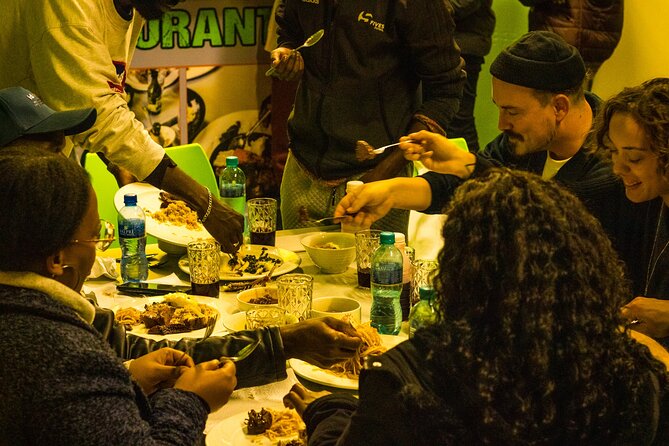
The second shared warm meal introduces West African cuisine, including food from Mali. You spend about 30 minutes eating and talking about the way food can connect communities.
This is the longest food stop on the route, which gives you more time to taste, ask questions, and compare the meal with the earlier Somali dishes. The tour covers food from southern, eastern, and western parts of Africa, so you get a useful sense of variety within the continent rather than one simplified idea of African cuisine.
The meal also reinforces the tour’s central point: recipes travel with people. Food traditions are carried into new cities, adjusted to new markets, and kept alive through small restaurants and family-run businesses.
Tea, coffee, and reflection at the Methodist Mission
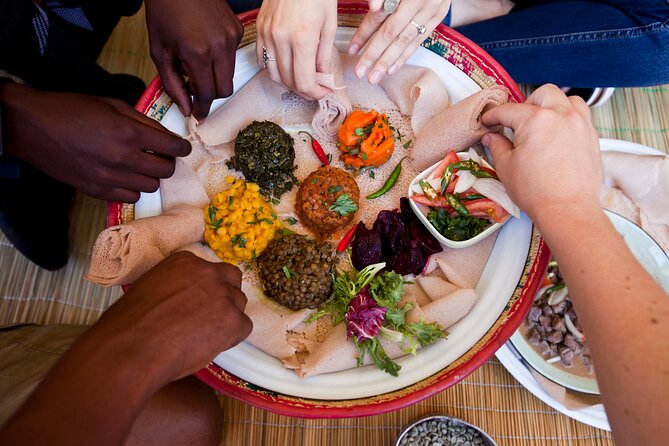
The final scheduled stop is the Methodist Mission, a welcoming community space linked with activism and social justice. Here you pause for tea or coffee and a treat while discussing the stories connected with the building and its wider role in Cape Town’s inner city.
This is a calm way to end a route that includes several meals, markets, political landmarks, and busy public spaces. It gives you time to think about what you have seen instead of ending abruptly after the last bite.
The stop lasts around 20 minutes. For me, this kind of ending is valuable because it leaves room for conversation. You can ask about places to eat, local businesses, books, fabrics, or food traditions that you want to explore later.
What the price includes in practical terms
The cost is about $92.02 per person. That is not cheap for a two- to three-hour walking tour, so value depends on what you want from the experience.
If you measure the price only by the number of food samples, you may find cheaper food walks in Cape Town. This tour includes two warm shared meals, a snack tasting, and warm and cold drinks, but it is not designed as a series of full restaurant meals.
The stronger value comes from the combination of food, guiding, access to small businesses, and context about places you might otherwise pass without understanding. You are paying for a small-group route through eight stops, not simply for what is on the plate.
The group limit of 10 is important. A smaller party makes it easier to hear the guide, ask questions, and sit or stand together at small food businesses. It also fits the personal scale of the stops better than a large coach group would.
The tour is booked, on average, 41 days ahead, so do not assume you can leave it until the last day of your trip. It is especially sensible to book it early because the guide’s food recommendations can help you plan later meals.
The guides and the tone of the storytelling
Guide names associated with this experience include Dennis, Tawanda, Sifiso, and Fez. The guiding style can vary by person, but the experience is built around storytelling, questions, and personal connections to Cape Town’s food and city life.
Dennis is praised for linking food traditions with the city’s past and for bringing people into the conversation. Tawanda is associated with explanations of architecture and South African history, while Sifiso has led a food-and-story route with a warm, engaging manner.
The best way to enjoy this is to stay curious. Ask what a dish is, who runs the business, how a food tradition reached Cape Town, or what you should try later. The tour is designed for participation, not just for taking photographs while the guide talks.
Who will enjoy this most
I would choose this tour if you want:
- Food from several African traditions in one afternoon
- Small restaurants and food businesses rather than polished tourist venues
- A walking route through Cape Town’s older public spaces
- Discussion of migration, entrepreneurship, politics, and gentrification
- A small group with room for questions
- Ideas for restaurants, spices, books, and fabrics to revisit later
It suits first-time visitors who want a quick introduction to Cape Town’s city centre, but it can also work for repeat visitors looking for a less familiar side of town.
You should think twice if you want a formal culinary class, a list of exact dishes in advance, or a seated restaurant meal at every stop. The route changes with the city’s small-business scene, and some stops are about place and story as much as food.
A moderate level of fitness is needed. This is a walking tour with several stops across the city centre, and the experience can last up to three hours. Wear comfortable shoes and avoid arriving after a large meal.
Booking details worth knowing
You receive confirmation at booking, and the tour has a mobile ticket. It operates near public transport, but the tour begins and ends in different places.
The start is Church Square at 0A Spin Street. The finish is Greenmarket Square. Plan your onward journey from the ending point rather than expecting a return to Church Square.
You can cancel for a full refund up to 24 hours before the start time. Cancellations or changes made within 24 hours are not refunded or accepted. Poor weather or failure to reach the minimum group size can lead to a cancellation, in which case you are offered another date or a full refund.
Should you book the African Food and Storytelling Tour?
Book it if you want food with context. The strongest part is not any single dish. It is the connection between Somali, Cape Malay, and West African cooking and the people, squares, markets, and businesses that give those foods a place in Cape Town.
I would schedule it near the beginning of your stay, arrive hungry, and keep dinner plans loose. You may leave with spices, a used book, new restaurant ideas, and a better sense of how the city centre works.
Skip it if you want a short tasting session with little walking or no discussion of difficult urban issues. For everyone else, the $92.02 price is reasonable when you value the small group, the three food experiences, and the access to parts of Cape Town you might not find alone.
FAQ
Where does the African Food and Storytelling Tour begin?
It begins at Church Square in Cape Town’s city centre, at the statue of Jan Hendrik Hofmeyr near the meeting of Parliament and Spin Street. Do not go to Church Square in Woodstock.
Where does the tour end?
The tour ends on foot at Greenmarket Square in Cape Town’s city centre. You arrange your own onward transport, and an Uber is recommended because city-centre parking is limited.
How long does the tour take?
The experience lasts approximately two to three hours.
How much food is included?
The tour includes three food experiences: two warm shared meals and one snack tasting, along with warm and cold beverages. The food includes Somali, Cape Malay or Creole, and West African flavours.
How large is the group?
The maximum group size is 10 people.
Is the tour suitable for anyone with limited mobility?
The tour requires a moderate level of physical fitness because it is a walking experience through Cape Town’s city centre.
Can I cancel for a refund?
You can cancel at least 24 hours before the start time for a full refund. Cancellations or changes made less than 24 hours before the start time are not refunded or accepted.
Just added around Cape Town
- 100 % Catch Rate Cape Town Wild Tours★ 5.0 · 5 reviews
- Private Cape Town City Evening Tour★ 5.0 · 3 reviews
- Private Cape Town City Tour table Mountain with wine tasting★ 5.0 · 10 reviews
- Cape Town Boat Trip★ 4.0 · 5 reviews
- Cape Town Aquila Private Game Reserve Big Five Safari Adventure★ 5.0 · 4 reviews
- Cape Town Private Birding Tour★ 5.0 · 14 reviews
- Private 2-Day Cape Town Highlights: Robben Island,Table Mountain Tickets & Wine★ 5.0 · 8 reviews
- Private Transfer: CPT Airport to Cape Town in Luxury Van★ 4.0 · 5 reviews
Food & Drink, compared.

Full-Day Winelands Tour with Wine Tastings & Food
Read our review →
Hartbeespoort: 2-Hour Dam Cruise with South African Food
Read our review →

Full-Day All Inclusive Safari with Traditional Braai Lunch
Read our review →
Stellenbosch & Franschhoek 20 Wine Tasting + Lunch Shared Tour
Read our review →
Browse the lists this tour appears in