
Reviewed · SCUBA DIVING
Cape Town: Shark Science SCUBA Diving Experience
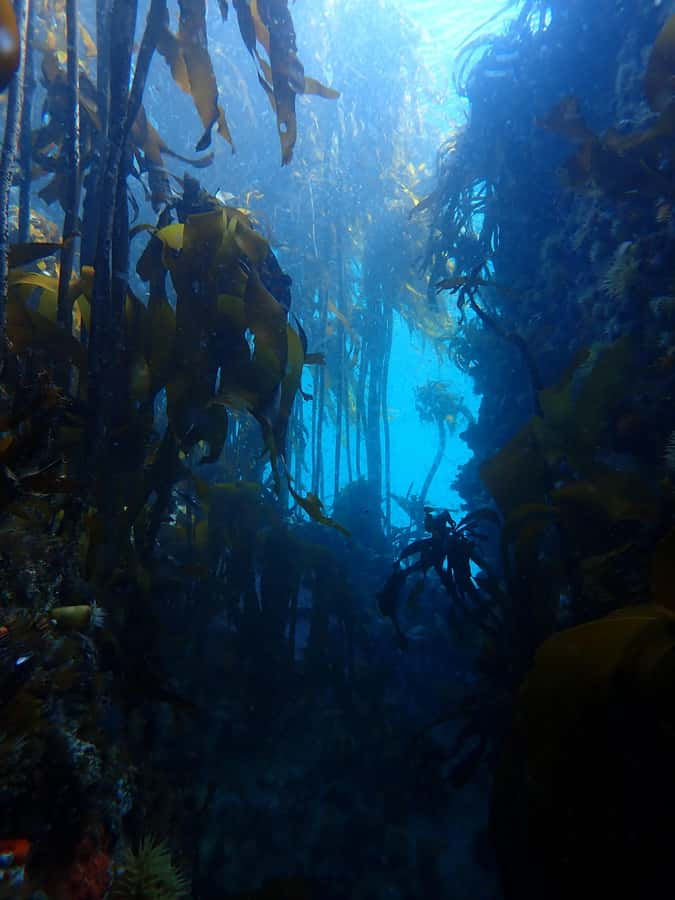
The most unusual part of this Simon’s Town scuba experience is that you are not simply looking at marine life. You may help record fish numbers or photograph shark markings for Fin Spotter, turning an underwater outing into a small piece of real conservation work. In the Great African Sea Forest, the swaying kelp is part of the lesson, not just scenery.
I like the close contact with marine biologists and the small group, capped at 10 people. I also like the chance to see shy puffadder sharks and pyjama sharks rather than chasing a guaranteed headline animal. The main consideration is that wildlife is never promised, and one recent guest felt rushed afterward and never received promised photos, so keep your expectations clear about follow-up.
- Shark science in the kelp: Photograph shark patterns or record fish abundance on an underwater slate.
- A careful start: The session includes a 20-minute safety briefing, equipment check, and an introduction to False Bay’s ecosystem.
- Small-group attention: No more than 10 people take part, and some outings may be much smaller.
- A useful morning schedule: Meet around 9:30 a.m. and finish around 12:30 or 1 p.m., leaving lunch time free.
- Shore access at Simon’s Town: You enter from predetermined sites and spend most of the time among kelp forests.
- Certified divers only: You must already hold an open-water scuba qualification and be a swimmer.
A science outing, not a standard wildlife cruise
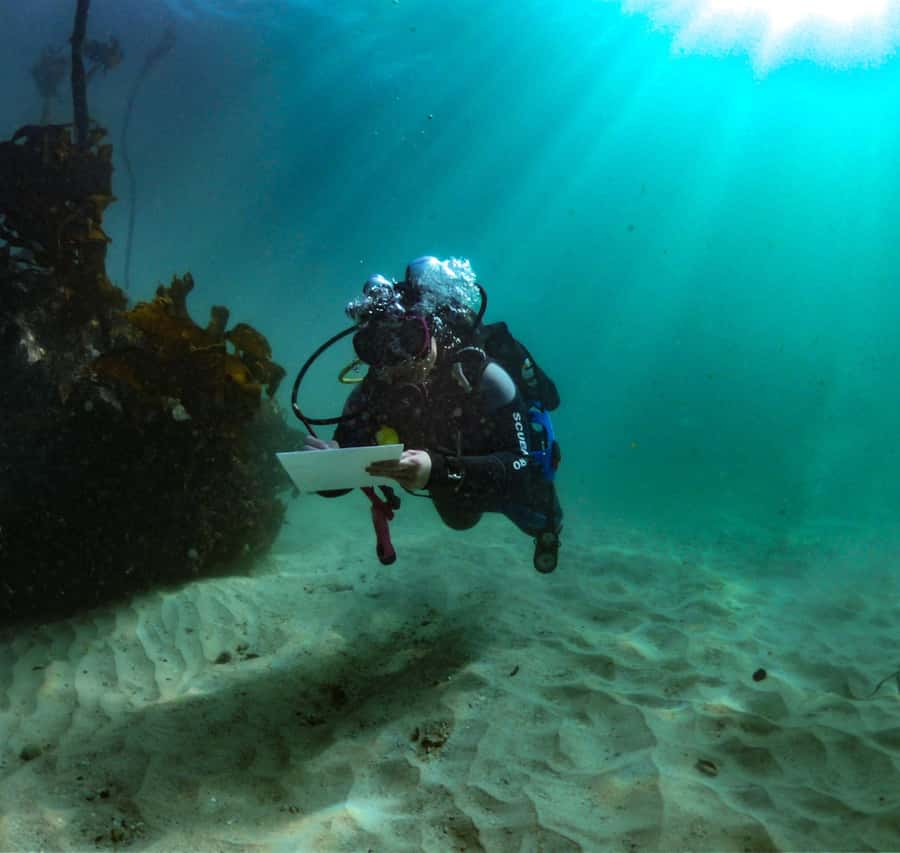
Cape RADD’s experience gives you a different way to meet False Bay. Instead of viewing the sea from a boat, you enter it from shore with marine biologists and look closely at the life sheltered by the kelp.
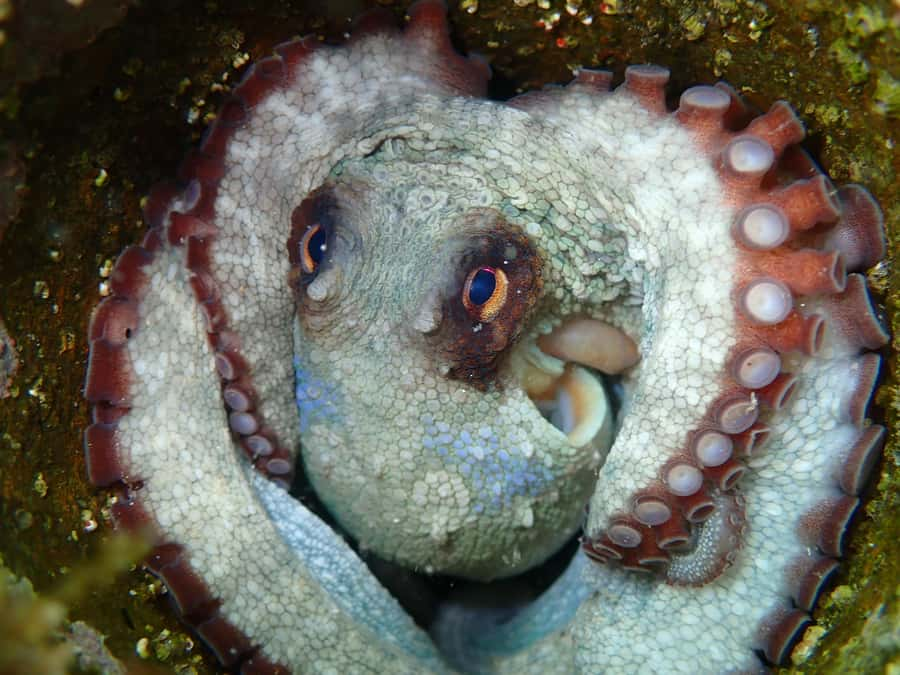
The main subjects may include puffadder sharks, pyjama sharks, stingrays, sea breams, octopus, and other fish. These animals can be elusive, so the appeal is the search itself. You are not buying a guarantee of a shark encounter. You are buying guided access to a special marine habitat and a chance to contribute useful observations.
That distinction matters. If your only goal is a dramatic shark photograph, this outing may feel uncertain. If you enjoy learning how field data is collected, it offers more substance than a simple underwater sightseeing trip.
The experience lasts about three to three and a half hours. You meet at Cape RADD’s Ocean HUB in Simon’s Town at roughly 9:30 a.m., work in the water, then return in time for lunch. The short schedule fits neatly into a day exploring the Cape Peninsula.
Finding Cape RADD at False Bay Yacht Club
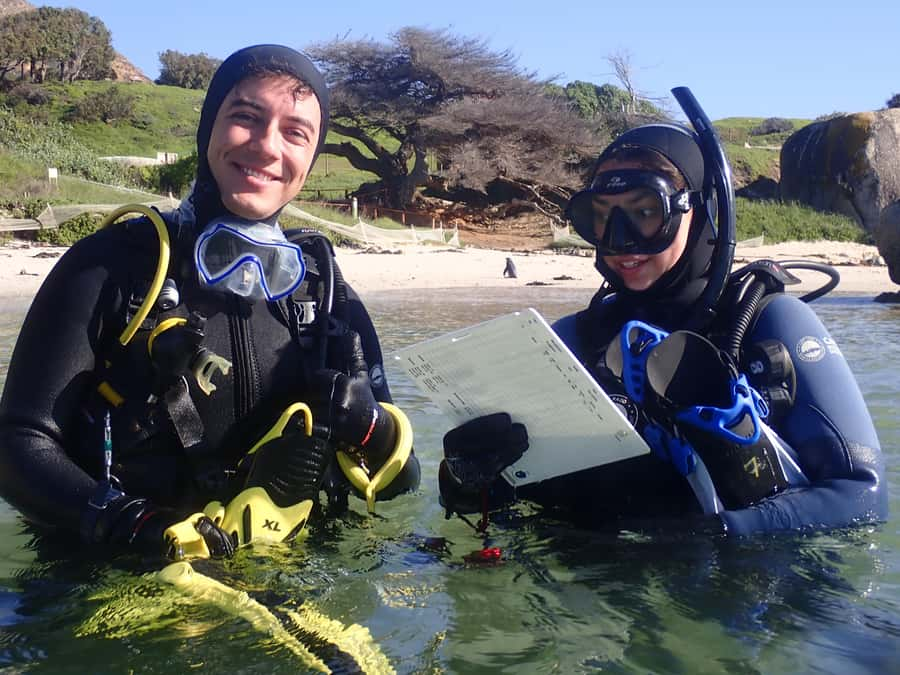
The meeting point is in the parking lot of the False Bay Yacht Club, under the Seven Seas Club building, at 117 St George’s Street in Simon’s Town. You arrange your own transport, so allow enough time to find the building and get settled before the briefing.
Cape Town’s wider peninsula attractions can make a full day here tempting, but this activity has a firm morning rhythm. You will want your swimwear on or ready, and you should bring a towel, hat, sunscreen, water, and a snack. A warm drink is provided at parts of the session, but lunch is not included.
The operator uses your email address or phone number for meeting instructions and any changes. Check those messages before setting out. That simple step matters for a shore-based activity, where weather and sea conditions can affect plans.
More dive trips off Cape Town:
- Cape Town: Scuba Diving Experience for Beginners
★ 5.0 · 14 reviews - Scuba Dive in Cape Town: 2 Dives for certified divers
★ 5.0 · 12 reviews - Cape Town: Discover Scuba Diving – 1 day experience
★ 5.0 · 5 reviews
The 20-minute briefing sets the tone
The session begins with tea or coffee and an introduction to the Great African Sea Forest, the broad kelp ecosystem that shapes False Bay’s underwater life. You then hear about the day’s shark science objective and how the information collected can help Cape RADD understand marine life in the bay.
A safety briefing lasts about 20 minutes. This is not filler. Shore entry and kelp require you to understand the site, your equipment, and the plan before entering the water.
A previous participant specifically appreciated the buddy check of the equipment and the careful approach taken by guide Mark. That is the sort of detail I want before an underwater activity. You should feel comfortable asking questions during this stage, especially if you are rusty with your equipment or want to understand how the data work will fit into the session.
The published information describes the main activity as a guided scuba outing, while one itinerary label calls the water portion snorkeling. Because you must be a certified open-water scuba diver and all diving equipment is included, confirm the exact format with Cape RADD before booking if that distinction matters to you.
Entering the Simon’s Town kelp forest
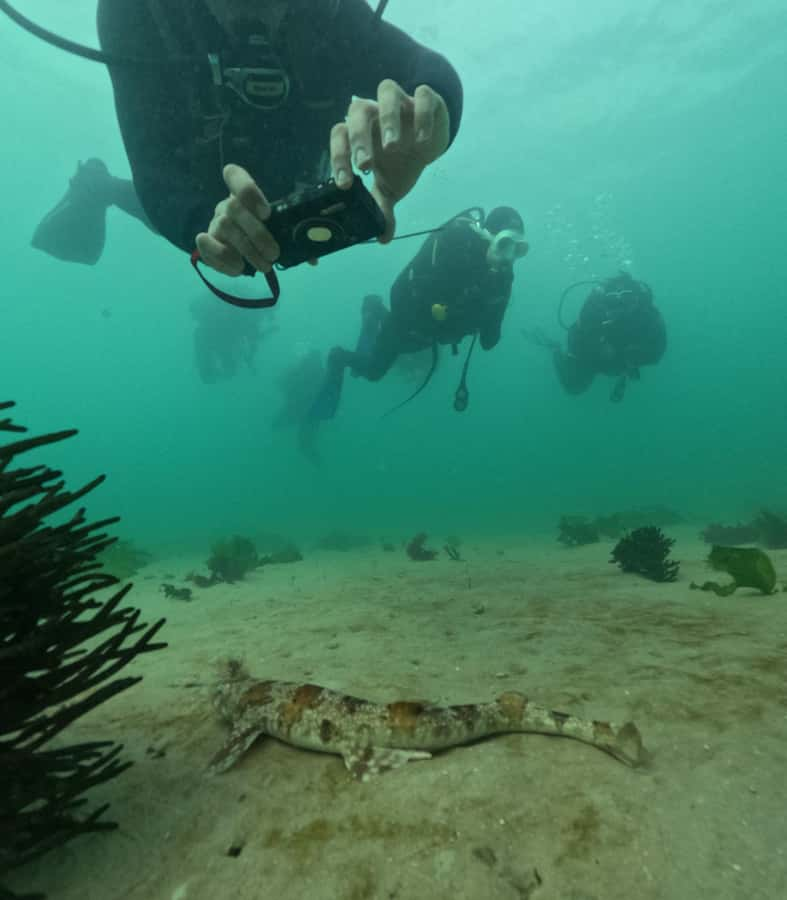
The water portion takes place at predetermined shore sites near Simon’s Town. The majority of your time is spent in the kelp forests, where sea bamboo moves with the water around you.
This is a habitat worth paying attention to. The kelp is not simply a green backdrop for photographs. It provides structure for fish and shelter for smaller marine life, and it gives the underwater setting a character quite different from an open-water reef.
The outing may produce sightings of puffadder sharks and pyjama sharks, along with rays, sea breams, octopus, and other fish. Penguins and sea otters may also be seen at the site. The word may is important here. Wildlife encounters depend on conditions and animal behavior, and nobody can promise a particular species.
You are asked not to touch marine life or plants. That rule protects the animals, the kelp, and you. It also keeps the session focused on observation rather than handling.
The itinerary describes a one-hour snorkeling segment within the Cape Peninsula portion of the schedule, but the fuller description centers on scuba. Ask about this before arrival so you know exactly what equipment and water time to expect.
How your observations become conservation data
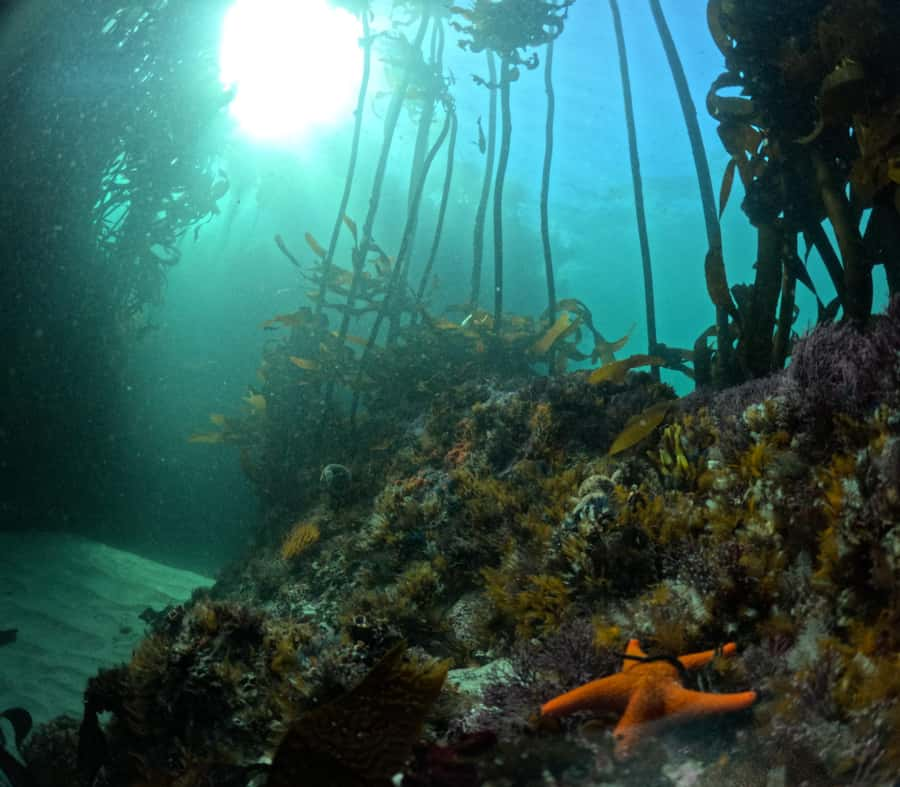
The strongest feature of this outing is the chance to do more than watch. You may photograph the distinctive patterns of sharks and submit those images to Fin Spotter. The markings can help researchers estimate population size and track movement patterns.
You may instead record fish abundance on an underwater data slate. This means noting what species you see and how many appear in the selected area. The task is simple enough to fit into a guided session, but it gives you a better sense of how marine surveys work.
Do not expect to spend every minute collecting numbers. You will still have time to look around and enjoy the kelp forest. The data work gives structure to your attention, helping you notice smaller animals and patterns you might otherwise miss.
For me, this is where the $178 price needs to be judged. You are paying for a guided marine biology experience, scuba equipment, an ecosystem briefing, and a small-group outing. Part of the value comes from the educational and conservation side, not just the number of animals you see.
The price is harder to justify if you want a quick recreational swim with no interest in recording information. It makes more sense if you already enjoy scuba and want a purposeful session in False Bay.
A few more Cape Town days worth comparing
- Cape Town: Hop-On Hop-Off Bus Tour with Optional Cruise
★ 4.8 · 3,929 reviews - Zipline Cape Town – From Foot of Table Mountain Reserve
★ 5.0 · 3,179 reviews - Cape Town: Table Mountain Cable Car, Hop-On Hop-Off Bus Tour
★ 4.6 · 3,157 reviews - From Cape Town: Big Five Game Reserve with Lunch
★ 4.6 · 2,409 reviews
What the group size means underwater
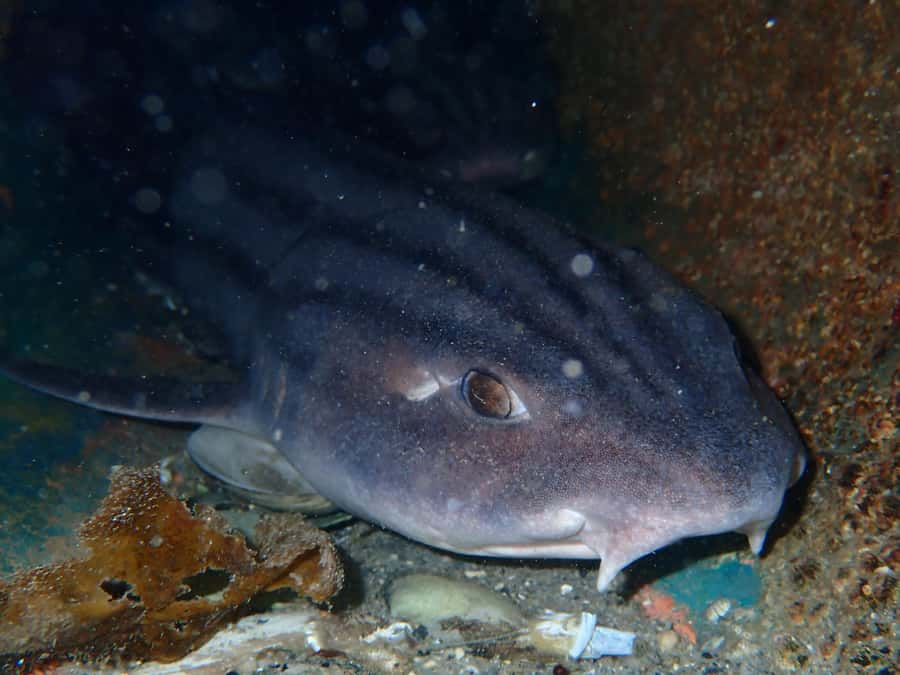
The group limit is 10 people, which keeps the outing from becoming a crowded procession. Some sessions may be smaller. One recent participant had the instructor entirely to themselves and valued the extra attention, though that level of individual service cannot be assumed.
A small group also helps during the buddy check, briefing, and data collection. You can ask questions without trying to catch a guide’s attention across a large crowd.
The guide’s role is especially important in kelp, where visibility, movement, and wildlife sightings can change quickly. Guide Mark received specific praise for careful equipment checks and patient answers. At the same time, the overall experience depends on the guide assigned to your session, the sea conditions, and how much wildlife is active that day.
You should be comfortable following instructions and staying with the group. This is a guided scientific outing, not a free swim.
The return to the Ocean HUB
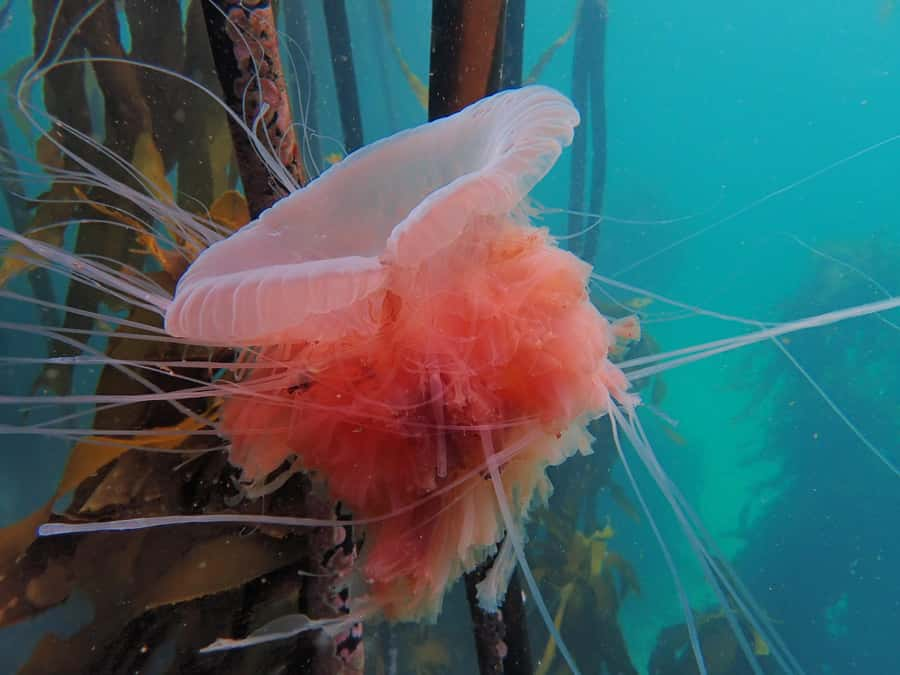
After the underwater session, you can rinse off in a heated outdoor shower at Cape RADD headquarters. You then have a warm beverage, share observations, and log the information collected during the morning.
This final stage gives the activity a proper finish. You see where your notes and photographs go rather than simply leaving the beach with a memory card full of images.
Be realistic about digital follow-up. One guest was told that photos would be emailed but did not receive them after several messages. That does not erase the value of the marine session, but it is a useful warning: treat promised photo delivery as a bonus, not the main reason to book. If you take important images, ask how and when they will be submitted before leaving.
A certification card is not part of the listed inclusions. One participant was disappointed not to receive a certificate, but this is a guided activity for already certified divers, not a certification course. Bring your existing qualification and do not book it expecting a new scuba credential.
Who will get the most from this experience
This outing suits a certified open-water diver who enjoys wildlife, conservation, and guided learning. It is a good fit if you like the idea of collecting data, photographing shark patterns, and paying attention to a whole ecosystem rather than only waiting for one large animal.
It also works well for a visitor with a busy Cape Town schedule. The morning timing leaves the afternoon available, and the small group makes the session feel more personal than a large commercial water excursion.
You should reconsider it if you are a non-swimmer, have no scuba certification, or want a guaranteed shark encounter. It is also not suitable for children under 10, wheelchair users, or people with back or heart problems.
The operator lists English as the instruction language. You will need to understand safety directions and follow the research instructions in English.
Practical value at $178 per person
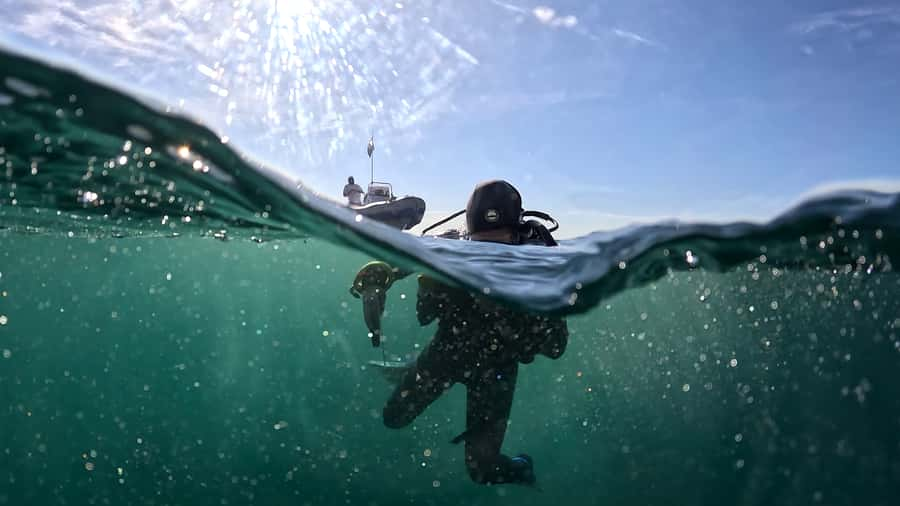
At $178, this is not a budget swim. The included equipment helps, since you do not need to arrange a separate rental package. The guided session with marine biologists and the conservation data work also give it more purpose than a standard recreational outing.
Still, the value depends on your priorities. You might see several species, or you might spend much of your session examining the kelp and collecting limited observations. The experience is worthwhile when the science angle matters to you and less compelling if you want a predictable wildlife checklist.
There is also no transport to Simon’s Town and no lunch. You will need to reach the meeting point yourself and carry your own snacks and water. Since the activity ends around 12:30 or 1 p.m., arranging lunch afterward should be easy.
Free cancellation is available up to 24 hours before the activity, and you can reserve now and pay later. Those options help if your Cape Town schedule is still shifting, but they do not change the need to check the meeting messages and sea conditions before you leave.
My call: book it for the science, not a guarantee
I would book this if I were already certified, comfortable in the water, and curious about False Bay’s kelp ecosystem. The combination of marine biologists, a small group, shark identification, and fish-counting gives the morning a clear purpose.
I would not book it solely for a guaranteed shark photograph or promised follow-up images. Wildlife is unpredictable, and the photo communication has not been perfect for every participant.
Before paying, confirm the exact water format, bring your certification details, and ask how images will be handled. If you want a thoughtful, hands-on marine conservation outing, this is a strong choice. If you want a simple swim with no data work, choose a more recreational option.
FAQ
Where does the activity meet?
Meet at 117 St George’s Street in Simon’s Town, in the parking lot of the False Bay Yacht Club under the Seven Seas Club building.
How long does the experience last?
The activity lasts about three to three and a half hours. The expected finish is around 12:30 to 1 p.m.
Do I need scuba certification?
Yes. You must be a qualified open-water scuba diver. Scuba certification is not included.
Is scuba equipment included?
Yes. All diving gear is included in the activity price.
What animals might I see?
Possible sightings include puffadder sharks, pyjama sharks, stingrays, sea breams, octopus, penguins, and sea otters. Sightings are not guaranteed.
Can I help with marine research?
Yes. You may photograph shark patterns for submission to Fin Spotter or record fish abundance on underwater data slates.
What should I bring?
Bring a hat, swimwear, towel, snacks, sunscreen, and water.
Is the activity suitable for everyone?
No. It is not suitable for children under 10, non-swimmers, people without scuba certification, wheelchair users, or people with back or heart problems.
Just added around Cape Town
- 100 % Catch Rate Cape Town Wild Tours★ 5.0 · 5 reviews
- Private Cape Town City Evening Tour★ 5.0 · 3 reviews
- Private Cape Town City Tour table Mountain with wine tasting★ 5.0 · 10 reviews
- Cape Town Boat Trip★ 4.0 · 5 reviews
- Cape Town Aquila Private Game Reserve Big Five Safari Adventure★ 5.0 · 4 reviews
- Cape Town Private Birding Tour★ 5.0 · 14 reviews
- Private 2-Day Cape Town Highlights: Robben Island,Table Mountain Tickets & Wine★ 5.0 · 8 reviews
- Private Transfer: CPT Airport to Cape Town in Luxury Van★ 4.0 · 5 reviews
Scuba Diving, compared.
CapeTown: Shark Cage Diving Experience with Scuba
Read our review →
Scuba Dive in Cape Town: 2 Dives for certified divers
Read our review →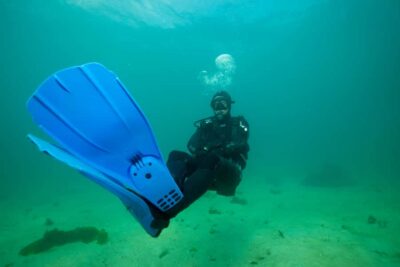
Browse the lists this tour appears in