
Reviewed · CITY TOURS
From Durban: Half Day Durban City Tour
Durban’s story comes into focus when you move from its beachfront Golden Mile to the African and Indian markets at Warwick Triangle. In about three and a half hours, you see the city’s coastal face, colonial-era center, working harbor, and mixed communities shaped by Zulu, Indian, and European influences.
I like the small group of no more than eight, which gives the guide room to answer questions. I also like the pairing of the Botanic Gardens and Warwick markets: one stop is calm and green, the other crowded and commercial. The main limitation is time. Most places are short stops or views from the minibus, not long visits.
Key points at a glance
- The Golden Mile sets the scene: Ride beside Durban’s famous beachfront promenade and view the upgraded Point Waterfront.
- Warwick Triangle feels local: Visit nine markets near a huge public transport interchange, with African and Indian stalls and many street vendors.
- The harbor adds working-city context: Pass sugar terminals, warehouses, and the small craft harbor.
- Moses Mabhida Stadium is a photo stop: You get time to pause rather than a stadium tour.
- Guides make a difference: Frank Kahts earned praise for clear English and strong local information, while David was noted for his friendly personality.
- Morning timing is practical: Pickup begins around 8:30 AM, the tour starts at 9:00 AM, and you return around 12:30 PM.
Why this short Durban tour works
I see this as a get your bearings fast tour rather than a deep examination of every Durban sight. You cover several parts of the city without spending a full day in a vehicle, and the route introduces the forces that shaped Durban: indigenous Zulu culture, colonial settlement, and the arrival of Indians as indentured laborers in the 19th century.
That mix gives the tour more substance than a simple photo circuit. You are not only looking at a stadium and a beach. You are also seeing the public markets, port facilities, university area, and gardens that help explain how the city works.
The tour costs $61 per person. That is not the cheapest way to ride around Durban, but the price includes hotel pickup and drop-off from Durban beachfront hotels, an air-conditioned minibus, an English-speaking guide, the Botanic Gardens visit, the markets, and the stadium photo stop. For a first morning in the city, I think the value is reasonable, especially if you want transport and commentary arranged in one package.
You will need to decide how much free time matters to you. The tour gives you about 30 minutes at the Botanic Gardens and 30 minutes for shopping at Warwick Triangle. The other stops are shorter or viewed from the road. If you prefer to linger at one museum, market, or garden, this schedule will feel brisk.
More City Tours in Durban
- Durban: City Sightseeing and Walking Tour
★ 4.6 · 98 reviews - Durban: Top 10 City Sights and Walking Tour
★ 4.1 · 69 reviews - Durban City Sightseeing and Walking Tour
★ 4.5 · 59 reviews
Starting from Durban’s beachfront hotels
Pickup is offered at seven Durban beachfront hotels, including the Hilton Durban, Balmoral, Garden Court Marine Parade, Southern Sun Elangeni and Maharani, Blue Waters Hotel, The Edward, and Garden Court South Beach.
Pickup begins around 8:30 AM, with the tour starting at 9:00 AM. You return to the beachfront hotel area around 12:30 PM. That timing is useful if you have an afternoon free, need to meet a later plan, or want a short city introduction before exploring on your own.
The air-conditioned minibus is a practical choice for Durban’s warm conditions. The group is limited to eight people, so you avoid the feel of a large coach. A small group also matters at the market stop, where a guide needs to keep everyone together and explain what you are seeing.
Wear comfortable shoes and light, comfortable clothing. Sunglasses, a sun hat, and sunscreen are sensible because several stops involve outdoor walking or standing. Lunch is not included, so eat before pickup or plan your next meal after the tour.
The Golden Mile and Moses Mabhida Stadium
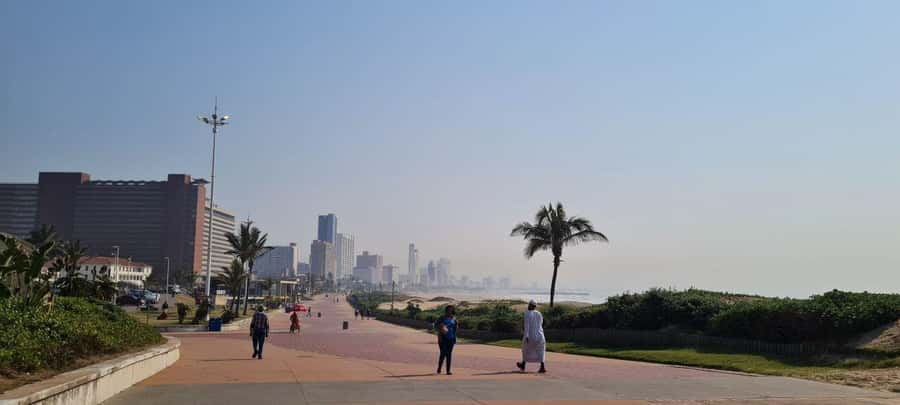
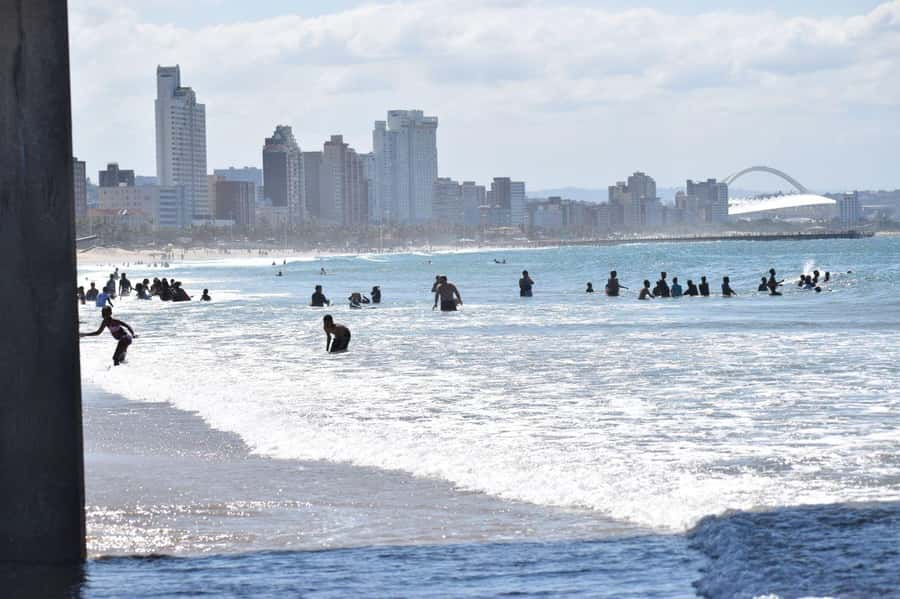
The route begins along the Golden Mile, Durban’s long beachfront promenade. You see the beaches from the vehicle and pass the renewed Point Waterfront area. This is a useful first look at Durban’s seaside identity, but do not expect a long beach walk or time for swimming.
The Golden Mile also helps you understand the city’s layout. Durban’s center sits close to the ocean, and the promenade links the resort side of town with areas connected to the port and central business district. Your guide can give the coastline context while you watch the city pass outside the windows.
A photo stop at Moses Mabhida Stadium follows. The schedule allows about 15 minutes here, enough for pictures and a quick look at one of Durban’s best-known modern landmarks. It is not a stadium tour, and the supplied details do not include access to the arch, viewing platform, or sporting facilities.
For many people, this will be a highlight because the stop breaks up the drive and gives you a clear landmark to photograph. If stadium architecture is a major interest, you may find the visit too brief. On a half-day city tour, though, the short stop makes sense.
City Hall, the harbor, and Durban’s working core
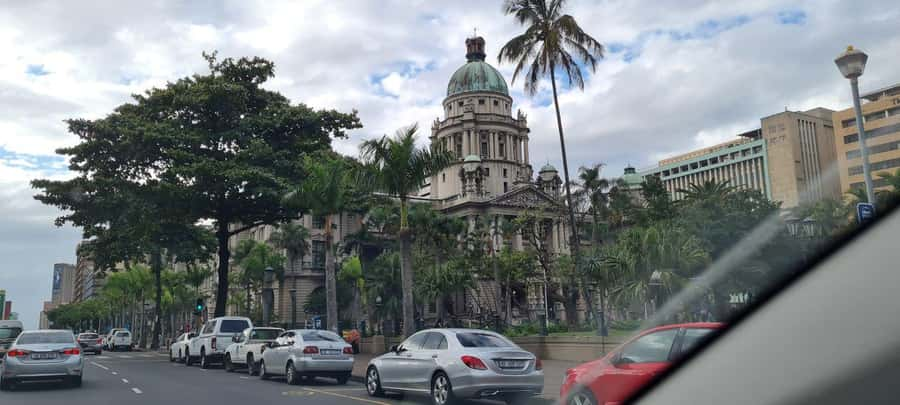
The minibus continues through central Durban, passing the city’s imposing City Hall. The building is described as majestic, and the guide adds a humorous story about its history. You get a photo opportunity rather than an interior visit, so listen closely while the guide supplies the background.
The route then moves toward the small craft harbor and the port area. The harbor is described as the eighth largest in the world, and you pass sugar terminals and busy warehouse areas. This part of the tour adds a useful counterpoint to the beaches and gardens: Durban is also a major port city with commercial traffic and industrial activity.
I appreciate this kind of stop because it keeps the tour from presenting Durban as only a seaside holiday town. You see the city’s working side, including the structures that support trade and transport. The port views are mainly from the minibus, so your experience depends on traffic, the route, and how clearly the guide points things out.
The drive near the University of Natal’s Durban campus offers views down toward the harbor. Again, this is a scenic pass rather than a campus visit. It adds another angle on the city, with higher ground giving you a broader view across the port area.
A few more Durban days worth comparing
- From Durban: Half-Day Safari Tour
★ 4.1 · 141 reviews - Half Day Safari Tour from Durban
★ 4.5 · 121 reviews - Half Day Durban City Tour and Phezulu Safari Park
★ 4.3 · 4 reviews - Durban: Half Day Phezulu Safari Park and Durban City Tour
★ 4.6 · 3 reviews
Thirty minutes among Durban’s gardens
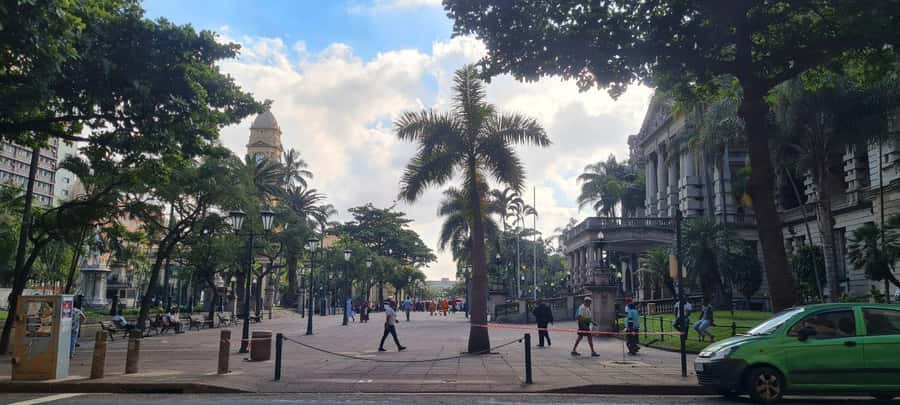
The Durban Botanic Gardens is the tour’s calmest stop. You have about 30 minutes to walk through part of the gardens and see a greener side of the city. The supplied details do not specify a particular collection or guided garden route, so expect a short visit rather than a full botanical study.
That limited time is still useful. After roads, buildings, warehouses, and market traffic, the gardens provide a quieter pause. You can stretch your legs, take photographs, and get a sense of Durban’s plant life without giving up the rest of the city route.
The garden stop is best for someone who wants variety. You see a little nature, but the tour does not leave enough time for a long walk or slow exploration. If gardens are your main reason for booking, plan a separate visit with more time.
Comfortable shoes help here, as does sun protection. The tour’s morning schedule should also be easier for walking than a midday visit, though the data does not give a specific temperature or weather policy.
Warwick Triangle and its African and Indian markets
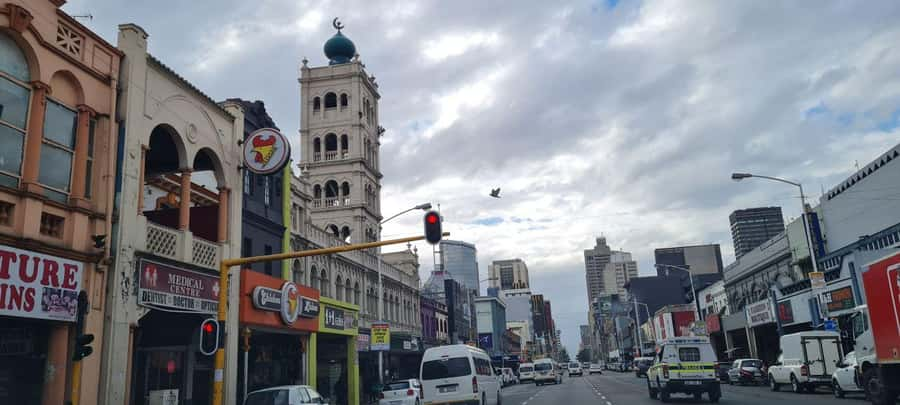
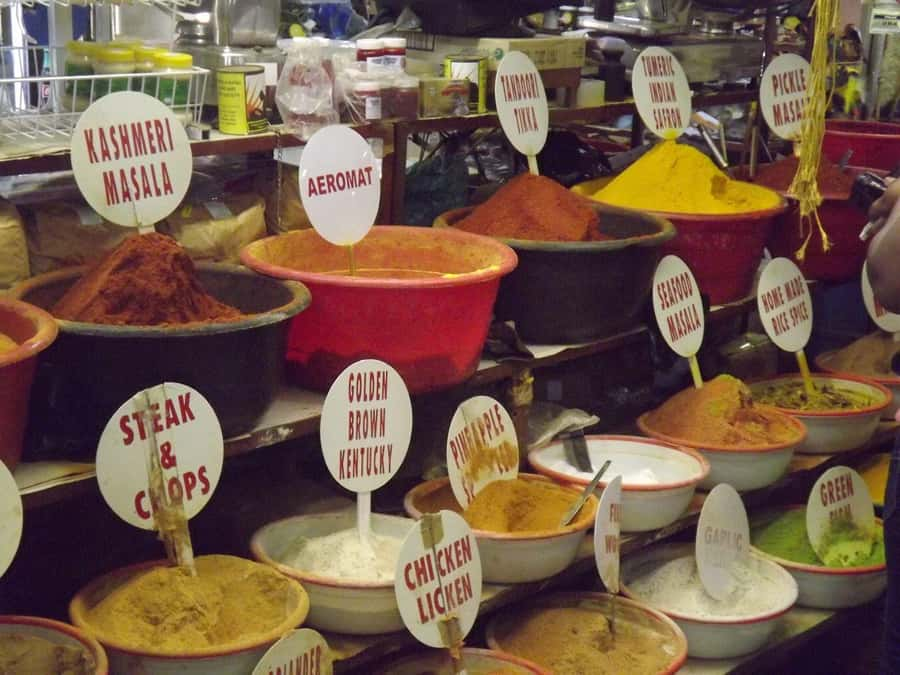
Warwick Triangle is where the tour feels most connected to everyday Durban. The area is home to nine distinct markets arranged around the city’s largest public transport interchange. About 6,000 street vendors serve an average of 460,000 daily commuters, giving you a direct look at one of the city’s busiest commercial zones.
You may see African and Indian market traditions side by side. This is not a polished shopping mall or a staged cultural display. It is a working market area, so you should expect movement, noise, people commuting, and vendors selling goods as part of their daily business.
The scheduled shopping visit lasts about 30 minutes. That is enough to walk through a section, look at merchandise, and perhaps make a small purchase, but it is not enough to study all nine markets. Stay close to the guide and keep your belongings secure, especially in a crowded public place.
I would treat the market as a chance to observe and buy modest items, not as the main shopping trip of your vacation. The value here is the setting and the social context. You see how transport, food, trade, and street commerce fit together in Durban.
Some people may find this stop more memorable than the formal landmarks. It gives you a direct sense of the city’s mixed cultural makeup, while the guide can help explain what you are seeing. The quality of the visit will depend heavily on the guide’s communication and on how the group moves through the area.
The guides: a key part of the experience
The tour is conducted in English by a local guide, and the guide matters a great deal on a short city route. You spend a fair amount of time in the minibus, so clear commentary can turn a drive into useful context rather than empty travel time.
Frank Kahts has been praised for easy-to-understand English, strong information, and his ability to respond to the needs of the group. That is particularly helpful at Warwick Triangle and around the harbor, where a few well-timed explanations can make the surroundings easier to understand.
David has also been noted for his friendly personality. Another guest described the guide as helpful, while a separate comment suggested that the guide could have known more about current entertainment options in the neighborhood. I would take that as a reminder to ask specific questions if you want advice about what to do after the tour.
The overall rating is 4.2 from 18 ratings, which points to generally positive experiences but not perfect consistency. One serious complaint reported that a scheduled tour did not take place and that communication and a refund were not handled well. That is not enough to define every departure, but it is worth confirming your pickup details before the morning of the tour and keeping your booking information handy.
What $61 buys you
At $61, the tour is priced for convenience and a guided overview. You pay for round-trip transport, hotel collection and return, a small group, and a guide who connects the separate sights. If you were already staying near the beachfront, some of the driving cost might feel less important, but the route reaches areas that are not naturally covered by a simple beach walk.
The small group is a real part of the value. With up to eight participants, you have a better chance of hearing the guide and asking a question than you would on a full coach. It also keeps the market stop more manageable.
The price does not include lunch, and the tour does not provide long visits at individual attractions. You are paying for range, structure, and local explanation rather than a full admission-based sightseeing day. I think that is fair for a first look at Durban, particularly if you have only one morning available.
Free cancellation is available up to 24 hours before departure, and you can reserve now and pay later. Those terms help if your schedule is still changing, but you should still verify the pickup arrangement because hotel transfers are central to the experience.
Who should book this tour
I would recommend it to a first-time Durban visitor who wants a compact overview without arranging several taxis or researching the route. It also suits cruise passengers staying near the beachfront, provided their timing matches the 9:00 AM start and 12:30 PM return.
The tour works well for people who enjoy seeing several sides of a city: coast, civic buildings, port, gardens, and markets. It is also a good choice if you prefer a guide to explain cultural and historical context rather than simply taking photographs.
You may want another plan if you want long walks, a full botanical visit, serious shopping time, or detailed access to the stadium and City Hall. The tour is also not designed around lunch, nightlife, or current entertainment advice. Ask the guide about those subjects, but do not book this as an evening-planning service.
Bring a curious attitude to Warwick Triangle. The market stop is valuable because it is part of working Durban, not because it has been arranged as a quiet attraction. Listen to the guide, respect the vendors, and use the 30 minutes well.
Should you book the Durban city tour?
Book it if you want a well-organized morning introduction to Durban with hotel transport, a small group, and a route that goes beyond the beachfront. The Golden Mile, Moses Mabhida Stadium, City Hall, harbor, Botanic Gardens, and Warwick Triangle give you a useful first map of the city.
Skip it if you prefer to explore one place slowly or if your main goal is a full day at the gardens or markets. Before booking, confirm your beachfront hotel pickup and remember that the guide is central to the experience. With a strong guide such as Frank Kahts, the short drives can become some of the most useful parts of the morning.
FAQ
How long does the Durban city tour last?
The tour lasts 210 minutes, or three and a half hours. It begins at 9:00 AM, with pickup starting around 8:30 AM, and returns to your hotel area around 12:30 PM.
Where does hotel pickup take place?
Complimentary pickup and drop-off are available from Durban beachfront hotels. Listed pickup hotels include Hilton Durban, The Balmoral, Garden Court Marine Parade, Southern Sun Elangeni and Maharani, Blue Waters Hotel, The Edward, and Garden Court South Beach.
Is transportation included?
Yes. Round-trip transportation in an air-conditioned minibus is included, along with collection and drop-off from Durban beachfront hotels.
What language is the tour conducted in?
The tour is conducted in English by a live local guide.
How large is the group?
The tour is limited to eight participants, making it a small-group experience.
Is lunch included?
No. Lunch is not included in the tour price.
What should I bring?
Bring comfortable shoes, sunglasses, a sun hat, sunscreen, and comfortable clothing. These items are useful for the outdoor stops and the walk through Warwick Triangle’s markets.
Just added around Durban
- Durban: Phezulu Cultural Village & Reptile Park Tour★ 4.8 · 37 reviews
- From Durban: Oribi Gorge & Lake Eland Adventure Tour★ 5.0 · 5 reviews
- From Durban: Safari & PheZulu Village Day Tour★ 4.4 · 24 reviews
- Half Day Durban City Tour and Phezulu Safari Park★ 4.3 · 4 reviews
- From Durban: Wildlife Lovers Big 5 Safari at 2 Game Reserves★ 5.0 · 5 reviews
- DURBAN:Highlights cityTour.Historically Cultural experience★ 4.9 · 20 reviews
- Durban: Half Day Phezulu Safari Park and Durban City Tour★ 4.6 · 3 reviews
- Durban: All-in-one Luxury Spa Package at Gwahumbe Game & Spa★ 4.6 · 3 reviews
City Tours, compared.
Cape Town Hop-On Hop-Off City Tour with Optional Cruise
Read our review →
Johannesburg Hop-On Hop-Off City Tour with Soweto Option
Read our review →
Jo’berg in 1 Day: Soweto, Apartheid Museum & City Tour
Read our review →
Cape Town City Pass: Save Over 50% on 80+ Top Attractions
Read our review →
Hop-On Hop-Off Bus, City Tour and Apartheid Museum
Read our review →
Browse the lists this tour appears in