
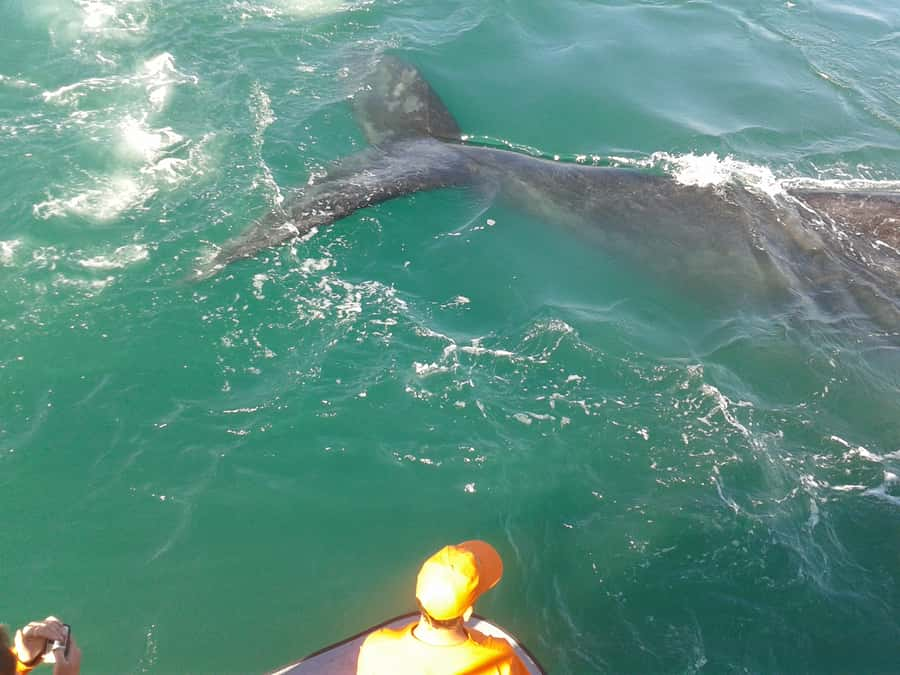
Reviewed · WHALE WATCHING
Hermanus: Boat Based Whale Watching Experience
Hermanus earns its whale-watching reputation from the water, where southern right whales often gather close to shore in Walker Bay. On this 90-minute trip, you may see mothers with calves, dolphins racing past the boat, seals, and seabirds, all with the Western Cape as your backdrop.
I like two things here: the crew takes animal distance seriously, and the boat gives you a real chance to watch rather than simply rush past. Guides such as Peter and Philip have been praised for clear explanations and sharp eyes. The main drawback is the sea itself. Rough water can make the ride uncomfortable, especially if you are prone to seasickness.
Key things to know before you go
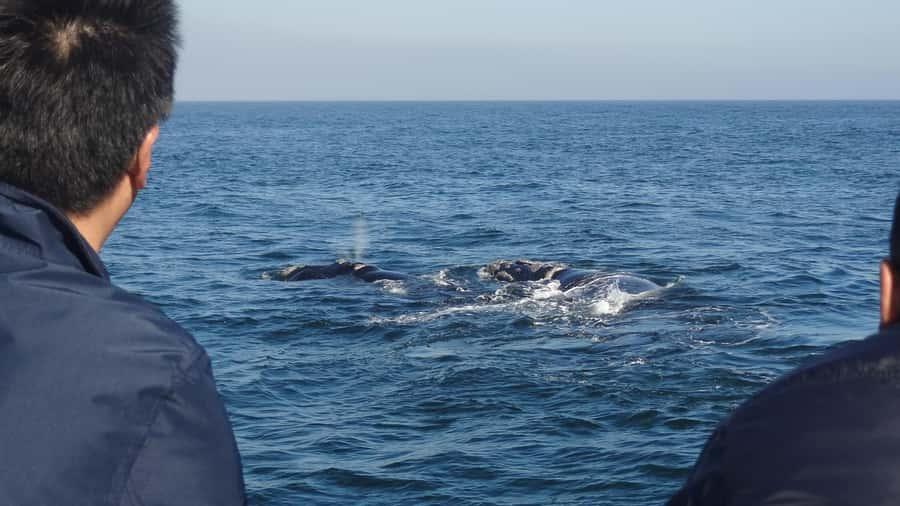
- Whale sightings depend on nature: You may see several whales, including mothers and calves, but sightings are never guaranteed.
- The boat stops near whales: Once animals are found, the engines are disengaged to avoid harming them with the propellers.
- The upper deck offers the best views: Access depends on the weather and may be delayed until whales are located.
- The season matters: August through October is generally the stronger period for whale sightings, while late November and December can be quieter.
- The trip is often lively with other wildlife: Dolphins, seals, seabirds, and, on rare occasions, a sunfish may appear.
- Plan for cold and spray: Bring warm layers, a windbreaker, a hat, sunscreen, and flat shoes.
Setting out from Hermanus New Harbour
You begin at the Hermanus New Harbour, where you should arrive about 30 minutes before departure. After entering the harbour, look for the orange building on the right. The physical ticket is provided when you arrive, so do not expect to use a printed ticket before reaching the meeting point.
There is a small harbour entrance fee of R5, paid separately on entry. Coffee is available when you arrive, and water is provided on the boat. These are modest touches, but they help when you are standing around in cool coastal weather before boarding.
The harbour itself is a practical starting point rather than a destination that needs much time. The important thing is to arrive early enough to find the orange building, collect your ticket, and listen to the crew without rushing. Late arrival could be stressful because the boat leaves as scheduled.
Before departure, the crew gives a safety briefing. You learn how to move around the vessel and what to expect once you are offshore. The briefing also prepares you for the wildlife encounter, including the types of whales that may appear and the importance of keeping a respectful distance.
More Cruises & Boat Tours in Hermanus
- Hermanus: Whale and Dolphin Watching Boat Trip
★ 4.6 · 807 reviews - Gansbaai: Marine Big 5 Boat tour
★ 4.7 · 593 reviews - From Cape Town: Hermanus Whale Watching Boat Trip
★ 4.4 · 378 reviews
The boat ride across Walker Bay
The trip begins with a run out from the harbour into the water around Hermanus. This first part is not just dead time before the whales appear. You get a different view of Hermanus and the Western Cape, with the shoreline opening out behind you as the boat moves into the bay.
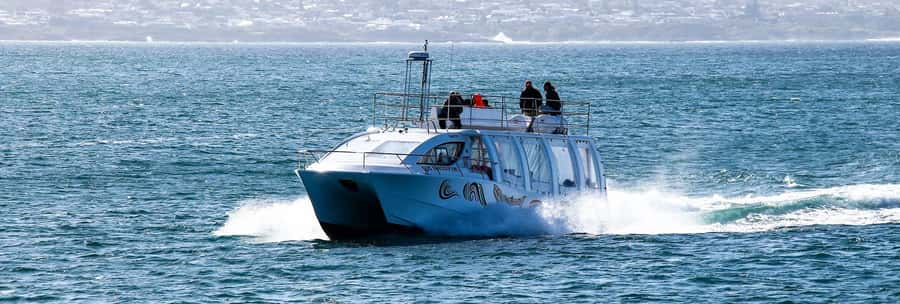
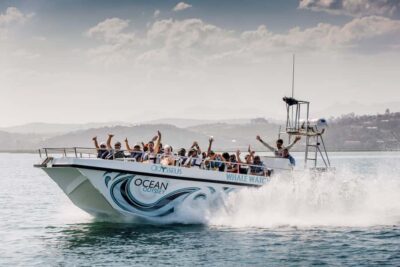
The vessel is described as comfortable and fast, with an upper deck that provides broad, unobstructed views when conditions allow. Several people particularly liked having room to move around rather than being fixed in tightly packed rows. Some boats are arranged with tables, which can work well for families, though the available layout can vary by departure.
In calm weather, you may be allowed onto the top deck before leaving. If the wind or sea is rough, the crew may keep you below until whales have been found. This rule makes sense from a safety point of view, but it means you should not assume that the upper deck is available for the whole trip.
You will want warm clothing even on a sunny day. The wind on open water feels much colder than it does beside the harbour, and spray can add to the chill. Wear flat shoes with a secure sole, and bring a windbreaker or jacket rather than relying on a light sweater.
Finding whales in their natural environment
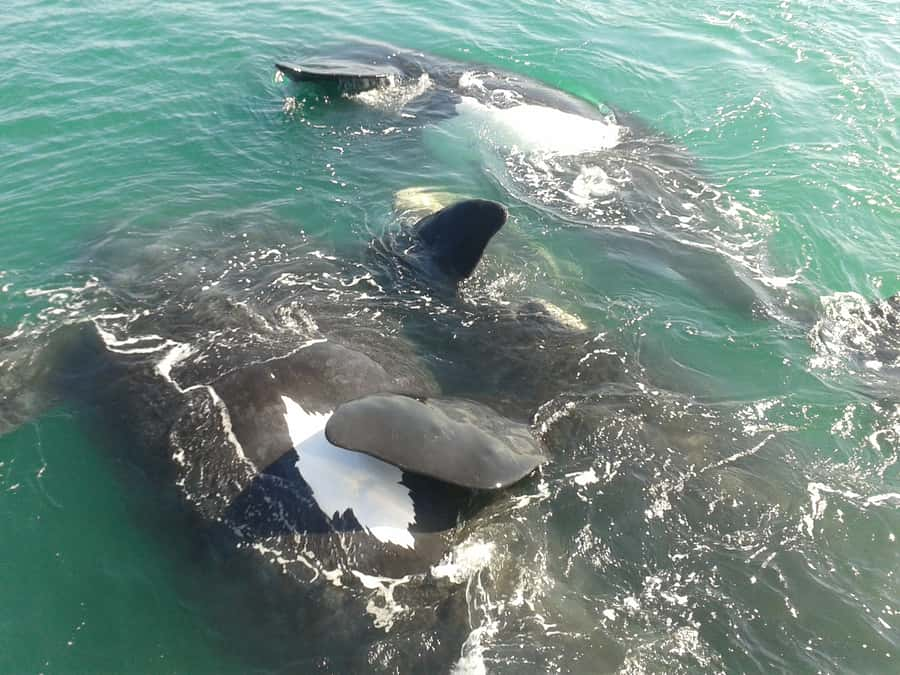
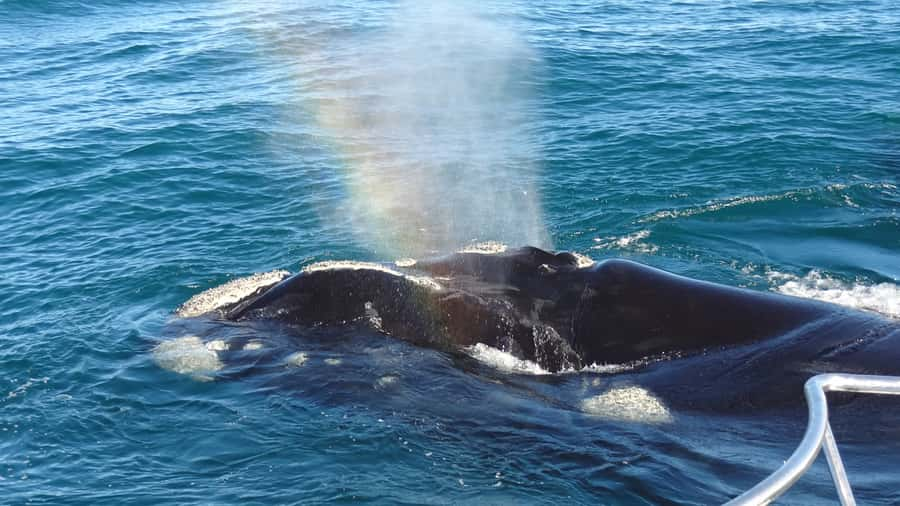
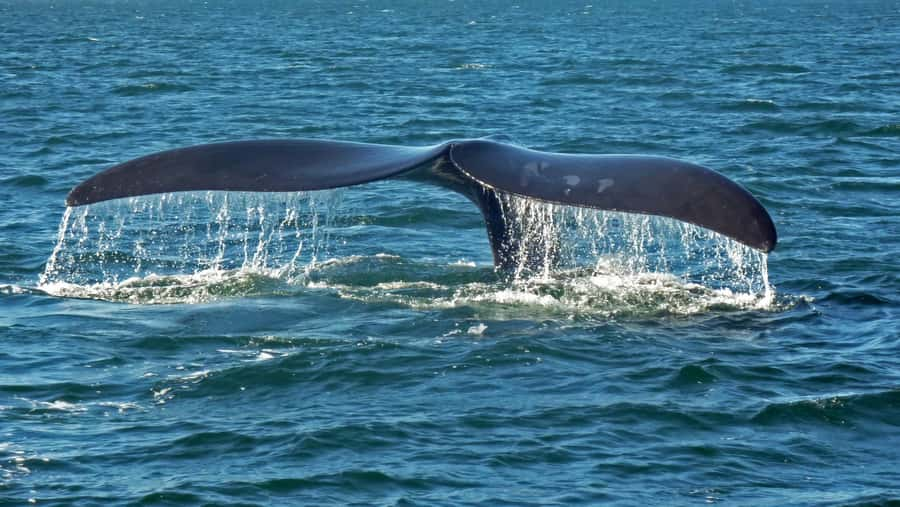
The heart of the trip begins when the crew starts searching the bay. You may see a spout first, then a dark back, a tail, or a sudden breach. A good guide makes a big difference here. The crew can point out distant movement that an untrained eye might miss, then explain what the whale is doing.
Southern right whales are especially important in this part of the coast, and mothers with calves are a common highlight during the stronger months. You might see a calf staying close to its mother, whales rolling near the surface, or a pair playing in the water. Some trips have seen several mother-and-calf pairs, while others have found whales with more searching.
The range of sightings can vary sharply by date. Late August, September, and October have produced particularly strong encounters, including reports of all three possible whale types, large groups of dolphins, and whales close to the boat. By late November or December, many whales may already have moved on, though sightings can still happen. A December trip, for example, may bring plenty of dolphins even when whales are scarce.
That seasonal difference is important when you judge the $93 price. You are paying for a serious wildlife outing, not a guaranteed show. If you visit during the stronger whale period and see several animals, the cost can feel fair for a two-hour ocean experience with a guide. If whales have left the bay, the trip may depend more heavily on dolphins, seals, scenery, and the boat ride itself.
Respectful viewing from a stopped boat
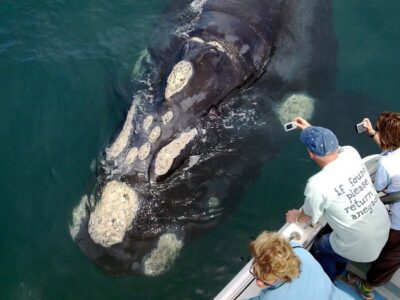
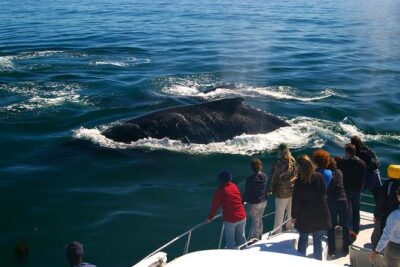
When whales are located, the vessel is allowed to move closer, then stops with the engines disengaged. This reduces the risk of injuring the animals with the propellers and gives you a quieter chance to watch.
That approach also changes the character of the experience. You are not chasing the whales around the bay. You sit or stand as the animals decide how close they want to come. Curious whales may approach the boat for a look at the people, but they may also remain farther away. The crew’s job is to offer a good view while leaving the animal in control.
This is one of the strongest parts of the outing. You can watch a whale surface repeatedly, wait for a tail to appear, and notice how a calf stays near its mother. The moment is less predictable than a staged attraction, which is exactly why a close encounter can feel so powerful.
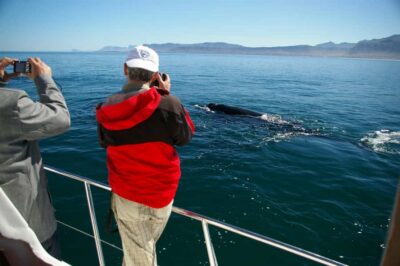
Photography takes patience. On rougher afternoons, the moving boat and changing light can make sharp photographs difficult. You will have a better chance of enjoying the sight if you first watch with your own eyes instead of keeping your phone raised for the entire encounter.
More Whale Watching in Hermanus
- Whale Watching from Gansbaai
★ 5.0 · 327 reviews - Boat Based Whale Watching from Hermanus
★ 4.5 · 205 reviews - From Cape Town: Full Day Guided Hermanus and Whale Tour
★ 5.0 · 155 reviews - Gansbaai: Whale Watching Trip by Boat
★ 4.7 · 127 reviews
Dolphins, seals, seabirds, and the occasional surprise
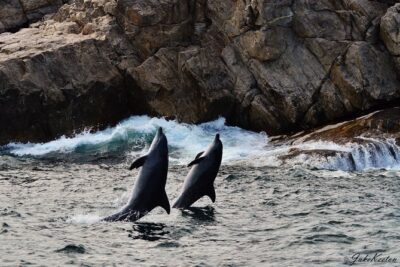
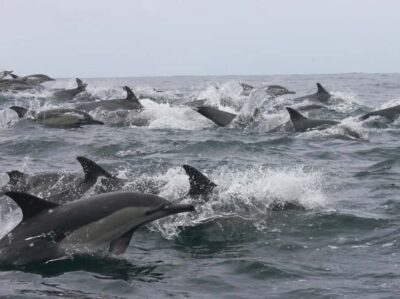
Whales are the main reason to book, but the bay can offer plenty more. Dolphins have appeared in large pods, sometimes numbering in the hundreds, and they may travel alongside the boat or cut across its path. Their speed and energy add movement to a trip that can otherwise involve long periods of waiting.
Seals are another regular possibility. You may spot them in the water or near the coast as the boat moves through the bay. Seabirds add to the picture, even if they are less dramatic than a breaching whale.
A few trips have also encountered a sunfish close to the vessel. That is not something you should count on, but it shows why the crew keeps scanning the water even after the main whale sighting. The sea can produce an unexpected moment when you least expect it.
One trip might bring whales, dolphins, and seals in the same outing. Another might deliver whales but no dolphins, or dolphins without whales. You should book with an open mind. The crew can search, explain, and position the boat well, but it cannot control which species are present on the day.
The guide and onboard explanations
The live guiding is in English, and the crew explains the wildlife as you travel. You can expect information about the possible whale types, animal behavior, and what to look for at the surface.
Individual guides have been praised for answering repeated questions patiently and for spotting whales from a long way off. Peter has been singled out for his friendly explanations, while Philip and his team have been noted for clear presentation and strong organization. The exact guide on your departure may differ, but the experience is built around having active guides on the boat rather than leaving you to identify wildlife alone.
This matters most when the sea is busy with small movements. A guide may see a blow or fin before you do, tell you where to look, and explain whether the whale is likely to surface again. That turns a general boat ride into a proper wildlife outing.
The crew also helps set expectations. If the whale season is ending, you may be told at the start that sightings could be limited. That honesty is useful. It lets you enjoy the trip for what it is instead of spending the whole time waiting for a guaranteed result.
Comfort, space, and the problem of seasickness
The boat has received good marks for comfort, speed, and room to move. The upper deck is especially useful because it gives you a broader view of the water and makes it easier to see animals appearing on either side.
The boat is not a calm sightseeing platform, though. You are on open water, and the sea can become rougher during the afternoon. One person may find the ride exciting while another feels ill before the whales appear. If you know you suffer from seasickness, this is the main concern to consider before booking.
Sit where the crew advises, keep your eyes on the horizon when possible, and bring any medication you normally use for boat trips. These practical steps are worth taking because feeling ill can overshadow even an excellent sighting.
There is a bathroom on the boat, though it may not be the main reason to choose this outing. Families should also remember that the trip lasts around 90 minutes, with some departures taking closer to two hours depending on the conditions and wildlife search.
Timing your visit for the best chance
The strongest period suggested by the sightings is August through October. September and October have produced close encounters, mothers with calves, breaching whales, and occasional sightings of several whale types. August can also be excellent, with whales active near the surface.
November can still be rewarding, especially early in the month. By the end of November and into December, whale numbers may be lower as animals leave the area. You could still see a mother and calf, but you should be more prepared for dolphins and other marine life to carry the trip.
Time of day can affect comfort. The sea may become rougher in the afternoon, which can make photography harder and increase the chance of seasickness. Conditions change, so this is not a fixed rule, but it is worth asking about the forecast and sea state when choosing among available departures.
The trips operate only when weather permits. Check availability for the departure time that suits you, then keep your schedule flexible enough to handle a weather change.
Is $93 a fair price?
At $93 per person, this is not a cheap harbour cruise. The value depends on what you want from it.
The price includes a 1.5 to 2-hour boat trip, an English-speaking guide, water on board, and coffee on arrival. You also get a vessel designed for wildlife viewing, access to a larger upper deck when conditions permit, and the chance to see more than one species.
I consider it fair value if whale watching is a major reason for your visit to Hermanus. A close encounter with a mother and calf, a pod of dolphins, or a whale approaching the stopped boat can justify the cost for many people. The experience also gives you a view of the coast that you cannot get from the shore.
It is less convincing if you need certainty, dislike rough water, or are looking only for a short scenic cruise. Wildlife can be distant or absent, especially late in the season. The price buys you time, crew effort, and a well-run search, not a guaranteed breach beside the boat.
Free cancellation up to 24 hours before departure and a reserve-now, pay-later option make planning easier. The separate R5 harbour entrance fee is small, but remember to carry it or make suitable payment arrangements.
Who should book this boat trip?
I would recommend it to families, couples, photographers who can accept changing conditions, and anyone who wants to see marine life without staying on land. The activity is suitable for all ages, and the upper deck can make it easier to spread out when the weather is good.
It suits you best if you can dress warmly, tolerate some movement, and accept that nature sets the timetable. You should also leave room in your day for the trip, since the listed duration is 90 minutes but the full outing can run closer to two hours.
I would think twice if seasickness is a serious problem for you. I would also avoid making this your only reason to visit Hermanus in December, when whale sightings can be less reliable. In that case, treat the boat ride as a chance to see dolphins, seals, seabirds, and the coast, with whales as a welcome bonus.
Should you book the Hermanus whale trip?
Book it if you want a respectful, guided search for whales in Walker Bay and you are visiting during the better months of August, September, or October. The combination of strong wildlife spotting, a roomy boat, patient explanations, and engines switched off near the whales makes this more than a quick photo stop.
Go in with realistic expectations. The best trip may bring a mother and calf close to the boat, while another may find only distant whales or dolphins. That uncertainty is part of wildlife watching, but the experienced crew gives you a solid chance of seeing something memorable.
FAQ
Where does the whale-watching boat leave from?
The boat leaves from Hermanus New Harbour. After entering the harbour, go to the orange building on the right-hand side.
How early should I arrive?
Arrive 30 minutes before the scheduled start time. Your physical ticket is provided when you arrive on the day.
How long does the trip last?
The listed duration is 90 minutes, while the boat trip may take about 1.5 to 2 hours depending on the departure and conditions.
What animals might I see?
You may see whales, dolphins, seals, and seabirds. Some trips have also seen a sunfish.
Are whale sightings guaranteed?
No. The trips are weather permitting, and whale numbers vary by season and day.
Can I go onto the upper deck?
In good weather, you may use the upper deck before departure. If conditions are poor, access may be delayed until the whales have been found.
What should I wear?
Wear warm, weather-appropriate clothing, including a windbreaker or jacket. Bring a sun hat, sunscreen, and flat shoes.
Is the trip suitable for children and all ages?
The activity is suitable for all ages. You should still consider the possibility of rough water if anyone in your group is prone to seasickness.
Just added around Hermanus
- Cape Agulhas Southern most Tip of African Continent Full Day Tour★ 5.0 · 16 reviews
- Cape Agulhas,, Where the 2 oceans meet★ 5.0 · 5 reviews
- Cape Agulhas | Stony Point Nature Reserve★ 5.0 · 4 reviews
- Cape Agulhas Southern Point of Africa Private Tour★ 5.0 · 4 reviews
- Cape Agulhas Full Day Private Tour★ 5.0 · 8 reviews
- Cape Agulhas Full Day Private Tour from Cape Town★ 4.5 · 14 reviews
- Boat Based Whale Watching from Hermanus★ 5.0 · 19 reviews
- Shark & Whale Trip Combo★ 4.8 · 12 reviews
Whale Watching, compared.
Browse the lists this tour appears in