
Reviewed · JOHANNESBURG TOURS
Johannesburg: The Evolution of Maboneng (Place of Light)
Maboneng is Johannesburg’s place of light, but its story is not a simple tale of old buildings turned trendy. This eastern inner-city district shows how art, small business, design, and urban renewal can reshape a neighborhood, with plenty of tension and unfinished business along the way. You begin at Curiocity Backpackers and spend two hours walking through that change.
I like the mix of street art and older city landmarks, especially the 1899 Cosmopolitan building and the public murals linked to Nelson Makamo. I also like that the route can bring you to less polished places, such as Kwa Mai-Mai Traditional Healers Market, instead of keeping you only in cafés and galleries. The main caution is value: at $42 per person, this is a fairly expensive walk, and the market or other advertised stops may not always be included.
Key points at a glance
- Maboneng’s urban story: Learn how entrepreneurs, artists, and new developments have changed part of Johannesburg’s eastern inner city over roughly two decades.
- Murals with a message: See public art by local and international artists, including Nelson Makamo’s work and a Mandela mural.
- Heritage beside new design: Walk from the elegant Cosmopolitan building, opened as a hotel and bar in 1902, toward Drive-lines, built with upcycled shipping containers.
- Traditional healing culture: The Kwa Mai-Mai market offers a very different view of Johannesburg, with sangomas, medicines, and traditional clothing.
- A strong art-and-book finish: Arts on Main connects the walk to William Kentridge and his foundation, while the Collectors Treasure is described as the largest second-hand bookstore in the Southern Hemisphere.
- A short but active outing: The tour lasts two hours, begins and ends at Curiocity Backpackers, and requires comfortable walking shoes.
Maboneng is more than a polished arts district
Maboneng comes from a seSotho word meaning place of light. The name fits the district’s creative identity, but it can also make the area sound more finished than it is. On this walk, you are looking at a neighborhood in motion, where renovated buildings, new housing, public art, older businesses, and traditional practices share a fairly small part of downtown Johannesburg.
That contrast is the reason to book. You are not simply being led from one attractive wall to another. The guide explains the forces behind the changes, including the entrepreneurial energy that helped bring new uses to old urban spaces. You also get a sense of why art matters here. A mural can brighten a wall, but it can also make a neglected or divided area feel open to the public.
The tour is conducted in English and starts at Curiocity Backpackers, 302 Fox Street, in Jeppestown. It returns to the same meeting point after about two hours. That makes it easy to fit into a Johannesburg day, though you should allow extra time if the final stop becomes a rooftop sunset view.
A few more Johannesburg days worth comparing
- Early Morning Balloon Safari with Breakfast from Magaliesburg
★ 5.0 · 418 reviews - From Johannesburg: Lion & Safari Park Half-Day Tour
★ 4.6 · 384 reviews - Half Day Lion Park tour from Johannesburg or Pretoria
★ 5.0 · 274 reviews
Starting at Curiocity on Fox Street
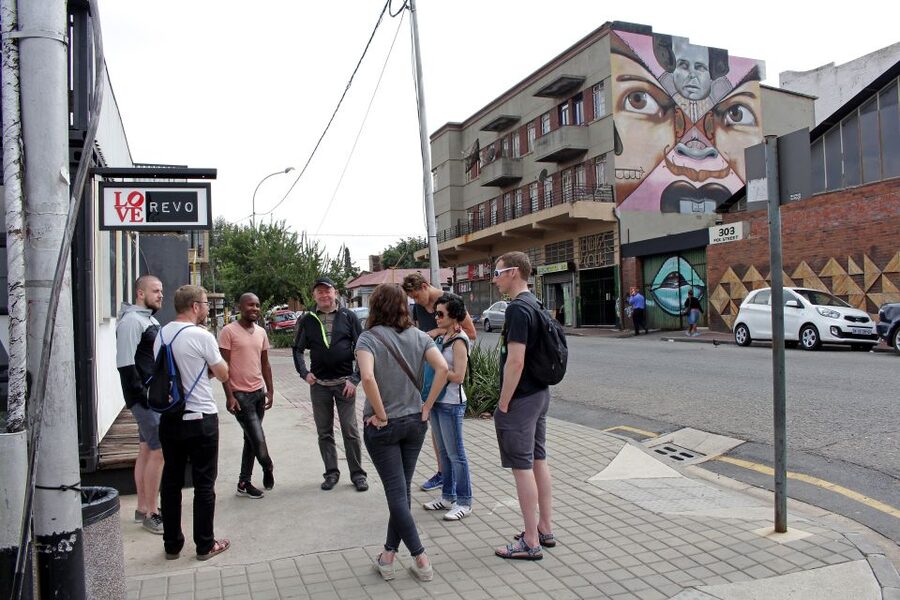
Curiocity Backpackers is more than a practical meeting point. It is a suitable place to begin because the hostel sits within the creative precinct rather than at a distant transport hub. Your guide gives you the local frame for the walk before you set off, introducing the area’s early suburbs, heritage, and recent changes.
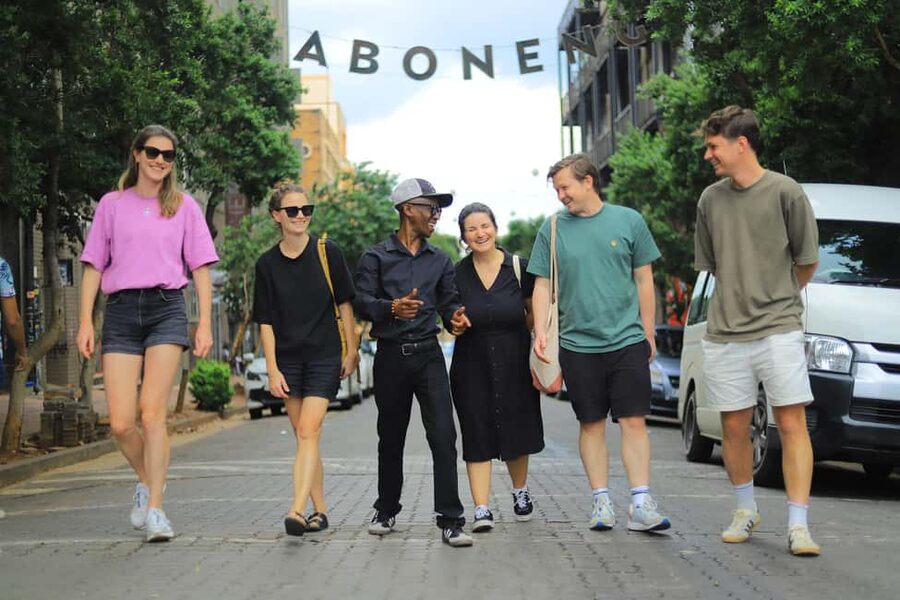
The quality of this opening depends heavily on the guide. Tsepho, also spelled Tsehpo in the available information, has led the walk, as has Eko. Tsepho has been praised for explaining the area and arranging access to venues with rooftop views and street art. Eko has also been noted for explaining the origins and past of Maboneng clearly.
That praise comes with a practical warning. One account describes a guide spending too much time on a phone and ending about 20 minutes early. So, when you meet your guide, pay attention to the planned route and ask which stops are operating that day. The area changes quickly, and the experience appears to depend on both the day’s conditions and the individual guide.
The Cosmopolitan and Johannesburg’s older face
One of the early landmarks is The Cosmopolitan, an elegant heritage building dating to 1899. It opened as a hotel and bar in 1902, giving the building a long connection with city life, nightlife, and the movement of people through Johannesburg’s early suburbs.
This stop helps balance the newer Maboneng image. You see that the district did not begin with street art, cafés, or shipping-container housing. Its older buildings carry the marks of a city that grew rapidly around mining and commerce, then faced periods of decline and change.
You may not spend a long time inside every building, so think of this as a guided look at the city’s past rather than a formal heritage tour. The value comes from the explanation around the architecture. A plain walk past an old façade becomes more useful when you understand what the building was built for and how its role has changed.
Drive-lines and the practical side of regeneration
The Drive-lines Development shows a newer response to urban housing needs. It uses upcycled shipping containers as affordable housing, linking design with the question of who gets to live in the inner city.
This is one of the tour’s most useful stops because it takes urban regeneration beyond decoration. A mural is easy to admire, but housing asks harder questions about affordability, ownership, and daily life. The walk presents entrepreneurship and creativity as tools for change, while also giving you a chance to consider the limits of that change.
Do not expect a full architectural inspection. The tour is a walking introduction, not a specialist design visit. Still, Drive-lines gives the route a practical center. You are seeing a real development rather than hearing only broad claims about renewal.
Same part of Johannesburg, a completely different kind of day:
- Johannesburg: Maboneng Street Art & Culture Tour
★ 4.9 · 257 reviews - Ultimate Johannesburg Tour
★ 5.0 · 200 reviews - Johannesburg: Local Food Tasting Guided Walking Tour
★ 4.7 · 192 reviews - Ponte Experience
★ 5.0 · 176 reviews
Murals that turn walls into public space
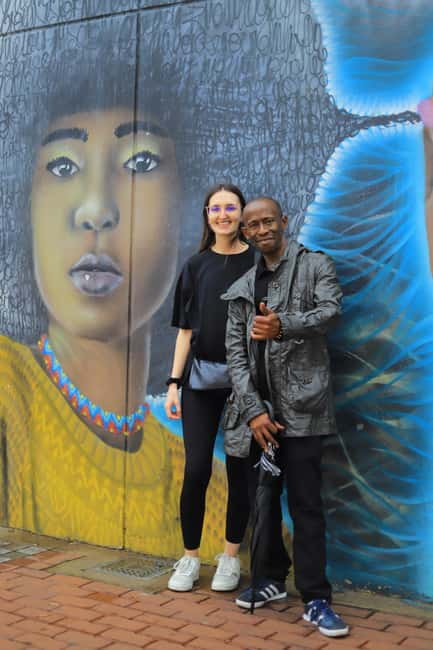
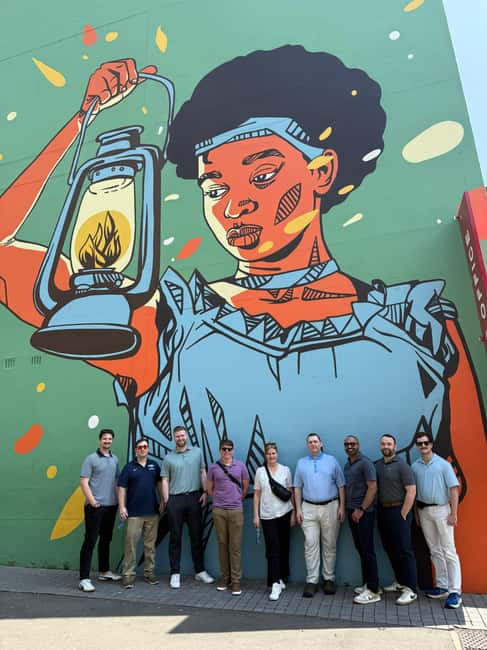
Street art is likely to be one of the most memorable parts of the outing. The route includes a Mandela mural, described with the playful reference to the leader-boxer, as well as large works by Nelson Makamo. The murals are treated as part of an open-air public art setting, not just as colorful photo backdrops.
I like this approach. The guide connects the art to the physical barriers found in cities. Walls can separate people, businesses, and neighborhoods. Public art can make those same surfaces easier to approach, discuss, and share.
The art also gives you a direct way to understand Maboneng’s creative identity. Local and international artists have contributed to the district, so the walls reflect both neighborhood energy and outside attention. The exact murals you see may change as new work appears or old work fades, which is part of the point in an evolving area.
Bring a phone or camera if you want photographs, but keep the focus on the explanation. The strongest part of this section is not simply finding a striking image. It is learning who made it, why it is placed there, and how public art affects the feel of the street.
Arts on Main and the William Kentridge connection
Arts on Main is another major stop. It is linked with William Kentridge, one of South Africa’s best-known artists, and with his foundation, The Centre for the Less Good Idea. The name itself suggests an interest in experiments, unfinished thoughts, and art that does not need to fit a neat commercial mold.
This gives the tour a welcome cultural anchor. You are not only looking at murals created outdoors. You are also seeing how galleries, foundations, studios, and public spaces can work together in a changing district.
The amount of time available may be limited. A two-hour walk has to cover several parts of Maboneng, so you should not expect an extended gallery visit or a full presentation on Kentridge’s work. If you want a serious art study, plan separate time for Johannesburg’s museums and galleries. If you want a quick introduction to the area’s creative network, Arts on Main fits well.
Kwa Mai-Mai, the oldest traditional healers’ market
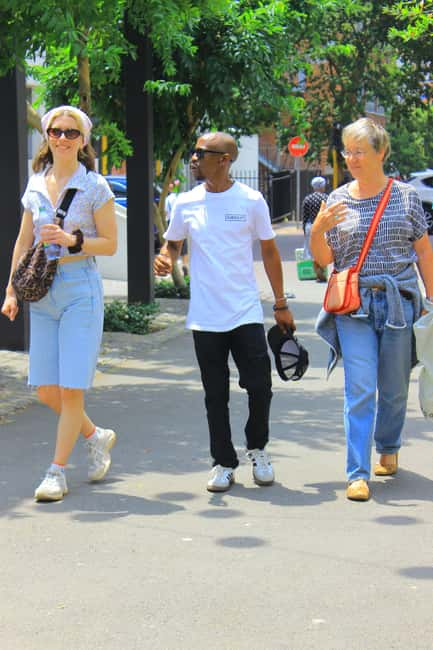
Kwa Mai-Mai Traditional Healers Market adds a very different layer to the experience. It is described as one of the oldest traditional healers’ markets in Johannesburg, with sangomas, traditional medicines, and clothing.
This is the stop that keeps the tour from becoming a narrow look at trendy redevelopment. You get a glimpse of living cultural practice, not just renovated façades. The market also shows that Maboneng and its surroundings are shaped by long-standing local traditions as well as newer creative businesses.
Approach this part with respect. Traditional medicines and healing practices are meaningful to the people who use and sell them. You may be able to browse or shop, but the purpose of the visit is not to treat the market as a costume display.
There is an important uncertainty here. The market visit has not occurred on every tour. If this stop matters to you, ask before setting out whether it is on the day’s route. The walk can still be worthwhile without it, but the experience is different when the cultural market is included.
The Collectors Treasure and a possible rooftop finish
The Collectors Treasure is presented as the largest second-hand bookstore in the Southern Hemisphere. For book lovers, this may be one of the best stops on the route. A large used bookstore gives you a chance to browse local titles, older publications, and unexpected finds in a way a quick photo stop cannot.
Again, time may limit your shopping. The tour covers a lot in two hours, and you should not count on having a long, leisurely search through every shelf. If the store captures your interest, note its location and return with more time if that is possible within your plans.
Depending on timing, the walk may finish with a sundowner overlooking the Johannesburg skyline. The word time willing matters here. Treat the view as a possible bonus, not a guaranteed final course. It can be a pleasant way to connect the street-level walk with the wider city, but you should not book this experience solely for sunset.
What $42 buys you, and what it does not
The price is $42 per person for a two-hour guided walk. That is not cheap for a short city tour, especially since no food, drinks, transport, or separate admissions are listed as included. You are paying mainly for the guide’s time, local context, and access to a route that may feel easier to navigate with someone who knows the area.
The price makes more sense if you value interpretation. A guide can explain why an old hotel matters, how container housing fits into urban renewal, and why murals have a public role. Those connections are hard to get from a self-guided stroll.
The price feels less convincing if the walk becomes only a basic route through the neighborhood. One person found it too expensive for what was ultimately a walk, and another reported that it ended early. The experience offers good material, but the guide needs to make the most of it.
My advice is simple: book it if this is your first look at Johannesburg’s eastern inner city and you want context, not just photographs. Skip it if you are comfortable exploring on your own and mainly want to browse shops, take pictures, or spend a long time at one venue.
Practical advice for a smoother walk
Wear comfortable shoes. The tour is on foot, lasts two hours, and moves between several stops. Weather-appropriate clothing is also important because much of the experience takes place outdoors.
The tour is not suitable for people with limited mobility, mobility impairments, or pregnant women. No group size is provided, so do not assume a private or very small outing. The only listed language is English.
The activity starts and ends at Curiocity Backpackers, so you do not need to arrange a separate return transfer. You can reserve now and pay later, and cancellation is allowed up to 24 hours before the start for a full refund. Littering is not allowed, a small rule that fits the tour’s focus on public space and neighborhood care.
You may also want to keep your schedule flexible. The route can include several places, but not every advertised stop has appeared on every outing. Ask at the beginning about Kwa Mai-Mai, Arts on Main, the bookstore, and the possible rooftop finish.
Who should book The Evolution of Maboneng?
I would recommend this walk to first-time Johannesburg visitors who want a guided introduction to urban change, public art, heritage buildings, and local culture. It suits curious walkers, architecture fans, street-art followers, and anyone who wants more context than a quick drive through downtown can provide.
It is also a good fit if safety and orientation are concerns. A guide gives you a planned route and local insight, which can make an unfamiliar inner-city neighborhood easier to approach.
I would be more cautious if you have limited walking ability, dislike uncertain schedules, or expect every named stop to be guaranteed. At $42, the guide’s quality matters. Tsepho and Eko have both been associated with strong explanations, but the experience has also been affected by uneven engagement and an early finish.
Book it for the story of a city in transition, not for a checklist of attractions. If your guide brings the buildings, murals, housing, market, galleries, and bookstore into one clear picture, the walk can be a worthwhile introduction to Maboneng. If you want a slower art visit or guaranteed market shopping, explore those places separately.
FAQ
Where does the Maboneng walking tour start?
It starts at Curiocity Backpackers, 302 Fox Street, Jeppestown, Johannesburg, 2043, South Africa.
Where does the tour end?
The activity ends back at the meeting point at Curiocity Backpackers.
How long does the tour last?
The guided walking tour lasts two hours.
What language is the tour offered in?
The tour is offered in English.
What is the price?
The listed price is $42 per person.
What should I bring?
Bring comfortable shoes and clothing suited to the weather.
Is the tour suitable for people with mobility impairments?
No. The tour is not recommended for people with limited mobility or mobility impairments.
Is the tour suitable for pregnant women?
No. The activity is listed as unsuitable for pregnant women.
Can I visit Kwa Mai-Mai Traditional Healers Market?
The route is intended to include Kwa Mai-Mai Traditional Healers Market, but the market visit has not occurred on every tour. Ask your guide at the start whether it is included that day.
Can I cancel the booking for a refund?
Yes. You can cancel up to 24 hours in advance for a full refund.
Just added around Johannesburg
- 13 Day Safari – Cape Town to Johannesburg★ 5.0 · 11 reviews
- Tala Game Reserve & Natal Lion Park 1/2 Day Tour from Durban★ 3.0 · 13 reviews
- South Africa from Joburg: Elephant Sanctuary Half Day Tour★ 5.0 · 3 reviews
- Private Safari Tour: Pilansberg National Park Big 5★ 5.0 · 7 reviews
- Johannesburg: Elephant and Monkey Sanctuary Half Day Tour★ 5.0 · 3 reviews
- Johannesburg: Wine Tasting and Cableway Half Day Tour★ 4.7 · 3 reviews
- Pretoria: Pretoria City and Lion Park Tour★ 4.8 · 41 reviews
- Lion Park Tour in Open Safari Vehicle★ 5.0 · 6 reviews
Johannesburg Tours, compared.

Early Morning Balloon Safari with Breakfast from Magaliesburg
Read our review →
From Johannesburg: Lion & Safari Park Half-Day Tour
Read our review →
Half Day Lion Park tour from Johannesburg or Pretoria
Read our review →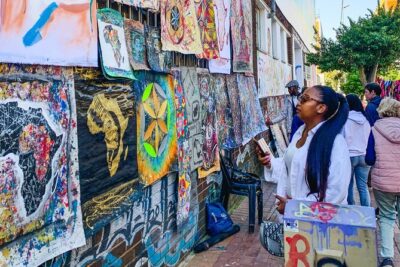
Johannesburg: Maboneng Street Art & Culture Tour
Read our review →

Johannesburg: Local Food Tasting Guided Walking Tour
Read our review →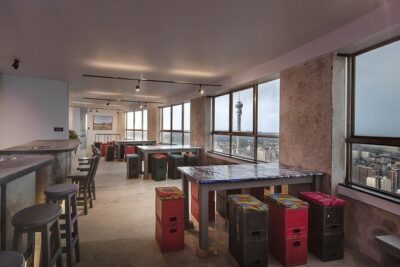
Johannesburg: Pretoria and Cullinan Diamond Mine Tour
Read our review →Browse the lists this tour appears in