
Reviewed · APARTHEID HISTORY TOURS
Johannesburg: Mandela Legacy Day Tour
Nelson Mandela’s story comes into focus when you visit the actual places tied to his work, imprisonment, family life, and return to public life. This nine-hour Johannesburg tour links Liliesleaf Farm, the Nelson Mandela Foundation, Constitutional Hill, Chancellor House, Mandela House, and the Apartheid Museum into one serious day of South African history.
I like the range. You see the family man at Mandela House, the lawyer at Chancellor House, the political leader at his former offices, and the prisoner at Constitutional Hill. I also like that transport, admission fees, a guide, and bottled water are included, which keeps the day simple.
The main drawback is the pace. Six major stops spread across Johannesburg and Soweto can make the day feel full, and food is not included. Wear comfortable shoes, bring your own lunch money, and expect history that can be emotionally heavy as well as educational.
Key points to know before booking
- Six major Mandela-related sites: The route covers Liliesleaf Farm, the Nelson Mandela Foundation, Constitutional Hill, Chancellor House, Mandela House, and the Apartheid Museum.
- A useful mix of public and private history: You move from political safe houses and law offices to Mandela’s family home and personal belongings.
- Named guides include Richard and Emmah: Richard has been praised for thoughtful explanations and careful organization, while Emmah has led an individual, moving tour through Johannesburg and Soweto.
- Transport and admission fees are included: Pickup and drop-off, entry fees, a live English-speaking guide, an English audio guide, and bottled water are part of the package.
- Plan for a full day: The tour lasts nine hours, with no food or drinks included beyond bottled water.
- Best for history-focused visitors: This is a good choice if you want context and interpretation, not simply a quick photo stop at Mandela-related landmarks.
Why this Mandela tour works as a full-day history lesson
Many Johannesburg tours focus on one place, often Soweto or the Apartheid Museum. This one takes a wider view. You follow Mandela from the underground political movement of the 1960s to his legal career, family life, imprisonment, and final public work.
That structure matters. Mandela’s life can easily be reduced to a few famous dates and speeches. Visiting the places connected to him gives those dates a physical setting. A safe house feels different from a former law office. A family home tells a different story from a prison complex.
You should expect a serious tour rather than a light sightseeing outing. The day deals with apartheid, imprisonment, political resistance, forced separation, and the long effort to build democracy. A strong guide helps connect the buildings to the people and decisions that shaped modern South Africa.
The quality of the guide will matter a great deal. Richard has been praised for being well informed, organized, and easy to spend the day with. Emmah has led a particularly personal route through Johannesburg and Soweto, explaining Mandela’s key places while adding wider context about recent South African history. Your assigned guide is not guaranteed to be either person, but these names give you a useful sense of the standard the company has delivered.
More Apartheid History Tours in Johannesburg
- Johannesburg: Half-Day Apartheid Museum Tour
★ 4.5 · 73 reviews - Apartheid Museum Tour
★ 4.7 · 12 reviews - Johannesburg: Private Guided City Tour with Apartheid Museum
★ 5.0 · 6 reviews
Liliesleaf Farm and the secret side of the struggle
Your first stop is Liliesleaf Farm in northern Johannesburg. In the 1960s, the property served as a safe house for members of the African National Congress and others involved in the anti-apartheid struggle.
The importance of Liliesleaf is its connection to the hidden side of politics. Public speeches and demonstrations are only part of how change happens. Safe houses provided places for planning, meeting, and staying out of the reach of the authorities.
You can expect this stop to set the tone for the whole day. It places Mandela within a wider network of colleagues and organizers rather than presenting him as a lone figure. That is one of the tour’s strengths: the story includes people who worked alongside him and shared the risks.
The first stop also helps explain why the route includes both political and personal locations. Mandela’s public reputation came from many years of private planning, legal work, family sacrifice, imprisonment, and cooperation with other leaders. Liliesleaf gives you that early political context before the tour moves into his later public life.
The Nelson Mandela Foundation and his final offices
The Nelson Mandela Foundation was the last office Mandela occupied before his death. Here, you see original items linked to him, including his briefcase, Nobel Prize medal, and Xhosa mountain attire.
These objects are small, but they carry the story in a way that a broad historical display cannot. A briefcase points to daily work. A medal marks international recognition. Traditional clothing connects Mandela’s public identity to his Xhosa background.
I find this stop especially useful for visitors who know Mandela mainly from photographs and speeches. The Foundation presents him not only as a symbolic national figure, but also as a working man with possessions, routines, and a personal style.
Do not expect every item to tell its story without explanation. The guide’s commentary is important here. Ask questions about what the objects reveal about Mandela’s public duties and private identity. The English audio guide adds another layer, but the live guide is the person who can adjust the explanation to your interests.
Constitutional Hill, where imprisonment becomes personal
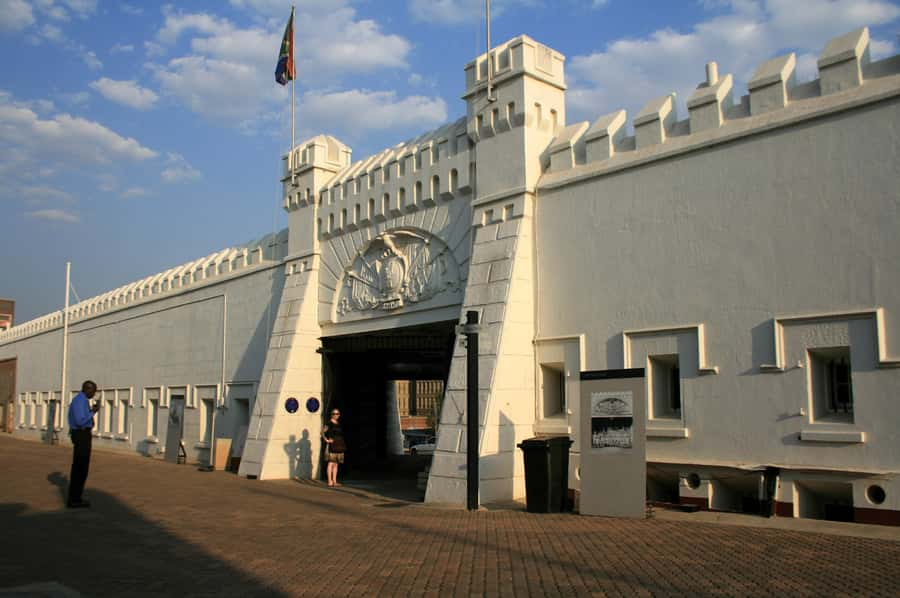
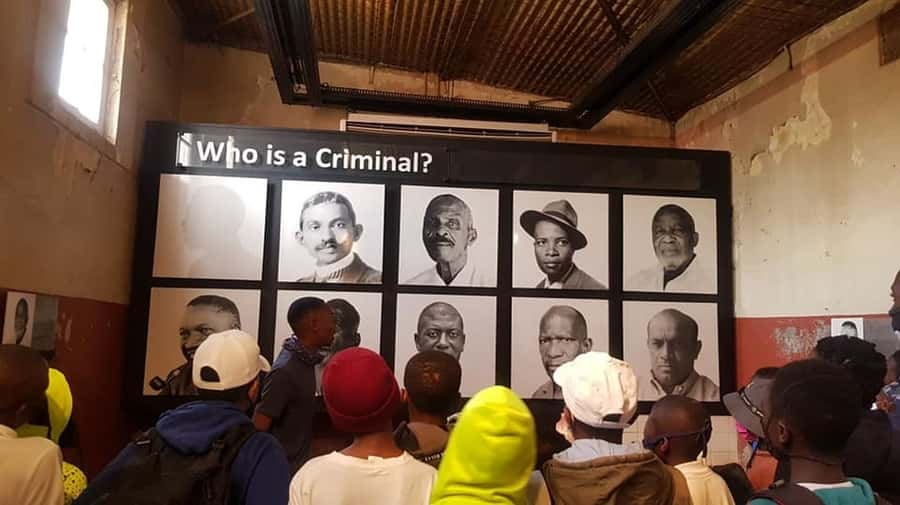
At Constitutional Hill, you visit the former prison complex where Nelson Mandela and many other important figures were held. The site is also linked to Mahatma Gandhi, Winnie Madikizela, Joe Slovo, and many others who opposed apartheid or challenged the political system.
This is not just a Mandela stop. That is precisely why it matters. You see how the prison system affected a broad group of political activists and public figures, and you get a clearer sense of the scale of the struggle.
The name Constitutional Hill also carries a strong contrast. A former prison site is now associated with South Africa’s constitutional democracy. The change in use gives the place a direct connection to the country’s political transformation.
Allow yourself time to take in this stop. The subject matter is difficult, and the visit may feel more demanding than the Foundation or Mandela House. Comfortable shoes are important because the tour involves several historic sites across a long day, and this is one place where rushing would reduce its impact.
Same part of Johannesburg, a completely different kind of day:
- Early Morning Balloon Safari with Breakfast from Magaliesburg
★ 5.0 · 418 reviews - From Johannesburg: Lion & Safari Park Half-Day Tour
★ 4.6 · 384 reviews - Half Day Lion Park tour from Johannesburg or Pretoria
★ 5.0 · 274 reviews - Johannesburg: Maboneng Street Art & Culture Tour
★ 4.9 · 257 reviews
Chancellor House and Mandela’s legal career
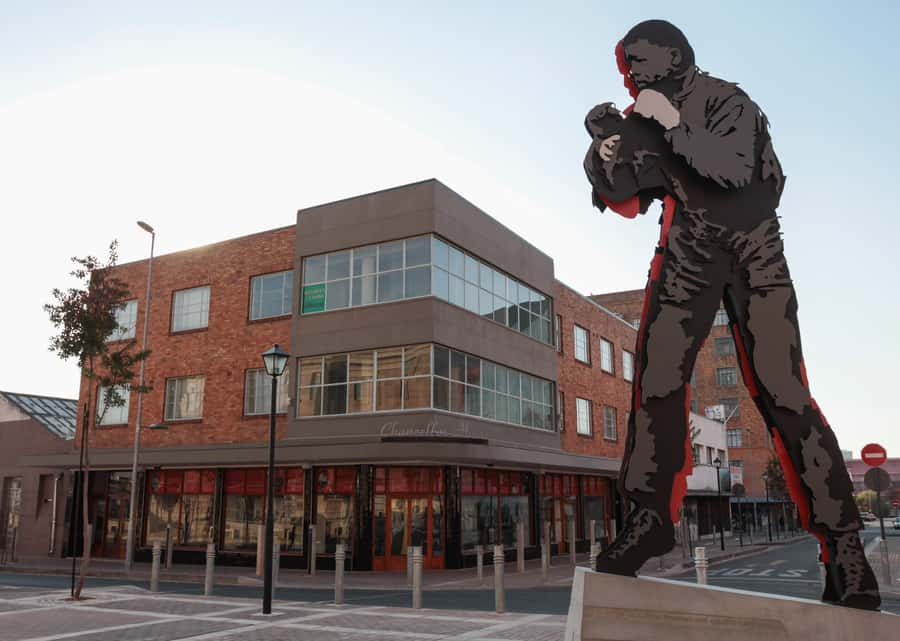
The itinerary then moves to Chancellor House in Johannesburg’s Ferreirasdorp area. This three-story building once housed the first black law firm in South Africa founded by Nelson Mandela and Oliver Tambo.
Chancellor House shows a different side of Mandela. Before he became a prisoner and later president, he worked as a lawyer. The office connected legal practice with the daily pressures of apartheid, giving Mandela and Tambo a direct view of the discrimination faced by black South Africans.
For you, this stop fills a gap that a prison-focused tour may leave behind. Mandela was not only a political symbol. He was also a professional who used the law while living under a system designed to deny equal rights.
The building is in central Johannesburg, so the visit also adds an urban setting to the route. It is not presented as a grand presidential site. Its value comes from what happened there and from the chance to see where Mandela and Tambo built their legal partnership.
Mandela House and the man behind the president
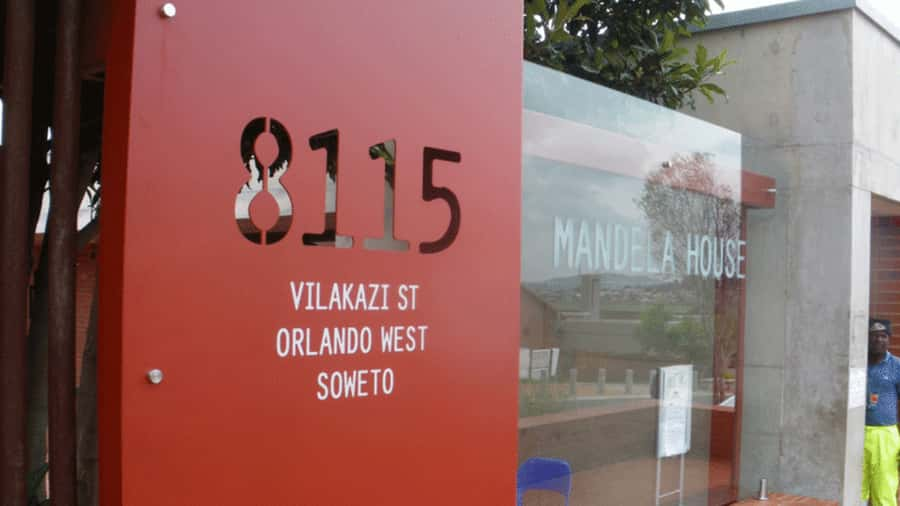
Mandela House in Soweto is where Mandela lived with his family from 1946 to 1962. It is also the home he returned to after his release from prison in 1990.
This is one of the most personal stops of the day. You move away from offices, prisons, and political sites and into the setting of family life. The house helps you think about Mandela as a husband, father, and neighbor, not only as a world leader.
The home is near the Tutu House, the former residence of Archbishop Desmond Tutu. That close connection places two major figures from South Africa’s recent past within the same Soweto neighborhood.
Mandela House can be especially useful if you are traveling with someone who knows little about the political details. A home is an accessible starting point. It gives the story a human scale and helps explain why Mandela’s return in 1990 carried such strong meaning.
This is also a good place to ask your guide about the contrast between Mandela’s family life and his long absences caused by political work and imprisonment. The tour’s strongest moments come when the guide makes that connection without turning the visit into a simple celebration.
The Apartheid Museum brings the day together
The final major stop is the Apartheid Museum. By this point, you have seen individual places connected to Mandela’s life. The museum gives you a wider framework for understanding the system he and many others opposed.
This ordering works well. Starting with Liliesleaf and moving through Mandela’s work, imprisonment, home, and public legacy means you arrive at the museum with specific places already in mind. The exhibitions can then help connect those individual stories to the laws, institutions, and social divisions of apartheid.
Plan for the museum to be emotionally demanding. It is not a quick final attraction to squeeze in before dinner. If the schedule allows, give the exhibitions your attention rather than treating them as a final checklist item.
The museum also keeps the tour from becoming too centered on one person. Mandela is the thread, but apartheid affected millions of people. The wider museum context helps you understand why the struggle required so many activists, lawyers, families, and communities.
How the nine-hour schedule feels
Nine hours is a substantial commitment, but it makes sense for this route. The sites are spread across Johannesburg and Soweto, so time in the vehicle is part of the experience. Pickup and drop-off are included, which is helpful if you do not want to arrange transport between several historical attractions yourself.
A private or small-group feel is not specified, so you should confirm the group setup if that matters to you. The experience includes a live English-speaking guide and an English audio guide. The live guide is likely to be most useful when you want to ask about the connection between locations.
Food and drinks are not included. Bottled water is provided, but plan to pay for your own meals or snacks. Because the day is long and the route is full, do not begin with the assumption that you will have plenty of spare time for a leisurely restaurant stop.
Comfortable shoes are a must. You will be moving through several historic properties and museum spaces, and the tour is not designed as a relaxed vehicle-only outing. The activity is also listed as unsuitable for pregnant women.
Is the $183 price good value?
At $183 per person, this is not the cheapest way to see Johannesburg’s Mandela sites. The value depends on how much structure and interpretation you want.
You are paying for a full nine-hour day, pickup and drop-off, entry fees, a guide, an audio guide, and bottled water. If you tried to arrange transport and admission to six separate sites yourself, the costs and planning would add up. You would also need to work out the order of the stops and how to connect Johannesburg with Soweto.
The strongest part of the value is the guide. A thoughtful explanation can turn a collection of buildings into a clear story. Richard’s careful organization and Emmah’s personal, well-informed approach show how much the human side of the tour can affect the day.
The price is less attractive if you prefer to visit museums slowly on your own or already know South African history well. The schedule may also feel too full if your ideal day includes long breaks, independent wandering, or extended time at one site.
For a first visit to Johannesburg, especially if you want one organized day devoted to Mandela and apartheid, the package is reasonably easy to justify. Just remember that meals are extra.
Who should book this experience?
I would choose this tour if you want a clear introduction to Mandela’s life and the political history of Johannesburg. It suits first-time visitors, history students, families with older children, and anyone who prefers having transport and admission handled in one booking.
It is also a good fit if you want more than Soweto photographs. The itinerary shows how Mandela’s life moved through law, political organizing, imprisonment, family life, and public service.
You may want a different plan if you dislike full-day tours or find difficult historical subjects overwhelming. The day has a lot of ground to cover, and the subject matter is not light. You should also be comfortable spending much of the day moving between sites rather than choosing one museum and exploring it at your own pace.
The free cancellation policy allows you to cancel up to 24 hours in advance for a full refund, and you can reserve now and pay later. Those terms are useful if your Johannesburg schedule is still changing.
Final recommendation: choose it for context, not just sightseeing
Book the Mandela Legacy Day Tour if you want the locations to connect into one story. Liliesleaf Farm explains the secret political work, Chancellor House shows Mandela as a lawyer, Constitutional Hill confronts imprisonment, Mandela House reveals family life, and the Foundation and Apartheid Museum widen the view.
The day is long, the food is not included, and the pace may feel demanding. Still, the combination of transport, entry fees, multiple major sites, and a live English-speaking guide makes this a practical choice for a first Johannesburg visit. Choose it for thoughtful historical context and a wide look at Mandela’s life, not for a relaxed day of casual sightseeing.
FAQ
How long does the Mandela Legacy Day Tour last?
The tour lasts nine hours.
What sites are included?
The route includes Liliesleaf Farm, the Nelson Mandela Foundation, Constitutional Hill, Chancellor House, Mandela House, and the Apartheid Museum.
Is transportation included?
Yes. Pickup and drop-off are included.
Is food included?
No. Food and drinks are not included. Bottled water is provided.
Is the tour available in English?
Yes. The tour includes a live English-speaking guide and an English audio guide.
Can I cancel the tour for a refund?
Yes. You can cancel up to 24 hours in advance for a full refund.
Just added around Johannesburg
- 13 Day Safari – Cape Town to Johannesburg★ 5.0 · 11 reviews
- Tala Game Reserve & Natal Lion Park 1/2 Day Tour from Durban★ 3.0 · 13 reviews
- South Africa from Joburg: Elephant Sanctuary Half Day Tour★ 5.0 · 3 reviews
- Private Safari Tour: Pilansberg National Park Big 5★ 5.0 · 7 reviews
- Johannesburg: Elephant and Monkey Sanctuary Half Day Tour★ 5.0 · 3 reviews
- Johannesburg: Wine Tasting and Cableway Half Day Tour★ 4.7 · 3 reviews
- Pretoria: Pretoria City and Lion Park Tour★ 4.8 · 41 reviews
- Lion Park Tour in Open Safari Vehicle★ 5.0 · 6 reviews
Apartheid History Tours, compared.
Soweto /Johannesburg and Apartheid Museum Guided Full Day Tour
Read our review →
Jo’berg in 1 Day: Soweto, Apartheid Museum & City Tour
Read our review →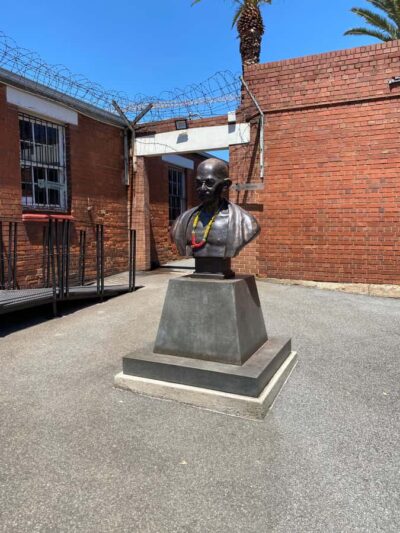
Johannesburg: Full-Day Tour with Soweto and Apartheid Museum
Read our review →
Full-Day Soweto, Apartheid Museum and Lunch Tour
Read our review →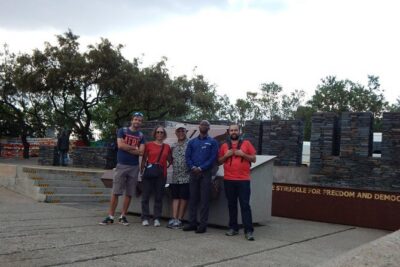
Half Guided Day Tour of Soweto And Apartheid Museum
Read our review →
Ultimate Johannesburg Soweto Experience with Apartheid Museum
Read our review →
Hop-On Hop-Off Bus, City Tour and Apartheid Museum
Read our review →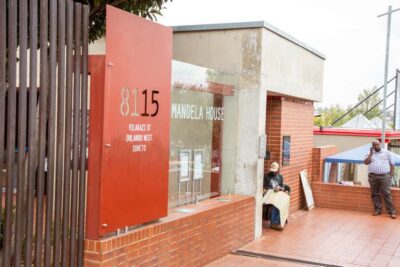
Johannesburg and Soweto Apartheid Full Day Tour w/Lunch
Read our review →Browse the lists this tour appears in