
Reviewed · STREET ART
Johannesburg: Street Art and Culture in Maboneng!
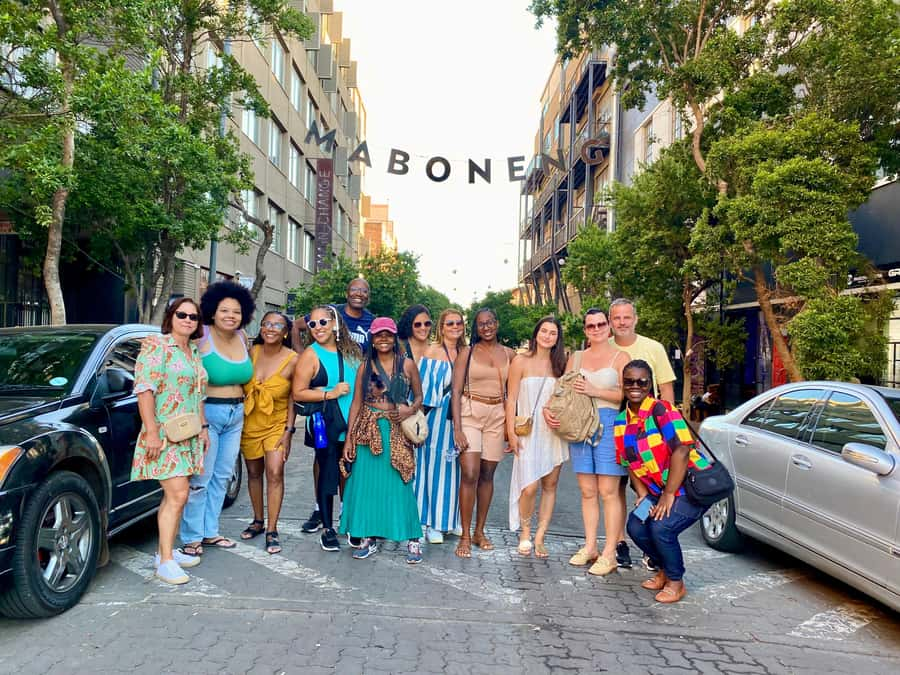
Maboneng is one of Johannesburg’s most engaging short walks, especially if you want more than a parade of painted walls. The street art is the hook, but the real subject is how an old industrial area became a creative district shaped by artists, small businesses, residents, and redevelopment. You’ll hear about artists such as ESPO Powers and DBongz, then connect their work to South African city life.
I like the personal local perspective offered by guides such as Ayanda, who has spoken about living through the area’s changes and is well known along its streets. I also like the stop at the Hideout Bar, an alleged meeting place for Mandela and other anti-apartheid activists. The main consideration is time: two hours gives you a useful introduction, not a full look at Johannesburg or every part of Maboneng.
Key points at a glance
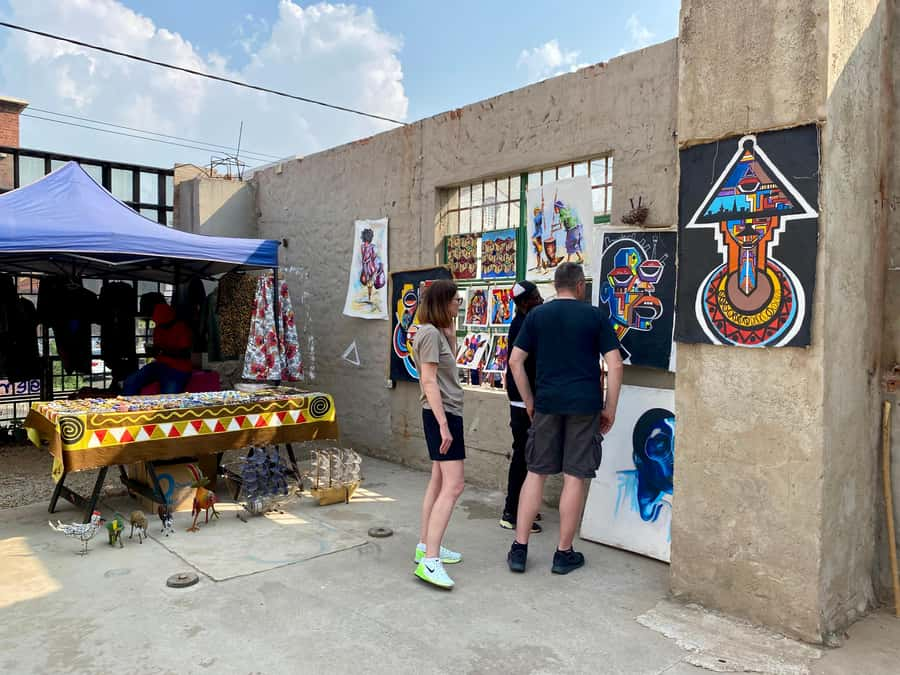
- Murals with meaning: Learn about local and international artists, including ESPO Powers and DBongz, rather than simply photographing finished walls.
- A neighborhood in transition: Follow Maboneng’s change from industrial district to creative precinct from 2009 to today.
- A useful local guide: Ayanda receives especially strong praise for his personal knowledge, humor, warmth, and ability to explain Johannesburg beyond the art.
- History inside ordinary places: Visit the Hideout Bar at Curiocity Backpackers and hear its alleged anti-apartheid connection.
- Small-group feel: Several bookings have been described as relaxed walks with only two to four people, though group size can vary.
- Practical value: The $40 price includes entry to the places visited, while coffee, food, and drinks cost extra.
Starting with coffee at Home of the Bean
Your meeting point is Home of the Bean, at the corner of Fox and Berea Streets beneath the bridge. From outside, the building looks like an old industrial structure, so do not expect a polished storefront that is easy to spot from a distance. Wait inside the coffee shop if you arrive early.
The tour begins with about 15 minutes for a safety briefing and orientation. You can buy a coffee before setting off, but it is not included in the price. That small start works well: you have time to meet the guide, ask questions, and get a clearer sense of the walk before entering the streets.
The operator contacts you by WhatsApp or message roughly 30 minutes before the start. Keep your phone available, especially if you need help finding the meeting point or if there is a booking change. The contact line is also available for questions before or after arrival.
More Street Art walks in Johannesburg:
- Johannesburg: Maboneng Street Art & Culture Tour
★ 4.9 · 257 reviews - Johannesburg: Maboneng Street Art & Culture Tour
★ 5.0 · 140 reviews - Colours of Johannesburg: A Graffiti & Street Art Tour
★ 5.0 · 21 reviews
Reading Maboneng through its street art
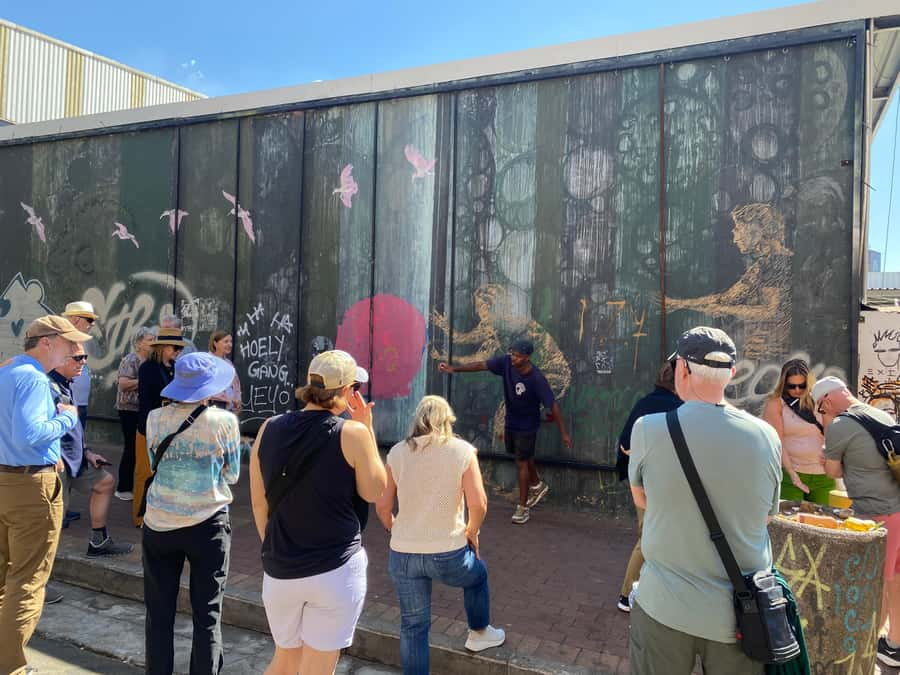
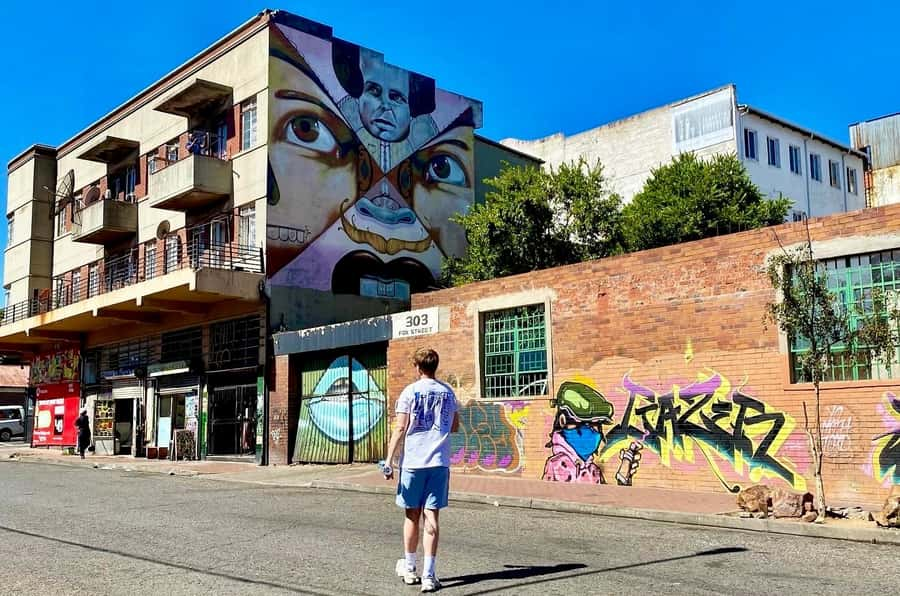
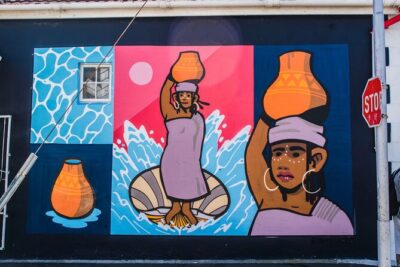
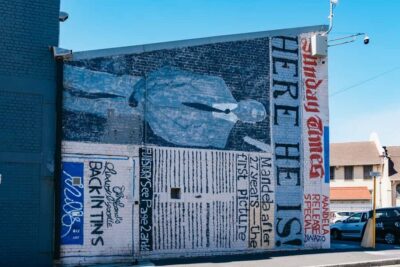
Once you leave the café, the tour becomes a moving lesson in how public art can change the feel and meaning of a place. Maboneng is known for painted walls, graffiti, galleries, food spots, small shops, and creative spaces. You will look at the art itself, then hear about the people who made it and the ideas behind selected pieces.
That context matters. Without a guide, you may notice color, scale, and technique, but miss the social point of a mural or the difference between commissioned street art and informal graffiti. The guide helps you slow down and look at details that are easy to pass.
Artists named on the walk include ESPO Powers and DBongz, with both international and South African voices represented. The art can act as a window into questions about identity, city life, community, inequality, and change. You are not just collecting photographs. You are being shown how walls record what a neighborhood is trying to say about itself.
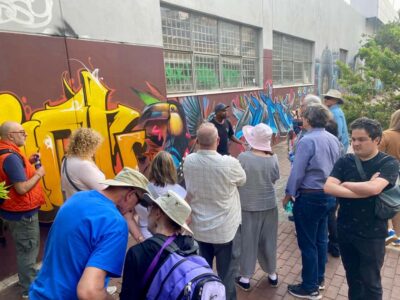
The first street section lasts about 30 minutes, followed by another half-hour walk later in the route. The split keeps the experience from becoming a single long lecture. You see art, move through the district, stop in indoor spaces, and return to the streets with a better sense of what you are looking at.
Maboneng Arts Village and the people who make the district
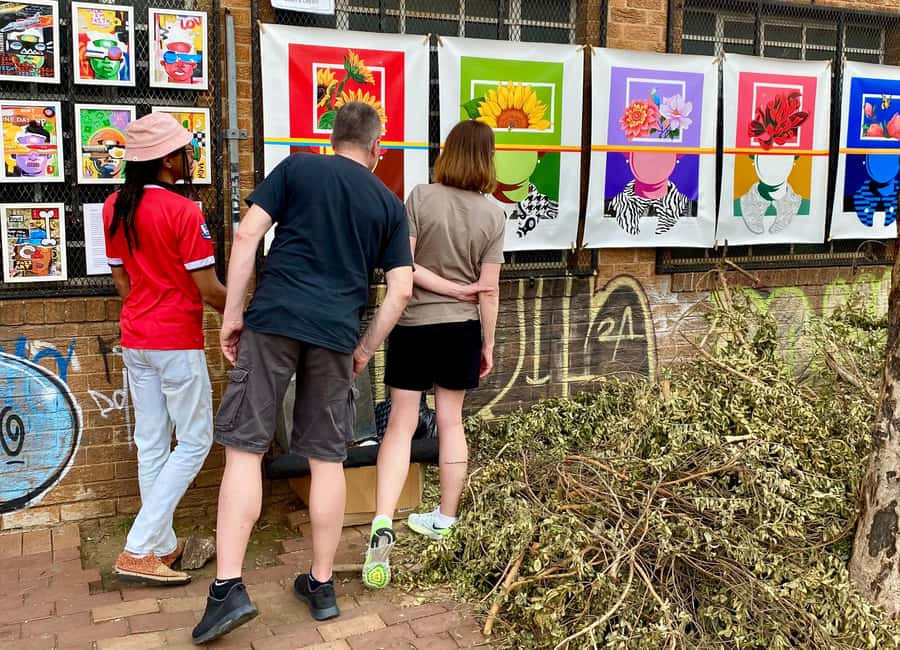
Maboneng Arts Village gives the walk a useful change of pace. It is a place where artists and other creatives can sell their work, making the area’s creative identity easier to understand than a mural alone can do.
You might find pieces to buy here or from informal sellers along the route. Bring cash or a card if you are interested in local art, crafts, gifts, or small purchases. Buying is optional, and the tour does not include shopping, but having a payment method gives you more freedom.
This stop also helps you see a tension at the heart of Maboneng. The district’s galleries, restaurants, design stores, and art projects attract new money and attention. At the same time, it remains a lived-in neighborhood with people who call the area home. A good guide can help you think about that change without reducing it to a simple success story.
Several people who booked the walk found the redevelopment angle as useful as the artwork. You will hear about the area’s old industrial role, the funding and vision behind its renewal, and the way art and food have helped change how people see the district. That broader view is one reason this tour suits anyone curious about present-day Johannesburg, not only street-art fans.
The Hideout Bar and an uneasy past
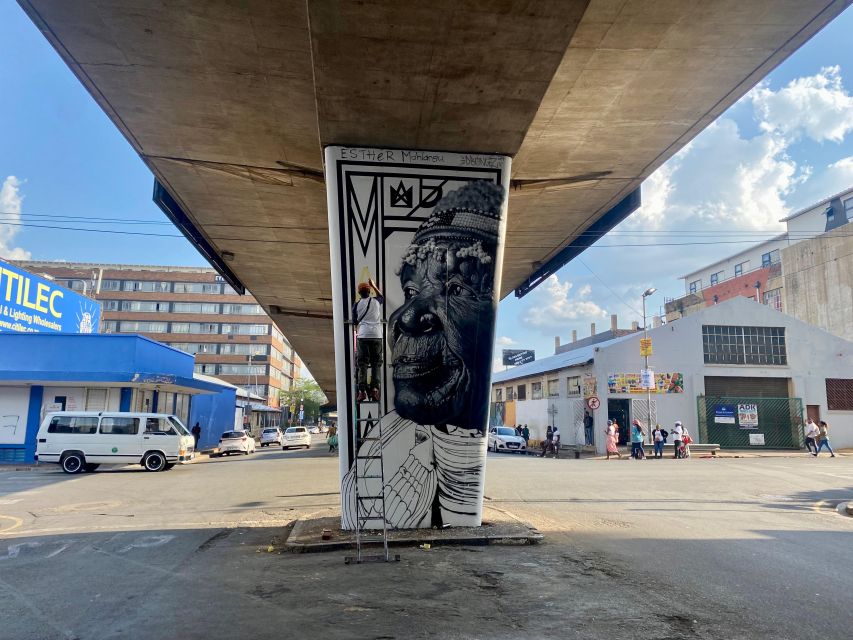
The stop at the Hideout Bar, located at Curiocity Backpackers, adds a layer of political history to the route. It is described as an alleged hideout for Nelson Mandela and other anti-apartheid activists. The word alleged matters. Treat the story as a local historical claim rather than a formally verified museum exhibit.
Even so, the setting makes the subject more immediate. Instead of hearing only about major national events in a distant landmark, you connect political struggle to an ordinary urban space. The story opens a conversation about how people moved, met, organized, and tried to stay safe during apartheid.
The bar is also a practical example of Maboneng’s mix of old and new. A space linked to a difficult period now forms part of a contemporary hostel and social venue. That contrast reflects the district itself: industrial buildings and older memories sit beside restaurants, studios, galleries, and new businesses.
You may want to ask the guide how the story fits into the wider history of Johannesburg. Ayanda, in particular, has been praised for explaining the causes and connections behind what you see, rather than giving isolated facts. The experience is strongest when you treat the walk as a conversation and ask about anything that catches your attention.
A few more Johannesburg days worth comparing
- Early Morning Balloon Safari with Breakfast from Magaliesburg
★ 5.0 · 418 reviews - From Johannesburg: Lion & Safari Park Half-Day Tour
★ 4.6 · 384 reviews - Half Day Lion Park tour from Johannesburg or Pretoria
★ 5.0 · 274 reviews - Ultimate Johannesburg Tour
★ 5.0 · 200 reviews
From industrial district to creative precinct
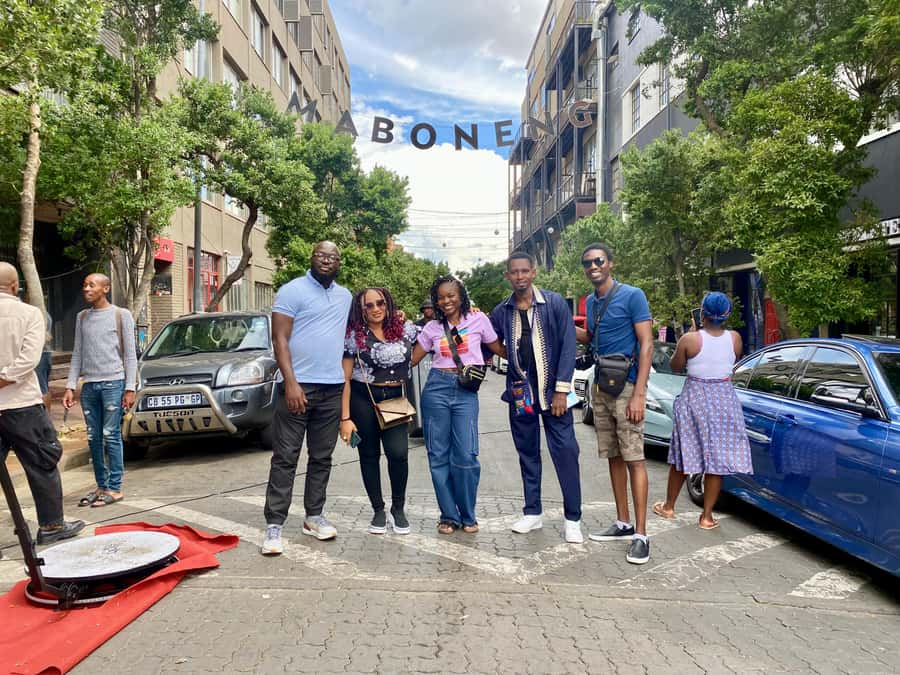
A central theme is Maboneng’s evolution from 2009 to the present. The tour explains how an old industrial area became a place associated with design, art, food, and city renewal.
That change is not presented only as decoration. It raises practical questions about who benefits from redevelopment, how investment reshapes streets, and what happens to residents when an area gains a new reputation. You will get a look at the hopes attached to Maboneng, as well as the social questions that come with gentrification.
This is where the guide’s local connection matters most. Ayanda has been praised for speaking from personal experience of the area’s regeneration. He also appears to know people along the route, with several bookings noting that residents and local workers greeted him. That does not guarantee the same guide for every departure, but it suggests the value of a person who is connected to the neighborhood rather than simply reading from a script.
Other named guides include Bonny, Kaiser, and Michael. The strongest praise across the bookings centers on friendly, clear explanations and a willingness to answer questions. One person found some information repetitive, so if you prefer a fast-moving art tour with little historical background, parts of the talk may feel slower than expected.
Streets, viewpoints, and a look at daily life
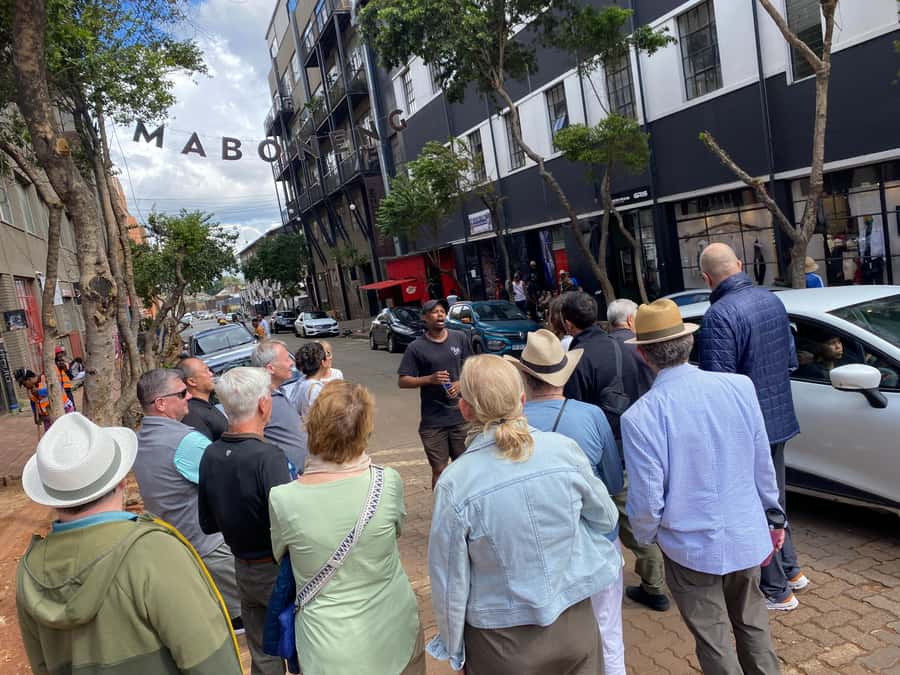
The walk includes another section through Maboneng, followed by a viewpoint with scenic views along the way. The exact view can depend on the route and conditions, but this part gives you a chance to step back from close-up murals and see the district in relation to the wider city.
The final street section brings the tour back to the everyday side of Maboneng. You may pass informal traders, local businesses, art spaces, and places where residents live and work. That mix is important. The precinct is not simply an outdoor gallery built for visitors. It is also a neighborhood with its own routines and tensions.
Several people found the walk reassuring because the guide helped them move through streets they would not have visited alone. That is useful advice for a first visit, but it is not a promise that every part of central Johannesburg will feel the same. Keep normal city habits: stay aware of your belongings, follow the guide’s instructions, and avoid wandering away from the group.
The tour is listed as wheelchair accessible. Because the experience takes place on city streets and in several buildings, it is sensible to contact the operator before booking if you have specific mobility needs. The operator can confirm current access conditions for your date.
What the $40 price really covers
At $40 per person, this is not the cheapest way to take a walk through Maboneng. You can see public art without paying for a guide. The value comes from the interpretation: artist names, local stories, redevelopment context, political history, and help finding spaces you might otherwise pass.
The price includes entry to all sites visited. It does not include coffee, food, or drinks, so budget extra if you want something at Home of the Bean or the Hideout Bar. You may also want spending money for art, crafts, gifts, or items from informal traders.
I see the price as fair for visitors who want an introduction in a compact two-hour format. The tour is particularly useful if you have limited time in Johannesburg, need a guided first look at Maboneng, or want to understand the city through art and urban change. If you already know the precinct well and mainly want to take photographs, the cost may feel less worthwhile.
The booking has free cancellation up to 24 hours before the start, and you can reserve now and pay later. Those terms help if your Johannesburg schedule is still shifting.
Who will enjoy this two-hour walk
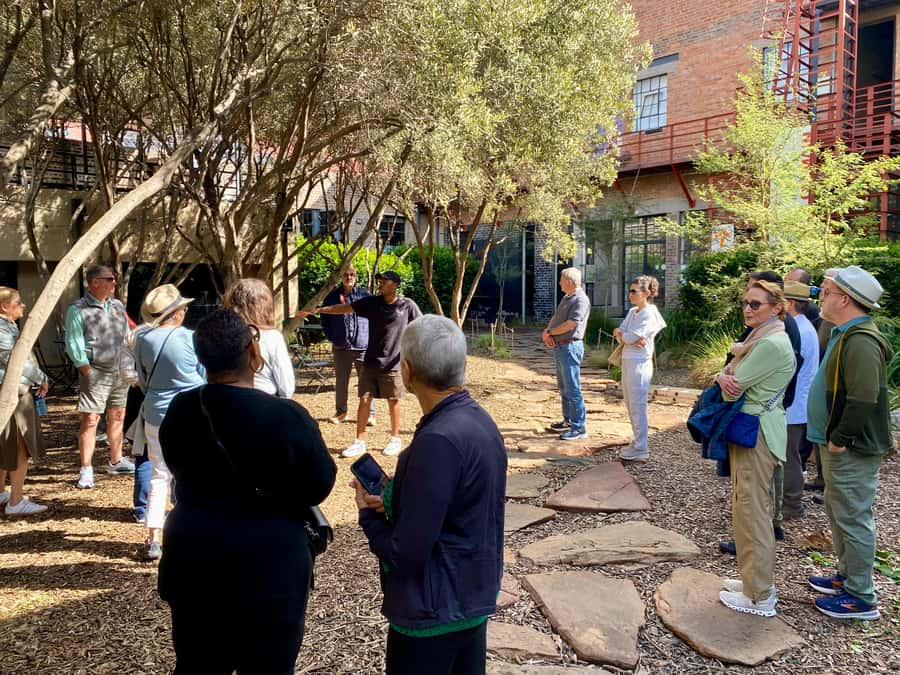
I would choose this experience if you like:
- Public art, graffiti, photography, and creative districts
- Local stories that connect ordinary buildings to national events
- Short walking tours with plenty of explanation
- Urban redevelopment and the questions that come with it
- Meeting a guide who can discuss Johannesburg beyond a standard sightseeing script
- A first visit to Maboneng when you want help getting oriented
It also suits older children and adults, according to the range of bookings described, though the amount of historical discussion may be more interesting to older children. The tour is offered in English only, so you need enough English to follow explanations and ask questions.
You should be comfortable walking for roughly two hours, with several stops and changes of location. The route includes streets, indoor spaces, a café starting point, and a viewpoint. Wear practical shoes and leave room in your schedule if you want to stay for food, drinks, or shopping afterward.
Guide quality and the personal touch
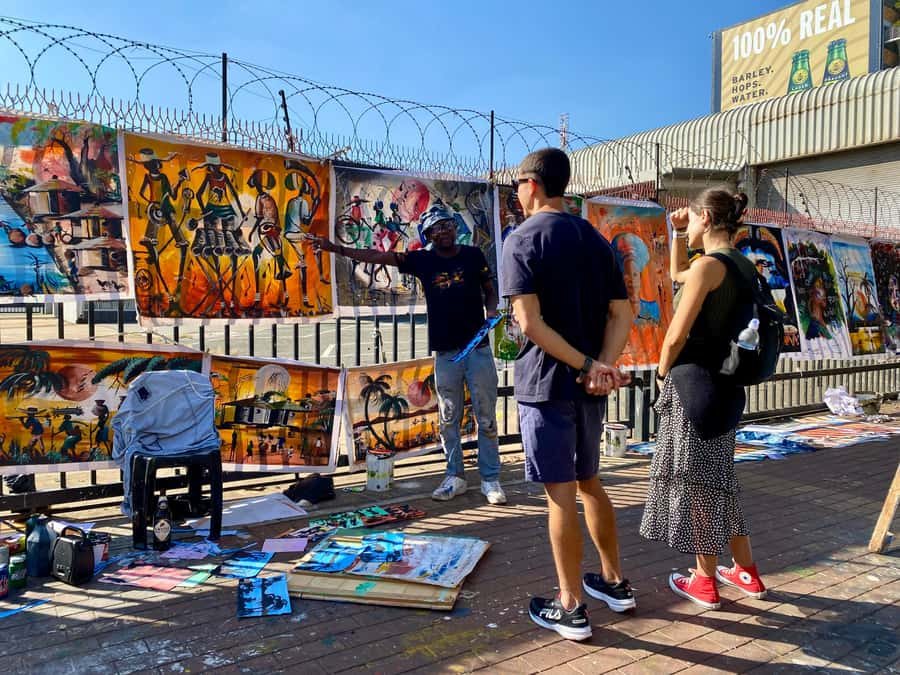
The most consistent strength is the guide. Ayanda receives especially strong praise for his warmth, clear speaking, humor, patience, and personal connection to Maboneng. He has been described as someone who answers questions carefully and explains both the artwork and the larger story of Johannesburg and South Africa.
That makes a difference in a district where the surface can be easy to admire but harder to understand. You want a guide who can explain why a work matters, how the area changed, and what local life feels like now. The best parts of this experience appear to come from that exchange.
The operator does not guarantee a particular guide, and names connected with different departures include Bonny, Kaiser, and Michael. The overall pattern is friendly, informed guiding, but expectations should remain realistic: a two-hour walk cannot cover every artist, every building, or every political issue.
Should you book the Maboneng street-art walk?
Book it if you want a thoughtful introduction to Johannesburg through art, local stories, and urban change. The walk gives you much more than a photo stop, especially when Ayanda leads it. The Hideout Bar, Maboneng Arts Village, and the redevelopment story make the route varied, while the murals provide a strong visual thread.
I would skip it only if you want a self-guided photography outing, dislike historical explanation, or have no interest in the social questions behind redevelopment. For most first-time visitors with two hours to spare, the $40 price is reasonable because you gain context, local orientation, and access to places that are easy to overlook on your own.
The booking score is 4.8 from 107 ratings, and the strongest praise focuses on guide quality, safety during the walk, street-art background, and the chance to understand Maboneng as a living neighborhood. Bring a phone, comfortable shoes, and a little spending money. Arrive inside Home of the Bean, listen closely, and let the walls lead you into a wider story about Johannesburg.
FAQ
Where does the Maboneng street-art tour begin?
It begins at Home of the Bean coffee shop on the corner of Fox and Berea Streets, beneath the bridge. Wait inside the coffee shop if you arrive before the tour starts.
How long does the tour last?
The tour lasts two hours.
What is the price?
The price is $40 per person.
Is coffee included?
No. Coffee, food, and drinks are not included and are paid for separately.
What language is the tour offered in?
The tour is offered in English only.
Is the tour wheelchair accessible?
Yes, the activity is listed as wheelchair accessible. Contact the operator before booking if you need details about access for your specific requirements.
Which artists might I learn about?
The tour may cover local and international artists, including ESPO Powers and DBongz.
Does the tour visit the Hideout Bar?
Yes. The route includes the Hideout Bar at Curiocity Backpackers, described as an alleged hideout for Mandela and other anti-apartheid activists.
Can I buy art or local goods during the walk?
Yes. You may encounter street artists, informal traders, curio shops, and gift stores. Bring cash or a card if you want to make purchases.
Can I cancel for a refund?
You can cancel up to 24 hours in advance for a full refund. You can also reserve now and pay later.
Just added around Johannesburg
- 13 Day Safari – Cape Town to Johannesburg★ 5.0 · 11 reviews
- Tala Game Reserve & Natal Lion Park 1/2 Day Tour from Durban★ 3.0 · 13 reviews
- South Africa from Joburg: Elephant Sanctuary Half Day Tour★ 5.0 · 3 reviews
- Private Safari Tour: Pilansberg National Park Big 5★ 5.0 · 7 reviews
- Johannesburg: Elephant and Monkey Sanctuary Half Day Tour★ 5.0 · 3 reviews
- Johannesburg: Wine Tasting and Cableway Half Day Tour★ 4.7 · 3 reviews
- Pretoria: Pretoria City and Lion Park Tour★ 4.8 · 41 reviews
- Lion Park Tour in Open Safari Vehicle★ 5.0 · 6 reviews
Street Art, compared.
Johannesburg: Maboneng Street Art & Culture Tour
Read our review →Johannesburg: Maboneng Street Art & Culture Tour
Read our review →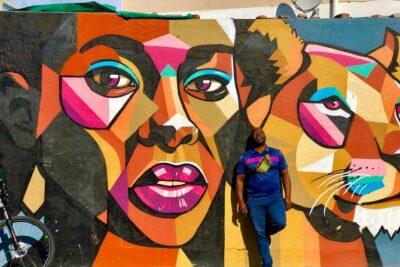
Colours of Johannesburg: A Graffiti & Street Art Tour
Read our review →
Browse the lists this tour appears in