
Reviewed · STREET ART
Cape Town: Woodstock Street Art & Culture Tour
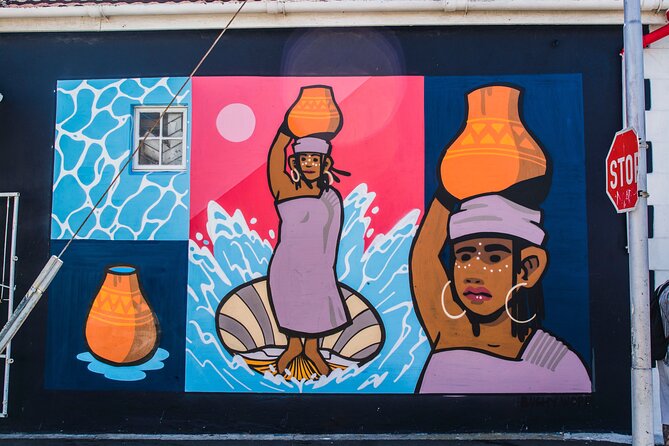
Cape Town’s Woodstock and Salt River neighborhoods turn a street walk into a lesson in art, politics, and local life. Over two hours, you’ll study murals, hear why they were painted, and learn how creative work is changing the way people see these communities. Some guides, including Chandy, Terrence, Shandy, and Shipo, also bring personal knowledge of the area and its artists.
I like two things right away: the tour gives the artwork a social purpose, and it takes you beyond Cape Town’s usual sightseeing circuit. You’ll also get real conversation rather than a string of quick photo stops. The main drawback is that the route and meeting details need your close attention, since one visitor lost 30 minutes after going to the wrong meeting point.
Key points at a glance

- Woodstock and Salt River in two hours: Walk through two Cape Town neighborhoods while discussing murals, community change, and South Africa today.
- Art with a story: Learn about artists, techniques, political concerns, and the ideas behind individual pieces.
- Local voices matter: Guides such as Chandy, Terrence, Shandy, and Shipo have been praised for thoughtful explanations and friendly conversation.
- More than graffiti: The route includes large mural work, including art around the Salt Circle area and pieces connected with a festival or exhibition.
- A small-group feel is possible, but not guaranteed: The maximum group size is 30, so ask about the expected group size if personal attention matters to you.
- Good value for art and context: At $38.65 per person, the tour costs more than a simple self-guided walk, but it adds access to local interpretation and a clear story.
Why Woodstock street art deserves two hours
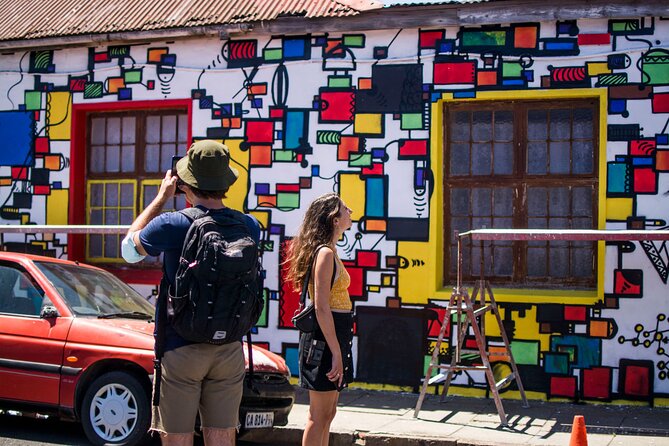
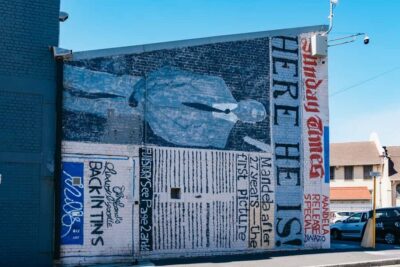
This is not a walk built around famous monuments. Its appeal comes from the way ordinary streets become an open-air gallery. You’ll see painted walls in Woodstock and Salt River, then stop to discuss the people, motives, and techniques behind the work.
That setting gives the art extra weight. A mural is not floating in a museum with a neat label beside it. It sits in a neighborhood dealing with social and economic pressures. The guide helps connect the image on the wall with the wider changes taking place around it.
I especially like that the experience treats street art as a form of public conversation. You’ll discuss the new South Africa, the country’s creative scene, and the positive changes taking place alongside serious local concerns. If you want only colorful walls for your camera, you may find the talk more serious than expected. If you want to understand why the paintings are there, that added context is the point.
More Street Art walks in Cape Town:
- Cape Town: Street Art Walking Tour in Woodstock
★ 4.8 · 293 reviews - Cape Town Woodstock Street Art Walking Tour
★ 4.5 · 77 reviews - Cape Town: Inspiring sustainable change through Street Art
★ 4.9 · 5 reviews
Starting in Woodstock, where art meets daily life
The Woodstock portion of the walk introduces you to a part of Cape Town that does not usually appear on a first-time sightseeing list. The route is on foot, so you see the neighborhood at street level instead of passing through a vehicle window.
Expect the guide to move between individual artworks and broader discussion. You might hear about an artist’s motivation, the methods used to make a mural, or the reason a particular subject matters in South Africa. The exact works can vary, and the information provided does not give a fixed list of mural names, so you should think of this as a guided area walk rather than a guaranteed checklist.
That flexibility can be useful. Street art changes, and a good guide can spend time on the strongest or most relevant pieces available that day. It also means you should not book this expecting a formal gallery tour with a printed catalog.
Several guides have been praised for making the walk personal. Chandy is described as wise and thoughtful, while Terrence is noted for encouraging questions and explaining both the artwork and the community. Shandy and Shipo are also named as guides who offer patient explanations of the paintings and their background.
Guide assignments can vary, so you cannot book this experience specifically around one person unless the provider confirms it. Still, the repeated appearance of several guide names suggests that the experience depends heavily on local storytelling, not just a standard script.
Salt River and the Salt Circle murals
The walk continues into Salt River, where the art includes a concentration of mural work around the Salt Circle area. This is one of the clearest reasons to choose the tour instead of simply searching for street art on your own.
The work here is not limited to rough graffiti. A significant part of what you see is large-scale mural art, including pieces linked to a festival or exhibition. The result is a route with enough visual variety to interest people who follow contemporary art, while still giving first-time visitors a way into the subject.
At each piece, you’ll look at more than color and composition. The guide discusses the artist, the story, and the local setting. You may also hear how different techniques shape the final image. That kind of explanation helps you notice details you might otherwise walk past.
The Salt Circle section may be the best fit for anyone who wants a concentrated collection of public art. The tradeoff is that the tour does not promise a fixed number of murals or a precise stop-by-stop schedule. Its strength is interpretation, not volume.
The conversations are part of the route
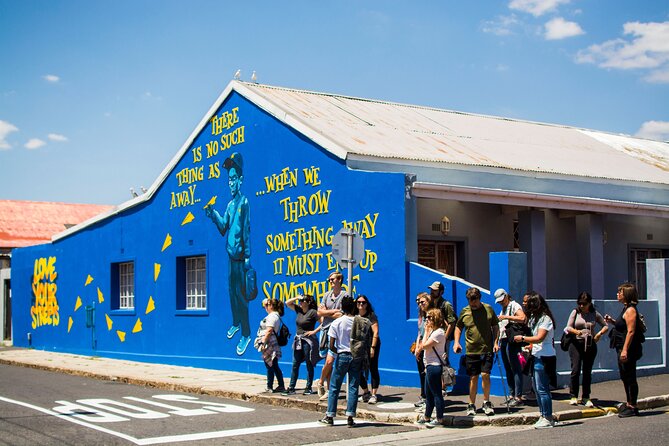
The most valuable part of this experience may happen between the murals. The walk includes discussion of social and economic issues in Woodstock and Salt River, as well as political and social concerns in South Africa and beyond.
That makes the tour different from a standard art walk. You are not just asking who painted a wall or how long it took. You are also considering why public art appears in a particular neighborhood and how it can alter outside perceptions.
One guide is described as a young person who offered insight into South African life from that point of view. That detail matters because it suggests the discussion can move from art history into present-day experience. The tour may suit you especially well if you want an introduction to how younger South Africans see the country’s changes.
The tone is not presented as a lecture. Guides encourage questions, and the conversations are part of the appeal. Still, the subject matter can be serious. Expect some talk about inequality, community pressures, history, and politics rather than a nonstop parade of cheerful murals.
A few more Cape Town days worth comparing
- Cape Town: Hop-On Hop-Off Bus Tour with Optional Cruise
★ 4.8 · 3,929 reviews - Zipline Cape Town – From Foot of Table Mountain Reserve
★ 5.0 · 3,179 reviews - Cape Town: Table Mountain Cable Car, Hop-On Hop-Off Bus Tour
★ 4.6 · 3,157 reviews - From Cape Town: Big Five Game Reserve with Lunch
★ 4.6 · 2,409 reviews
Meeting local artists and understanding the work
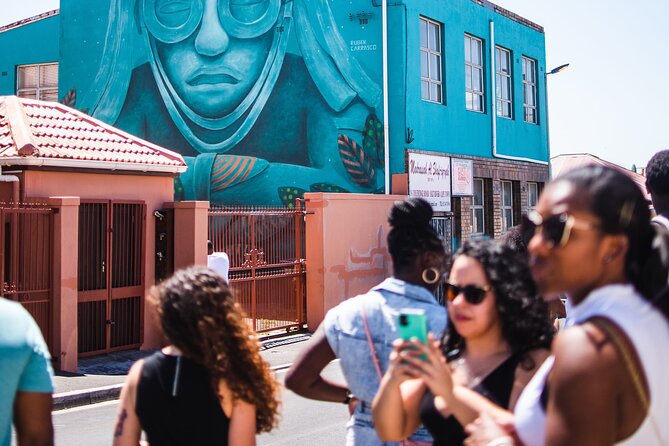
The experience description says you may meet some of the artists themselves. That is a strong feature, but it should be understood as a possibility rather than a guaranteed appointment. Artist availability can change, and no specific artist is named.
If an artist is present, you get a chance to hear about the work from its maker. That can clarify the difference between a commissioned mural, a festival piece, and other forms of public art. If no artist is available during your walk, the guide still provides background on the creators and their aims.
The guide’s role is important here. Several names connected with the tour are praised for explaining the artists and the stories behind their work in detail. You can ask about symbolism, materials, technique, or the relationship between a mural and its surroundings.
This is also where the tour’s limit becomes clear. It is a two-hour introduction, not an art-school workshop or a private meeting with a full roster of creators. You’ll leave with a stronger framework for looking at street art, but not an exhaustive catalog of every artist working in Cape Town.
What the two-hour format gives you
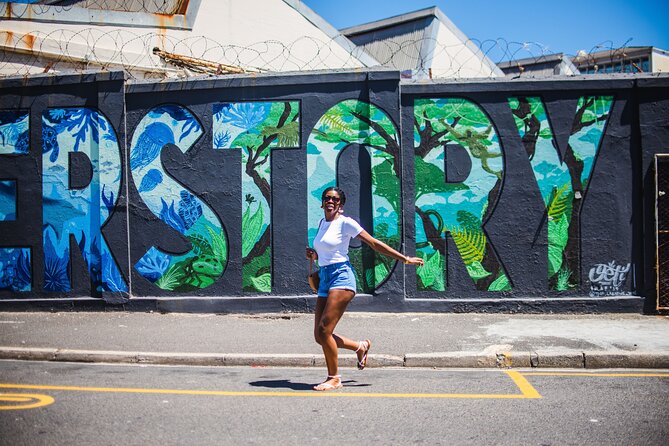
Two hours is a sensible length for this kind of walk. It gives you enough time to move through Woodstock and Salt River, stop at several works, and have real discussion without turning the outing into a full-day commitment.
The pace should suit most people who can participate in a normal walking tour. The supplied information says most people can take part, but it does not give a total walking distance or a detailed accessibility description. If you need specific support, confirm those details before booking.
A two-hour route also works well early in a Cape Town visit. You’ll gain a better sense of these neighborhoods and can use that context when you see public art elsewhere in the city. It can also fit neatly into a day when you want one focused activity rather than a long guided excursion.
The maximum group size is 30. That is manageable for a street walk, but it is not a private experience, and a group of 30 can make conversation or close viewing harder. If the booking calendar allows you to choose among times, a less popular departure may offer a calmer experience.
Is $38.65 a fair price?

At $38.65 per person, this tour is priced above a casual self-guided walk, but the comparison is not quite fair. You are paying for a guide who explains the art, introduces local context, and may help you understand pieces that would otherwise look like colorful walls without a story.
The value is strongest if you care about the reasons behind the murals. A free walk can show you images, but it cannot reliably explain the artists, the techniques, the political questions, or the local changes connected with them.
The price is less compelling if you want a quick photo outing or if you already know Woodstock and Salt River well. The tour’s worth depends on the quality of the conversation, and that makes guide assignment important. The positive descriptions of Chandy, Terrence, Shandy, and Shipo suggest a strong emphasis on personal explanation, but no specific guide is guaranteed.
For an art-minded visitor, the cost is reasonable for two hours of local interpretation. For a budget visitor who is happy to explore independently, you could instead use the tour as an introduction, then revisit the area on your own.
Practical details before you book
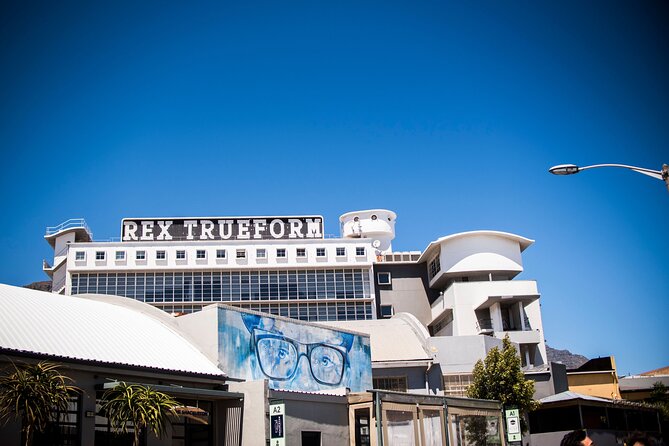
Your confirmation arrives when you book, and the ticket is mobile, so you do not need a printed voucher. The tour operates near public transportation, which makes it easier to reach than an activity far outside the city.
Pay close attention to the exact meeting point. One person arrived at the wrong location because the booking information was unclear and the group started 30 minutes late. That is a small but important warning: check the meeting instructions, allow time to orient yourself, and contact the provider if anything seems uncertain.
Service animals are allowed, and most people can participate. The group can include up to 30 people, so ask ahead if you need a smaller group or have mobility concerns that require route details.
You can cancel for a full refund up to 24 hours before the start time. Changes or cancellations made less than 24 hours ahead are not accepted for a refund, and the cut-off follows local Cape Town time.
Who will enjoy this walk most?
I would choose this experience if you like contemporary art, local neighborhoods, and conversations about how a city is changing. It suits people who want to get beyond Cape Town’s best-known sights without giving up a clear guide and planned route.
It is also a good fit for first-time visitors who want a gentle introduction to South African social issues through public art. The guide’s explanations give you a starting point for thinking about politics, community identity, and creative work without requiring prior knowledge.
Families and mixed-age groups may find the visual art an easy way into serious topics, though the depth of the discussion depends on the guide and the questions asked. Art students, photographers, and anyone interested in mural culture should find plenty to study.
I would hesitate if you dislike walking, want a tightly timed sightseeing schedule, or expect every stop to feature a famous artist. You should also think twice if you want a purely lighthearted activity. The tour addresses difficult social and economic issues, and that is central to its value.
Should you book the Woodstock street art tour?
Book it if you want art with context, not just a collection of colorful backdrops. The strongest reasons are the local guide, the chance to discuss the artists and their motives, and the look at Woodstock and Salt River from inside the communities rather than from a sightseeing bus.
At $38.65, it is a fair buy for a two-hour introduction to Cape Town’s public art scene. Confirm the meeting point, accept that the guide may vary, and come ready to ask questions. If you do, this walk can give you a more thoughtful view of the city’s creative life and the issues its murals bring into public view.
FAQ
How long does the Cape Town street art tour last?
The tour lasts approximately two hours.
Where does the tour take place?
The walk takes place in the Woodstock and Salt River neighborhoods of Cape Town.
What will I see during the tour?
You will see street art and murals, discuss individual pieces, and learn about the artists, their motivations, and the techniques used.
Does the tour discuss South African social issues?
Yes. The walk includes discussion of social and economic issues in Woodstock and Salt River, as well as political and social concerns connected with South Africa and the wider world.
Might I meet any artists?
You may meet some of the artists, but no particular artist or meeting is guaranteed in the provided information.
Who guides the tour?
Guide names associated with the experience include Chandy, Terrence, Shandy, Shipo, and another guide identified as X. The specific guide may vary by departure.
How much does the tour cost?
The listed price is $38.65 per person.
How large can the group be?
The maximum group size is 30 people.
Can I cancel for a refund?
Yes. You can cancel at least 24 hours before the start time for a full refund. Cancellations or changes made less than 24 hours before the experience are not refunded.
Just added around Cape Town
- 100 % Catch Rate Cape Town Wild Tours★ 5.0 · 5 reviews
- Private Cape Town City Evening Tour★ 5.0 · 3 reviews
- Private Cape Town City Tour table Mountain with wine tasting★ 5.0 · 10 reviews
- Cape Town Boat Trip★ 4.0 · 5 reviews
- Cape Town Aquila Private Game Reserve Big Five Safari Adventure★ 5.0 · 4 reviews
- Cape Town Private Birding Tour★ 5.0 · 14 reviews
- Private 2-Day Cape Town Highlights: Robben Island,Table Mountain Tickets & Wine★ 5.0 · 8 reviews
- Private Transfer: CPT Airport to Cape Town in Luxury Van★ 4.0 · 5 reviews
Street Art, compared.
Johannesburg: Maboneng Street Art & Culture Tour
Read our review →Johannesburg: Maboneng Street Art & Culture Tour
Read our review →
Johannesburg: Street Art and Culture in Maboneng!
Read our review →
Colours of Johannesburg: A Graffiti & Street Art Tour
Read our review →
Browse the lists this tour appears in