

Reviewed · CITY TOURS
Johannesburg City Centre Walking Tour
Johannesburg’s city centre is best understood on foot, with a local guide who can explain both the grand buildings and the hard realities around them. This tour links Chancellor House, where Nelson Mandela and Oliver Tambo worked, with Main Street, the Workers Museum, Mary Fitzgerald Square, and the city views from the Top of Africa.
I like the way the tour combines serious history with everyday city life. I also like the finish: a South African braai in the artsy Maboneng Precinct, with plant-based choices available. The main thing to consider is that some transfers may be needed between areas, and the published meeting, endpoint, and lunch details should be confirmed before you set out.
Key points to know before booking

- Chancellor House puts Mandela and Tambo’s legal work in context, rather than treating Johannesburg as a string of photo stops.
- The Workers Museum explains the migrant labor system that helped shape the city and South Africa.
- The Top of Africa adds a useful bird’s-eye view after several hours at street level.
- Maboneng provides a lively food finish, with a braai and plant-based options.
- Small groups of no more than 10 make it easier to ask questions and stay together.
- Guide quality is central, with Mathapelo, Tebogo, Clement, Kutlwano, Mulalo, and Sibongile all praised for warm, careful guiding.
Why a guided walk works well in Johannesburg
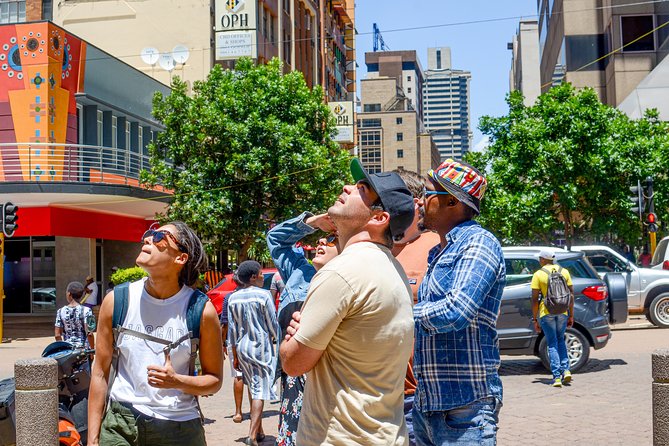
Johannesburg can be an intimidating place for an independent walker, especially if you have only a short time in the city. This experience gives you a way into the central business district without asking you to work out the safest route, the meaning of each building, or the best way between districts on your own.
I like the plain, street-level focus. You are not sealed inside a vehicle looking through glass. You walk through the city, see how people use its squares and sidewalks, and have a guide nearby to explain what you are seeing.
That matters in Johannesburg. The city centre carries stories of mining, labor, segregation, political struggle, migration, business, and urban decline. A building can look attractive from the outside while carrying a painful past. A square can be a useful meeting place, a historic protest site, or simply part of the daily commute. A good guide helps you read those layers.
The group limit of 10 is another plus. It is small enough for direct conversation, which suits this tour better than a large group with a flag and a loudspeaker. Guides such as Mathapelo and Tebogo are praised for answering questions, giving honest context, and knowing when to let you look around quietly.
More City Tours in Johannesburg
- Johannesburg: City Centre Walking Tour
★ 4.8 · 152 reviews - Half Day Pretoria City Tour from Johannesburg or Pretoria
★ 5.0 · 150 reviews - Johannesburg Half Day City Tour
★ 5.0 · 67 reviews
Starting at Gandhi Square and Main Street
The meeting point is outside the Nando’s restaurant at Gandhi Square, at Shop 180 in the Metropolitan Building on Rissik Street. That gives you a clear central starting point, though you should allow time to find the exact restaurant entrance.
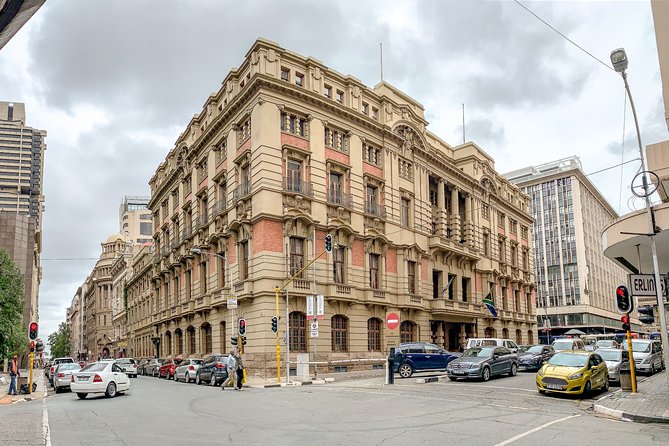
The first major stop is Main Street, where you spend about 30 minutes. This is a good opening because Johannesburg’s older commercial core is not simply a backdrop for photographs. Its buildings tell the story of a city built around gold, finance, transport, and migration.
Your guide can help you notice the details that are easy to miss when walking alone: older façades, changing businesses, street activity, and the contrast between historic architecture and present-day city life. You will also get a sense of the pace of Jozi, as Johannesburg is widely known, rather than seeing only the polished districts presented in tourist brochures.
The walk is not designed as an architecture lecture. It is more useful than that. You get buildings, local observations, and a chance to ask how the city changed over time. Several guides are praised for adding music, culture, personal insight, and honest opinions to the basic route.
The Workers Museum and the labor behind the city
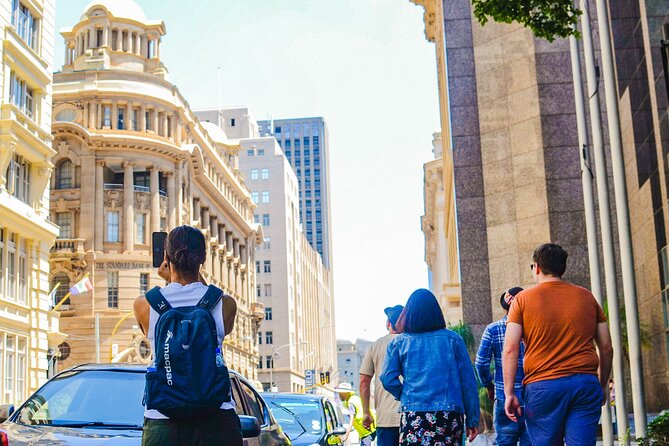
The Workers Museum receives about 20 minutes of the tour. It occupies a former compound, and its importance comes from the way it explains the lives of workers who helped build Johannesburg.
The city’s wealth did not appear by magic. Mining and industry relied on large numbers of workers, many of them living far from their families under restrictive conditions. The museum gives you a human scale for that system. Instead of hearing only about mines, companies, and money, you learn more about the people whose labor made the city possible.
I would pay close attention here, even if museums are not usually your main reason for booking a walking tour. A short visit can change the way you look at the streets you have already crossed. It also provides useful background for later stops, especially when the guide connects labor, race, law, and political change.
The museum visit is brief, so do not expect a long self-guided museum session. Its value comes from the guide’s explanation and from seeing one focused place within a wider city walk.
Chancellor House and the law office of Mandela and Tambo
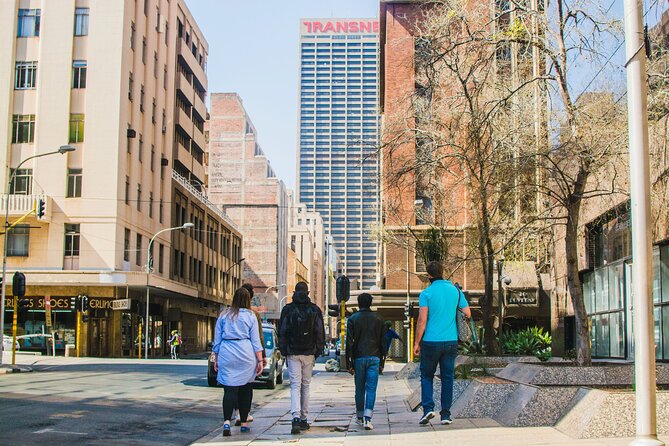
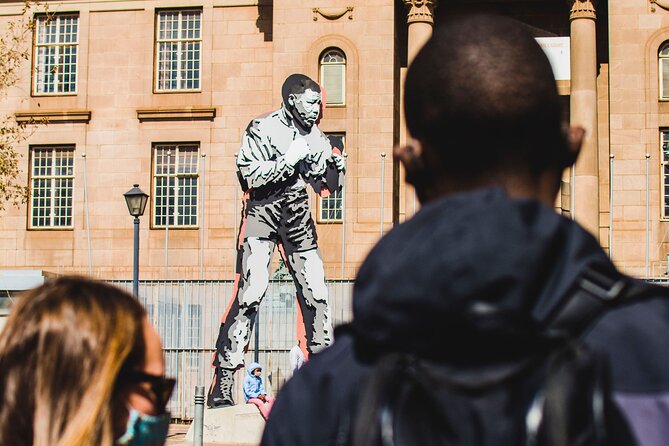
Chancellor House is one of the tour’s strongest stops. It is associated with Nelson Mandela and Oliver Tambo’s law office, founded as South Africa’s first Black-owned law firm.
That detail gives the building real weight. This was not just an office in an old commercial district. It was a place where people facing an unjust legal and political system sought help, and where Mandela and Tambo built a practice that became part of the wider struggle against apartheid.
The stop lasts about 15 minutes, so expect an introduction rather than an extensive visit. Still, the location helps turn familiar names into a physical place. You can stand where the two lawyers worked and see how their professional lives were tied to the city around them.
This is also a good point to ask questions. Guides such as Clement, Mathapelo, and Tebogo are repeatedly praised for making complicated South African history easier to follow without flattening it into a simple story. That is important. Johannesburg’s past includes courage, injustice, ambition, loss, and change all at once.
More Walking Tours in Johannesburg
- Johannesburg: Local Food Tasting Guided Walking Tour
★ 4.7 · 192 reviews - Johannesburg: Guided Walk with Lions in the African Bush
★ 4.7 · 45 reviews - Johannesburg: Hillbrow Walking Tour Including Ponte building
★ 4.8 · 32 reviews - Johannesburg: Private Walking Tour with a Local
★ 4.4 · 17 reviews
Mary Fitzgerald Square and the city in public view
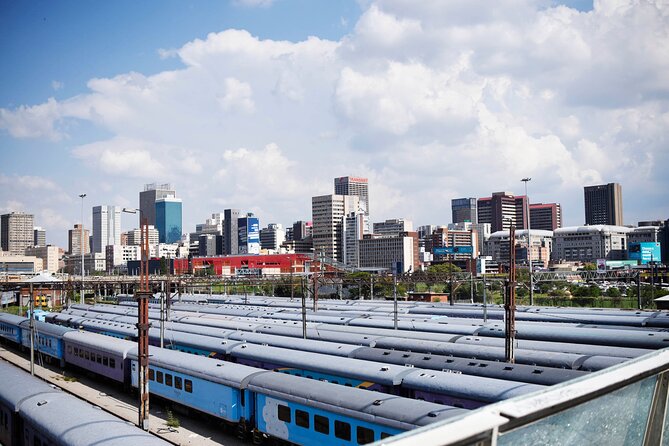
The walk continues to Mary Fitzgerald Square, with roughly 10 minutes here. The square is often used for meetings, making it a useful place to think about public space in Johannesburg.
Squares are more than open areas between buildings. They can be places where workers gather, communities organize, music is performed, and political ideas become visible. Your guide can help connect the square’s present use with the city’s broader social and political life.
This stop also gives the walking route a needed pause. Three hours on city sidewalks can feel active, so a short stop in an open space helps break up the movement. You will have time to take photographs and watch the city around you.
The experience is not a polished sightseeing circuit. That is part of its appeal, but it also means conditions can vary. Some sections may feel rougher or less comfortable than the protected tourist areas many visitors know. Follow your guide’s directions, stay with the group, and keep your attention on your belongings.
The Top of Africa and a different view of Jozi
The tour includes city views from the Top of Africa skyscraper. After seeing Johannesburg at pavement level, this high viewpoint gives you a new way to understand its size and layout.
From above, the city becomes easier to read. You can look across the central district and see the relationship between older commercial streets, newer developments, and the wider spread of Johannesburg. It is also one of the best chances during the tour to pause for photographs.
The viewpoint is useful because the walking route focuses so closely on individual buildings and streets. From the top, you step back and see the larger city. The contrast helps: at street level you notice people, shopfronts, public squares, and architecture; above the city, you see how those pieces fit together.
The supplied schedule does not give a separate duration for this stop. If the viewpoint is especially important to you, confirm its exact timing and access when you book. The tour is about three hours in total, so the guide will need to keep the route moving.
Getting between districts and reaching Maboneng
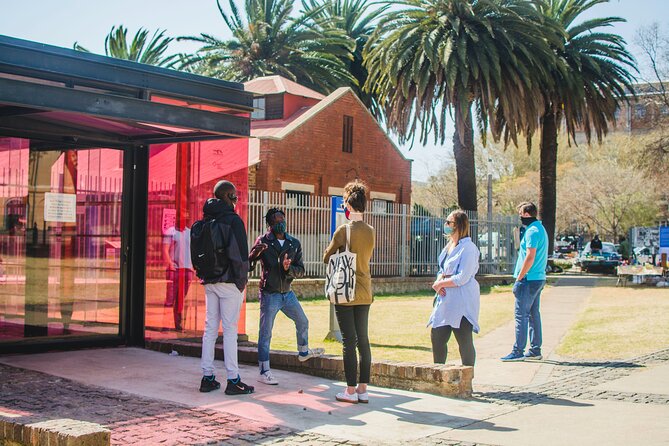
The route includes the central city, then continues toward the Maboneng Precinct for lunch. At least one account of the experience describes taking a taxi or arranging an Uber from Gandhi Square through Jewel City and onward to Maboneng. That means you should not assume every part of the experience is one continuous walk.
This is a practical point, not a flaw. Johannesburg is spread out, and a short vehicle transfer can be sensible when moving between areas. Guides have also helped with taxi or Uber arrangements, including checking that a participant reached the hotel safely after the tour.
The exact sequence can vary, so confirm where the city walk ends, how the transfer works, and when lunch takes place. The stated end point is Constitution Hill Human Rights Precinct at 11 Kotze Street in Braamfontein, while the tour information also says the experience ends with lunch in Maboneng. That is worth clarifying before booking, particularly if you have an afternoon train, flight, or separate appointment.
Braai lunch in the Maboneng Precinct
The meal is one of the tour’s most appealing features. You finish with a braai, the South African tradition of cooking food over a fire or grill, in Maboneng. The meal gives you a taste of local food culture rather than another stop at a standard international restaurant.
You can expect a social, informal finish in an arts-focused part of the city. Maboneng is associated with art, music, crafts, and local businesses, and the area gives the tour a different mood from the older central streets.
The meal has received especially warm praise, including the chakalaka, a spicy vegetable relish often served with South African food. Plant-based options are available, which is useful if you do not eat meat. Water is included, but additional items and costs are not, so bring a payment method for anything beyond the provided meal and water.
Lunch also helps balance the serious parts of the morning. The Workers Museum and Chancellor House deal with difficult subjects. Sitting down to eat, talk, and experience a contemporary district lets you connect the past with the city as it is now.
What the guides add to the experience
The guide is the main reason to choose this tour instead of attempting the route alone. Mathapelo is praised for clear explanations, honest South African history, and an easy manner. Tebogo is described as fun, careful about safety, and able to add music and culture to the walk.
Clement is noted for making the outing feel like a relaxed conversation. Kutlwano has helped with suggestions for other things to see in Johannesburg. Mulalo is praised for combining strong local knowledge with a good lunch choice, while Sibongile has been attentive about safety and helped arrange transport after the walk.
You should not assume a specific guide unless the booking confirms one. But these comments show the kind of service to expect: practical route advice, answers to questions, attention to safety, and a willingness to explain the city beyond the standard facts.
The best guides also know when not to talk. One useful skill on a city walk is giving you space to look at a building, take a photograph, or watch street life without filling every second with commentary.
Price, timing, and who gets the best value
At $45.19 per person, the tour is not the cheapest way to see Johannesburg. It is also more than a simple free walking route. The price covers a guide, a structured three-hour experience, water, the city walk, the viewpoint, and a braai lunch with plant-based choices.
For me, the value comes from the access and judgment. You are paying for someone who knows how to link the stops, explain difficult history, and help you move between parts of the city. That matters more here than it would in a compact, easy-to-navigate old town.
The tour is booked about 21 days ahead on average, so it makes sense to reserve early if your schedule is fixed. Free cancellation is available up to 24 hours before the start time. Changes or cancellations inside that window are not accepted for a refund.
Most people can take part, and the tour is near public transportation. Still, you should be comfortable walking for much of three hours, standing at stops, and managing city streets. Wear practical shoes, carry water even though some is provided, and keep your phone and wallet secure.
Who should book this Johannesburg walk?
I would choose this tour if you are visiting Johannesburg for the first time and want a grounded introduction to the city centre. It is especially useful if you are uneasy about walking downtown alone or want more than a drive-by view of the main sights.
It suits people who like history tied to real places. Chancellor House and the Workers Museum are not throwaway photo stops, and the guide’s explanations give them meaning. It also suits food-minded visitors who want a braai rather than a generic lunch.
You may want another option if you dislike urban walking, prefer a tightly timed sightseeing schedule, or need a guaranteed endpoint without any transport changes. The route includes difficult parts of Johannesburg, and the experience does not hide the city’s deterioration or social problems behind a polished presentation.
Should you book it?
Yes, if you want to meet Johannesburg at street level and are willing to accept a little uncertainty in the route. The combination of Main Street, the Workers Museum, Chancellor House, Mary Fitzgerald Square, the Top of Africa, and a braai in Maboneng gives you a much fuller picture than a quick city drive.
Book it early, confirm the exact lunch and endpoint arrangements, and go with an open mind. You will get the most from this experience if you want honest context, local guidance, and a city walk that shows both Johannesburg’s energy and its difficult edges.
FAQ
How long does the Johannesburg City Centre Walking Tour last?
The tour lasts approximately three hours.
Where does the tour start?
The meeting point is outside Nando’s at Gandhi Square, Shop 180, Metropolitan Building, Rissik Street, Marshalltown, Johannesburg.
What places are visited during the walk?
The route includes Main Street, the Workers Museum, Chancellor House, Mary Fitzgerald Square, Johannesburg’s city centre, and views from the Top of Africa. The experience also includes time in or transport to the Maboneng Precinct for lunch.
Is lunch included?
The tour ends with a braai lunch in the Maboneng Precinct. Plant-based options are available. Additional items and costs are not included.
How many people can join the tour?
The maximum group size is 10 people.
What is included in the tour price?
Water is included. Additional items and costs are not included.
What is the cancellation policy?
You can cancel up to 24 hours before the experience start time for a full refund. Cancellations or changes made less than 24 hours before the start time are not accepted for a refund.
Just added around Johannesburg
- 13 Day Safari – Cape Town to Johannesburg★ 5.0 · 11 reviews
- Tala Game Reserve & Natal Lion Park 1/2 Day Tour from Durban★ 3.0 · 13 reviews
- South Africa from Joburg: Elephant Sanctuary Half Day Tour★ 5.0 · 3 reviews
- Private Safari Tour: Pilansberg National Park Big 5★ 5.0 · 7 reviews
- Johannesburg: Elephant and Monkey Sanctuary Half Day Tour★ 5.0 · 3 reviews
- Johannesburg: Wine Tasting and Cableway Half Day Tour★ 4.7 · 3 reviews
- Pretoria: Pretoria City and Lion Park Tour★ 4.8 · 41 reviews
- Lion Park Tour in Open Safari Vehicle★ 5.0 · 6 reviews
City Tours, compared.
Cape Town Hop-On Hop-Off City Tour with Optional Cruise
Read our review →
Johannesburg Hop-On Hop-Off City Tour with Soweto Option
Read our review →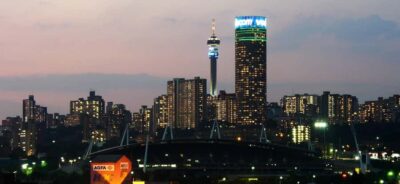
Jo’berg in 1 Day: Soweto, Apartheid Museum & City Tour
Read our review →
Cape Town City Pass: Save Over 50% on 80+ Top Attractions
Read our review →
Hop-On Hop-Off Bus, City Tour and Apartheid Museum
Read our review →
Browse the lists this tour appears in