
Reviewed · CITY TOURS
Half Day Pretoria City Tour from Johannesburg or Pretoria
Pretoria tells a different story from Johannesburg. Its grand avenues and government buildings focus your attention on Boer nationalism, British rule, and the making of modern South Africa. I like that this half-day tour links four important sites without asking you to handle Pretoria traffic or arrange several separate admissions.
I also like the comfortable minivan, hotel pickup, and guides such as Khutso, Ali, Thabang, and Tshepo, who bring personal energy to the history. The main drawback is that some stops may be viewed from the vehicle for safety reasons, and a half day can feel tight when attractions are closed or traffic slows the route.
Key points to know before you book
- The Voortrekker Monument is the main history lesson: Its carved interior panels tell the story of the Great Trek and the rise of Afrikaner nationalism.
- You visit both Paul Kruger’s home and the Union Buildings: These stops connect one political era to the next, from the old Boer republics to South Africa’s present government.
- Hotel pickup works from Johannesburg or Pretoria: Round-trip transport saves time and removes the need to find parking in a spread-out capital.
- The group can reach 15 people: Some departures may feel intimate, and a small booking can sometimes operate almost like a private tour.
- The tour is built for a quick first look: Expect roughly four to five hours, not a slow museum day.
- Safety affects the sightseeing: You may not leave the vehicle at every architectural stop, and that limitation is worth knowing in advance.
Why Pretoria makes a useful half-day from Johannesburg
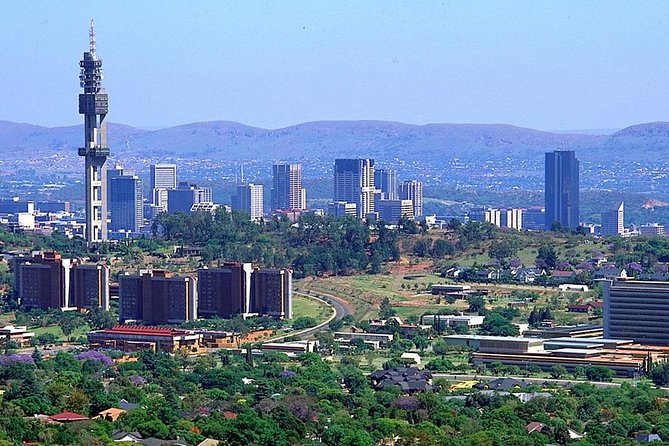
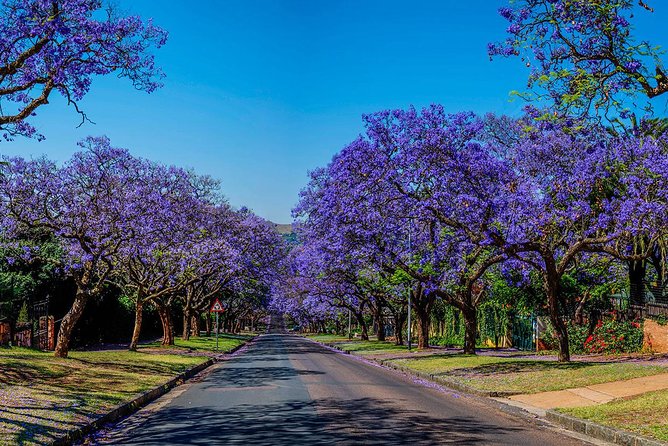
If Johannesburg is your base, Pretoria gives you a sharp change of pace. The city is known for broad, tree-lined streets, older public buildings, monuments, and the seat of national government. The tour does not try to cover every corner. Instead, it uses a compact route to explain how power shifted between Boer, British, African, and modern democratic governments.
That focus makes the trip useful early in a South Africa visit. You get names and events that help place later sights in context. The Voortrekker Monument explains Afrikaner identity. Paul Kruger’s home brings the late nineteenth-century Transvaal into view. The Union Buildings connect that older political world with today’s state.
I like this approach because the drive between stops becomes part of the lesson. Your guide can point out buildings and explain why Pretoria looks different from Johannesburg. The experience is not just a collection of photo stops. It is a short introduction to the political story behind the city.
Still, you should set your expectations correctly. This is a guided overview, not an exhaustive city tour. You will see the key places and hear their background, but you will not have unlimited time to study every exhibit or wander through every public garden.
More City Tours in Johannesburg
- Johannesburg: City Centre Walking Tour
★ 4.8 · 152 reviews - Johannesburg City Centre Walking Tour
★ 5.0 · 80 reviews - Johannesburg Half Day City Tour
★ 5.0 · 67 reviews
Riding comfortably from Johannesburg or Pretoria
The tour includes pickup and drop-off at hotels in Johannesburg and Pretoria. That is a major practical benefit, since the cities are spread out and the attractions are not all within an easy walking route. You ride in an air-conditioned minivan, with onboard uncapped WiFi included.
For a four to five-hour outing, the vehicle matters. Pretoria can be warm, and several stops involve outdoor areas or short walks. Air conditioning gives you a break between visits, while the minivan keeps the group together and lets the guide explain the city as you move.
The maximum group size is 15. That is not a private tour by definition, but it is far more manageable than a large coach. Your guide can usually respond to questions without turning every stop into a formal lecture. The pace also seems adaptable. One guide arranged a golf cart at the memorial so elderly parents could reach the site more easily, which is a useful sign for families concerned about mobility.
A small booking may bring an unexpected advantage. One person who booked alone ended up with what was effectively a private tour because the departure did not get canceled. That is not something you should assume will happen, but the operator does appear to run the trip even with a very small group.
The Voortrekker Monument and the Great Trek
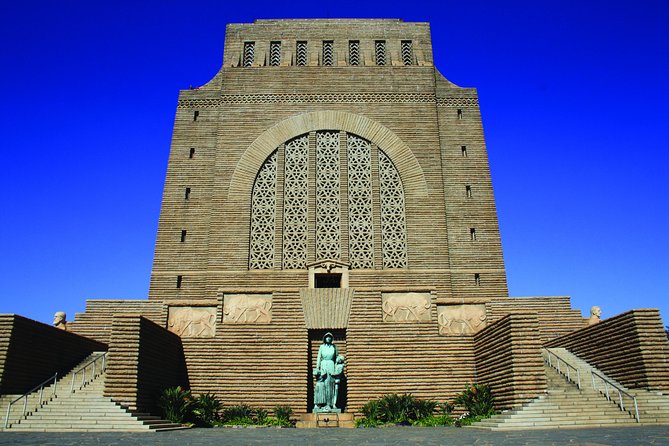
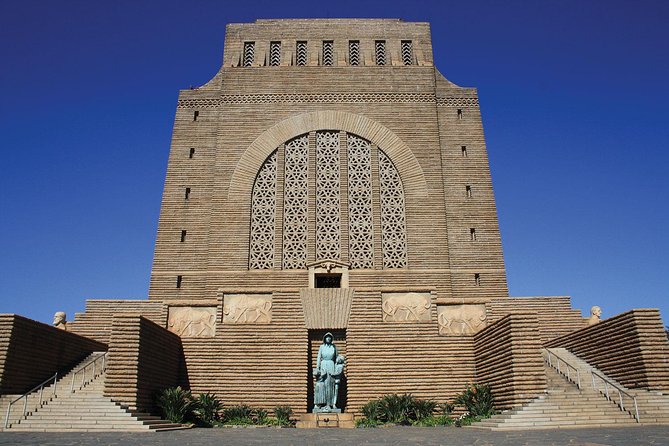
The Voortrekker Monument is the most striking stop and usually the emotional center of the tour. Built in the form of a massive stone cube, it commemorates the Voortrekkers, Boer settlers who moved inland during the Great Trek and resisted British control in the Cape.
Inside, carved panels present scenes from that migration and its battles. The monument is important to many Afrikaans-speaking South Africans because it represents Afrikaner nationalism. Your guide can help you understand both the pride connected to the site and the political ideas behind its design.
I would give this stop your full attention. The stonework and scale are memorable, but the meaning matters more than the architecture alone. The monument presents one side of South Africa’s past, centered on the Boer experience and the settlers’ struggle. It does not provide a complete account of every community affected by that expansion.
That limitation is important. You should listen for what the monument emphasizes, and also notice what it leaves out. Some visitors found that Pretoria’s official monuments give less space to the original inhabitants who were displaced, sometimes by force, by settlers. A good guide can help you place the monument within that wider story rather than treating its message as the whole truth.
The stop lasts about an hour, with admission included. You may have time for the building, the displays, and views from the grounds. The site can involve walking, so mention mobility concerns to your guide. The golf cart arrangement described by one family shows that help may be possible, but it is wise not to treat that service as guaranteed.
Church Square, old Pretoria, and the city’s architecture
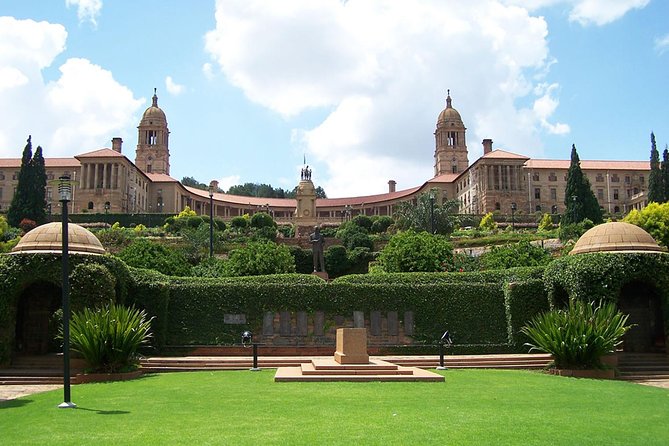
Church Square gives you a look at Pretoria’s civic center and older public architecture. The route includes prominent buildings such as the Ou Raadsaal, the Palace of Justice, and the Capital Theatre. These structures help show how the city developed as a political center rather than simply a residential capital.
This part of the tour is especially useful if you enjoy architecture. Your guide can explain the purpose and background of the buildings, and you can ask questions about the city’s culture and changing government. The square also helps tie the other stops together. The Voortrekker Monument presents Afrikaner identity in grand symbolic form, while Church Square shows how that identity operated through institutions and public life.
Do not expect a long independent walk here. Safety concerns may mean that some buildings are viewed from the minivan or that the stop is brief. One person found the inability to get out at certain points disappointing, although the restriction was explained as a precaution against tourist-related robberies.
That may feel frustrating if you want detailed photographs or time to examine façades. On the other hand, a guided drive lets you see more in a short period and avoids leaving the group in places the operator considers risky. I would think of Church Square as an architectural orientation rather than a full sightseeing stop.
A few more Johannesburg days worth comparing
- From Johannesburg: Lion & Safari Park Half-Day Tour
★ 4.6 · 384 reviews - Half Day Lion Park tour from Johannesburg or Pretoria
★ 5.0 · 274 reviews - From Johannesburg: Pretoria Half Day Tour
★ 4.5 · 93 reviews - Johannesburg: Half-Day Apartheid Museum Tour
★ 4.5 · 73 reviews
Paul Kruger House and the Transvaal era
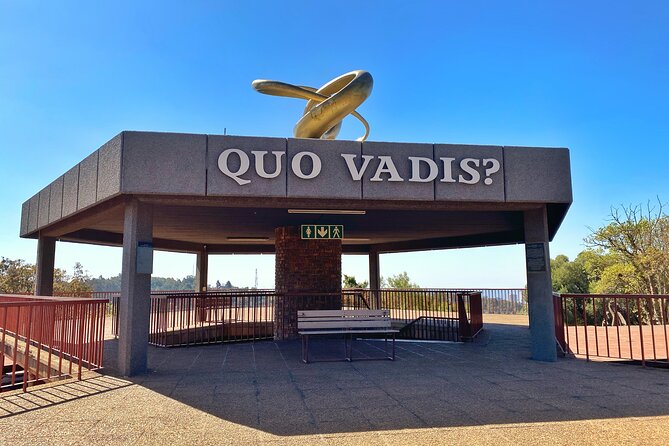
The Paul Kruger House Museum gives the tour a more personal scale. Instead of a huge monument or government complex, you enter the former home of Paul Kruger and see furniture and personal items linked to his family.
Kruger was a major figure in the old Transvaal and is also the person whose name appears in Kruger National Park. The house helps you connect the political figure to ordinary domestic details. A guide can explain his role, his beliefs, and the period in which he led the South African Republic.
I like this stop because it balances the monumental sites. After the large, public message of the Voortrekker Monument, a house filled with family possessions can make the past feel more human. It also gives you a chance to ask about the relationship between Boer leaders, British rule, and the later development of South Africa.
Admission is included, and the scheduled visit is about an hour. The exact amount of time may depend on traffic, group pace, and opening conditions. One unhappy booking found that some advertised attractions were closed on a weekend and had to be replaced with an alternative. That warning is worth taking seriously. Confirm the operating status of the sites when you book, especially if your visit falls on a weekend or public holiday.
The Union Buildings and South Africa’s modern government
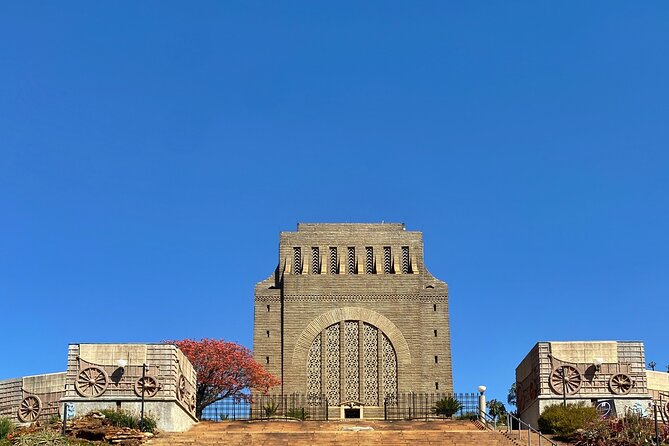
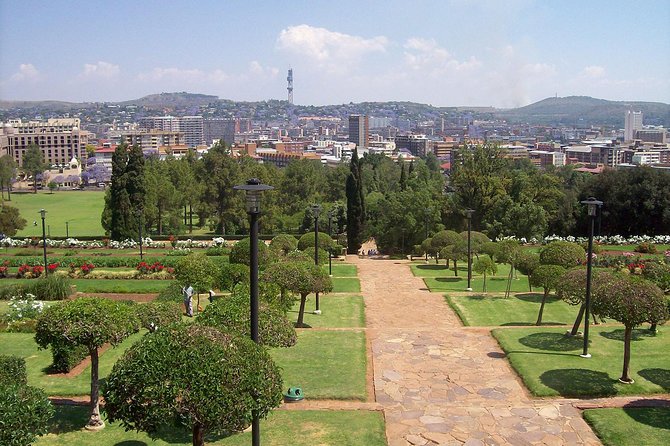
The Union Buildings are the headquarters of South Africa’s government and one of Pretoria’s best-known public landmarks. The complex sits above terraced gardens, where you can take a short walk and enjoy views across the city.
This is usually the tour’s most open and relaxed stop. After several history-heavy interiors and city streets, the gardens give you room to stretch your legs. The buildings also help explain why Pretoria remains the administrative capital, even though Johannesburg is the country’s major business center.
The area has a strong connection to modern democratic South Africa. The grounds include a prominent Nelson Mandela monument, which adds another layer to a tour that otherwise focuses heavily on Boer and colonial history. Seeing the monument alongside the older sites makes the country’s political changes easier to grasp.
The scheduled time is about 30 minutes. That is enough for a walk, photographs, and a look at the main setting, but not enough for a slow garden visit. If you prefer lingering at major landmarks, the pace may feel brisk. If you are using the tour to get your bearings, the short stop works well.
The guide can shape the whole experience
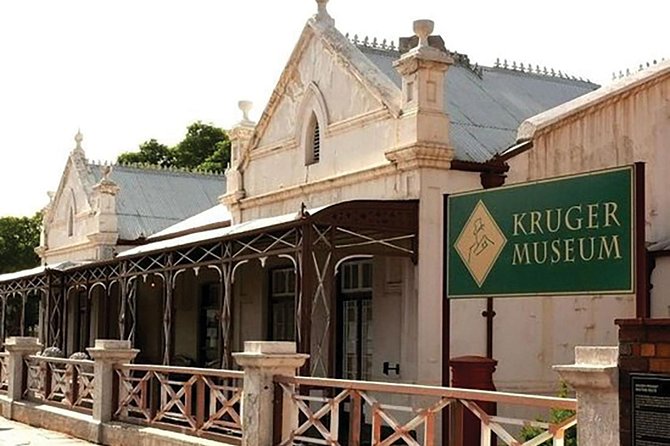
The strongest part of this tour is the guide’s ability to connect sites that might otherwise feel unrelated. Guides named in the feedback include Ali, Khutso, Thabang, Tshepo, Cpho, Marc, and Guy. Their styles may differ, but the repeated strengths are clear: clear explanations, careful driving, patience, and a willingness to answer questions.
That matters in Pretoria because the monuments carry political weight. You need more than dates. You need someone who can explain why the Voortrekker Monument matters to Afrikaner nationalism, how Paul Kruger fits into the story, and why the Union Buildings represent a different chapter.
Several guides were praised for adjusting the pace. That can help if you are traveling with older relatives or children. Families found the outdoor sections manageable, and children enjoyed parts of the Voortrekker Monument and Union Buildings. The tour can also work well for solo visitors because guides may spend more time answering individual questions when the group is small.
The experience will be best if you participate. Ask about the African communities affected by Boer expansion, the British role, the changing meaning of the monuments, and the connection between Pretoria’s past and the apartheid era. The city does not tell one simple story, and the quality of your questions can broaden the visit.
What the $83.39 price includes
At $83.39 per person, this is not the cheapest way to see Pretoria. The value comes from combining transport, a driver-guide, hotel pickup and drop-off, air conditioning, WiFi, and admission to the Voortrekker Monument and Paul Kruger House.
If you are staying in Johannesburg, the transport is the key saving. You do not have to arrange a separate driver, navigate between sites, or work out where to park. You also get a guide who can explain the buildings while you travel. For a first visit, that convenience may justify the price.
The value is weaker if you only want quick exterior photographs. Some locations may be viewed from the vehicle, food and drinks are not included, and the schedule is short. You are paying for interpretation and door-to-door transport, not a full day of museum access.
Group discounts may be available, and the maximum group size of 15 keeps the format relatively personal. I would compare the price with a private vehicle if your party is larger or if you need a very flexible schedule. For solo visitors or couples who want history without driving, the shared tour is easier to justify.
Who should choose this Pretoria tour?
I would recommend it to you if you are staying in Johannesburg and want a structured introduction to Pretoria without committing a full day. It suits people who care about political history, architecture, monuments, and the stories behind national symbols.
It also works well for families. The drive breaks up the sightseeing, the outdoor stops give children room to move, and the guide can keep the historical material lively. Older adults may appreciate the vehicle and the possibility of help at the memorial, though walking is still part of the experience.
You may want another option if you prefer long, independent visits or if you dislike fixed schedules. The route is efficient, but it cannot guarantee that every building will be open or that you can leave the vehicle at every point. It is also not the best match for someone seeking a tour focused mainly on contemporary township life, African history, or apartheid. Pretoria’s traditional monuments receive the most attention.
The tour pairs well with a visit to the Apartheid Museum or Soweto. Those experiences can give more room to African perspectives and the twentieth-century struggle against apartheid. Together, the visits produce a fuller understanding than Pretoria alone.
Practical details before you reserve
The tour lasts about four to five hours, with roughly two hours devoted to Pretoria’s general city sights, one hour at the Voortrekker Monument, one hour at Paul Kruger House, and about 30 minutes at the Union Buildings. Actual timing can shift because of traffic, hotel pickups, group delays, and opening conditions.
Pickup is offered from hotels in both Johannesburg and Pretoria. Food and drinks are not included, so plan accordingly, though the provided information does not specify stops for buying refreshments. Confirmation is issued at booking, and the child rate applies only when the child shares with two paying adults.
Most people can take part, but the tour includes walking at the monument and Union Buildings. If someone in your group needs extra assistance, contact the operator in advance and explain the situation clearly.
You can cancel for a full refund up to 24 hours before the local start time. Cancellations or changes made inside that window are not refunded or accepted. That policy makes early planning sensible, especially if your Johannesburg schedule depends on flights or other timed activities.
Should you book it?
Book this tour if you want a short, well-organized introduction to Pretoria with hotel transport and a guide who can explain the city’s political past. The Voortrekker Monument and Paul Kruger House provide the strongest historical content, while the Union Buildings add a clear link to modern South Africa.
Skip it if you need guaranteed entry to every listed site, long independent walks, or a stronger focus on African and apartheid-era history. For most first-time visitors based in Johannesburg, though, the tour offers a useful half day, comfortable transport, and enough context to make Pretoria more than a quick drive past government buildings.
FAQ
How long does the Pretoria city tour last?
The tour lasts approximately four to five hours.
Where does pickup take place?
Hotel pickup and drop-off are offered from Johannesburg and Pretoria hotels.
Which attractions are included?
The route includes Pretoria city sights, the Voortrekker Monument, the Paul Kruger House Museum, Church Square and its notable buildings, and the Union Buildings.
Is admission included?
Admission to the Voortrekker Monument and Paul Kruger House Museum is included. The Pretoria city portion and Union Buildings visit are listed without an admission charge.
How large is the group?
The tour has a maximum of 15 people.
Is the tour suitable for children?
Most people can participate, and children have enjoyed the outdoor sections at the Voortrekker Monument and Union Buildings. The child rate applies only when the child shares with two paying adults.
What happens if I need to cancel?
You can receive a full refund if you cancel at least 24 hours before the experience start time. Cancellations and changes made less than 24 hours before the start are not refunded or accepted.
Just added around Johannesburg
- 13 Day Safari – Cape Town to Johannesburg★ 5.0 · 11 reviews
- Tala Game Reserve & Natal Lion Park 1/2 Day Tour from Durban★ 3.0 · 13 reviews
- South Africa from Joburg: Elephant Sanctuary Half Day Tour★ 5.0 · 3 reviews
- Private Safari Tour: Pilansberg National Park Big 5★ 5.0 · 7 reviews
- Johannesburg: Elephant and Monkey Sanctuary Half Day Tour★ 5.0 · 3 reviews
- Johannesburg: Wine Tasting and Cableway Half Day Tour★ 4.7 · 3 reviews
- Pretoria: Pretoria City and Lion Park Tour★ 4.8 · 41 reviews
- Lion Park Tour in Open Safari Vehicle★ 5.0 · 6 reviews
City Tours, compared.
Cape Town Hop-On Hop-Off City Tour with Optional Cruise
Read our review →
Johannesburg Hop-On Hop-Off City Tour with Soweto Option
Read our review →
Jo’berg in 1 Day: Soweto, Apartheid Museum & City Tour
Read our review →
Cape Town City Pass: Save Over 50% on 80+ Top Attractions
Read our review →
Hop-On Hop-Off Bus, City Tour and Apartheid Museum
Read our review →
Browse the lists this tour appears in