
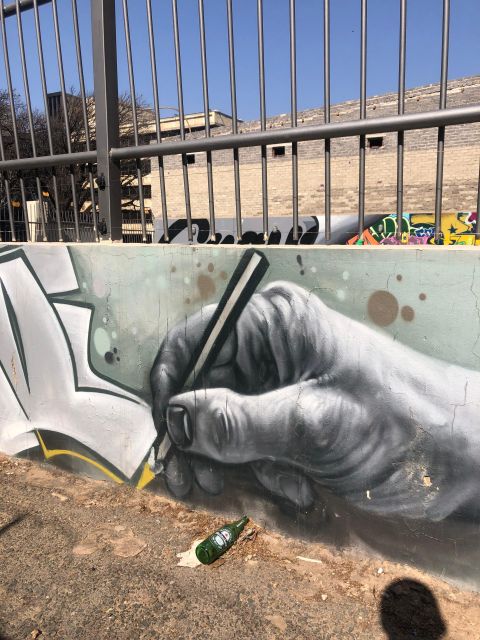
Reviewed · CITY TOURS
Johannesburg City Walking Excursion
Johannesburg is a city you understand best on foot, one neighborhood and one difficult story at a time. This excursion takes you from Braamfontein through Newtown, Gandhi Square, and Maboneng, connecting street art, music, labor laws, politics, and daily life in the City of Gold. The local guide is central to the experience, especially in parts of downtown you may not want to explore alone.
I like the route for two clear reasons: it covers a wide slice of Johannesburg rather than one isolated sight, and it links famous names such as Nelson Mandela, Oliver Reginald Tambo, and Mahatma Gandhi to actual buildings and streets. I also like that local lunch and transport during the tour are included. The main caution is that this is a long city walk with uneven urban conditions, no hotel pickup, and no wheelchair access.
Key points to know before booking
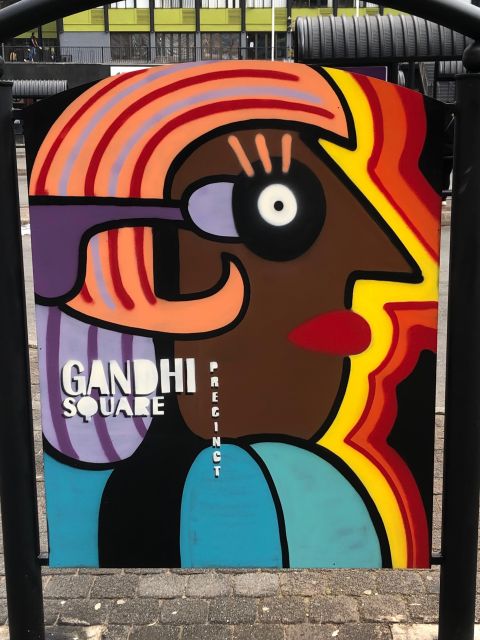
- A full central-city route: Walk from Braamfontein and Newtown to Gandhi Square, Carlton Centre, and Maboneng.
- History on the street: Learn about immigration laws, laborers, apartheid-era conflict, and the legal work of Mandela and Tambo.
- Art is part of the route: See Joburg street art, the Market Theatre area, the ABSA gallery, and Maboneng artists.
- A local guide matters: Guides such as Tebogo explain the city and help you move through central areas with greater confidence.
- Good inclusions for $40: Local lunch and transport during the activity are included, but entry tickets and hotel transfers are not.
- Bring practical gear: Wear comfortable shoes, carry water, sun protection, a jacket, tissues or sanitizer, and a power bank.
Why walking explains Johannesburg better

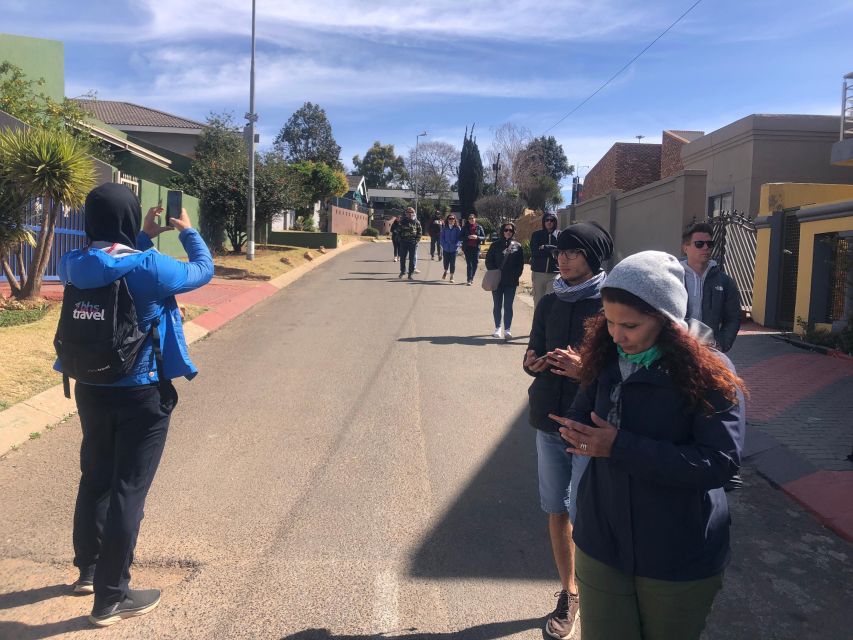
Johannesburg can feel confusing when seen only through a car window. Its major districts sit close together on a map, yet each tells a different part of South Africa’s story. This tour uses the streets as its classroom, moving from Braamfontein toward Newtown and then into the central business area.
The route is not simply a list of sights. It shows how politics, labor, business, music, art, and migration shaped the city. Your guide provides the thread tying those subjects together, which is important in Johannesburg. A building may look ordinary until you learn who worked there, who was excluded, or which law affected the people living nearby.
A guide also gives you practical reassurance. One rating reports that the city center felt safe and interesting with the guide, and that the participant would not have visited the heart of the city alone. That is a useful clue about the tour’s purpose. You are not being placed behind glass or driven past downtown. You are walking through it with local context.
The activity is offered in English. One guide named in the feedback is Tebogo, who was praised for explaining many interesting details about Joburg. Guide assignments can vary, so you should not assume Tebogo will lead your date, but the experience depends heavily on having a good local escort.
More City Tours in Johannesburg
- Johannesburg: City Centre Walking Tour
★ 4.8 · 152 reviews - Half Day Pretoria City Tour from Johannesburg or Pretoria
★ 5.0 · 150 reviews - Johannesburg City Centre Walking Tour
★ 5.0 · 80 reviews
Starting in Braamfontein and heading to Newtown
The meeting point is described as a restaurant marked by beautiful black and white artwork on its exterior. Look carefully for that visual clue, and allow time to find it. Hotel pickup is not included, so you are responsible for reaching the starting point.
The guide begins with an overview of Johannesburg and the plan for the day. This opening matters because the route covers several districts and themes. You will get more from later stops if you understand how the city grew, why it attracted workers, and why it became tied to some of South Africa’s biggest political conflicts.
From Braamfontein, you walk toward Newtown and pass the Nelson Mandela Bridge. The bridge provides a strong visual marker between parts of the inner city, but the real value is the explanation around it. You are seeing modern Johannesburg while learning how national politics and urban change meet in ordinary streets.
Expect an active outing rather than a short sightseeing stroll. Comfortable shoes are essential. Sunglasses, a sun hat, biodegradable sunscreen, and a light jacket are sensible because the tour goes ahead in different weather conditions. You should also carry a power bank, since a full day of navigation, photographs, and communication can use your phone quickly.
Newtown, the Market Theatre, and Mary Fitzgerald Square
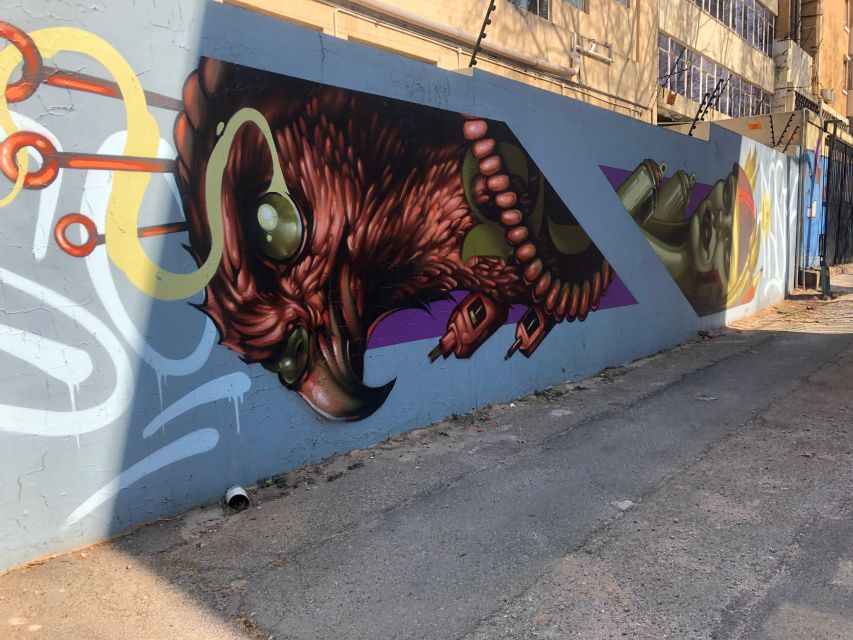
Newtown brings the city’s music and arts story into focus. The route includes the Market Theatre and Mary Fitzgerald Square, two places connected with South African performance and public culture.
The Market Theatre is useful for understanding how music and theater gave people a way to express ideas during difficult political periods. Mary Fitzgerald Square adds an open civic space to the story. Instead of treating art as decoration, the guide shows how it fits into the country’s public life.
This is one of the strongest sections for anyone interested in culture. You will not be attending a performance, and entry tickets are not included, so your experience is based on seeing the areas and hearing the explanation. Still, the stop can give you a better sense of why Newtown is associated with creative work.
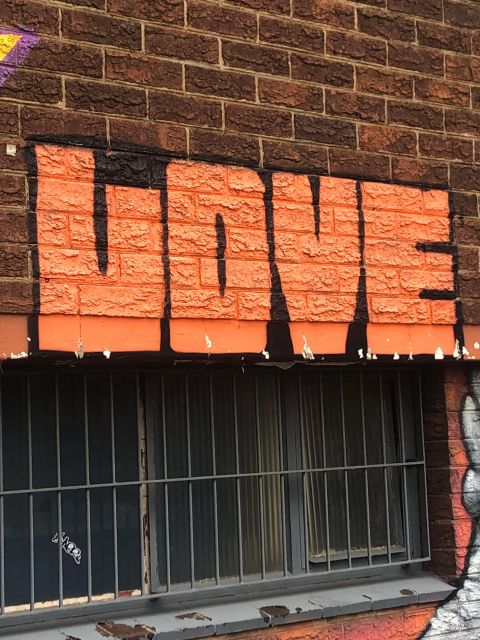
The city’s street art is another draw. The tour promises heartwarming street art, and later takes you to Maboneng, where local artists and their work become a main focus. Art gives the walking route some relief from heavier subjects such as labor control, poverty, and political conflict.
Workers Compound and the Science Discovery Centre
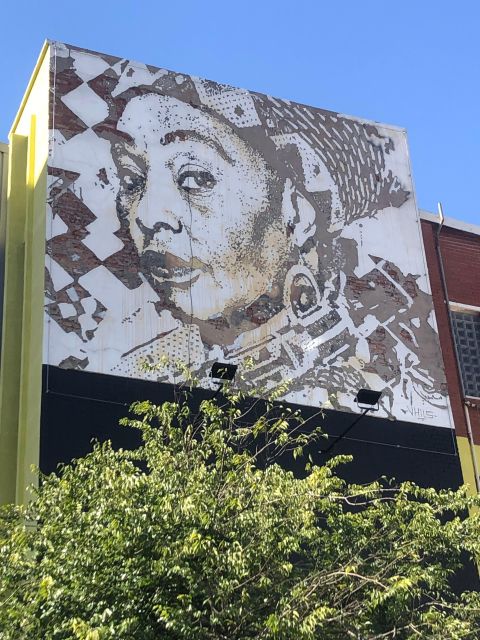
The walk continues to the Workers Compound, where the guide explains South Africa’s laborers’ immigration laws. This is not a light sightseeing stop. It addresses the systems that controlled the movement and working lives of laborers, helping you see how Johannesburg’s mines and industries affected people far beyond the city center.
The value here is context. Johannesburg’s growth was tied to work, money, and migration, but those forces did not operate fairly. A guide can explain the human effects of rules that might otherwise appear as dry legal facts.
The route also includes the Science Discovery Centre. The supplied details do not specify the length of the visit or whether an entry ticket is needed, so check the arrangements before booking if this is a priority for you. Since admission tickets are not included in the $40 price, budget separately for any paid entry.
This section may feel more serious and less polished than a conventional city tour. That is part of its purpose. You are seeing how the city’s economy was built, not only its most attractive public spaces.
More Walking Tours in Johannesburg
- Johannesburg: Local Food Tasting Guided Walking Tour
★ 4.7 · 192 reviews - Johannesburg: Guided Walk with Lions in the African Bush
★ 4.7 · 45 reviews - Johannesburg: Hillbrow Walking Tour Including Ponte building
★ 4.8 · 32 reviews - Johannesburg: Private Walking Tour with a Local
★ 4.4 · 17 reviews
Ferreira Market, Chancellor’s House, and the court district

At Ferreira Market, the tour turns toward the legal and political story of Johannesburg. You visit Chancellor’s House, associated with Nelson Mandela and Oliver Reginald Tambo when they worked as attorneys.
This stop gives the famous names a physical setting. Rather than hearing only about Mandela as a national leader, you learn about his professional life and partnership with Tambo. Their legal work connects the city’s streets with the wider struggle against unjust laws.
The route also includes the magistrate court. That stop fits well with the legal theme, though the supplied information does not say that you enter the court. Treat it as a place viewed from the route unless your guide tells you otherwise.
Ferreira Market and the court district also show how everyday commerce and government institutions sit side by side. This contrast is one reason a walking tour can be more revealing than a sightseeing bus. You move through working parts of the city, not only monuments prepared for visitors.
Main Street, Gandhi Square, and Johannesburg’s industry
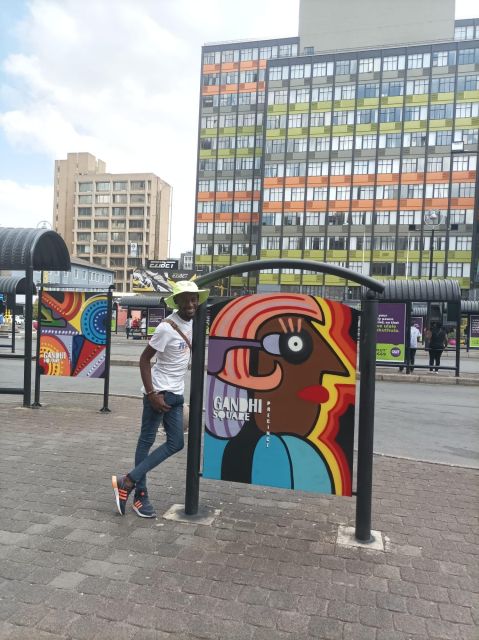
The walk along Main Street leads to Gandhi Square, named for Mahatma Gandhi. The guide uses this area to discuss South Africa’s biggest industry. The details provided do not name the industry directly, but the subject fits Johannesburg’s long connection with mining and the wealth it generated.
Gandhi Square also brings another international figure into the route. You hear how Gandhi’s time in South Africa became part of his public life, while the surrounding city tells a much larger story of labor, business, law, and racial control.
This part of the walk may appeal to you if you like history tied to locations. It is less about taking a quick photograph and more about understanding why the city developed as it did. Ask questions here if you want the guide to connect the industry with earlier stops such as the Workers Compound and the immigration laws.
Carlton Centre and the ABSA gallery
The itinerary includes the Carlton Centre, described as the fifth tallest building in Africa. It gives you a strong change of scale after the street-level walking sections. You see Johannesburg from the perspective of a major commercial landmark, though the supplied details do not confirm access to an observation deck or upper floors.
Entry tickets are not included, so do not assume every building or gallery visit is free. The tour does include a visit to the ABSA gallery, where works by artists from across Africa are exhibited. This gives the route a clear artistic finish before Maboneng.
The gallery is particularly useful after the earlier discussion of music, theater, labor, and law. You have spent much of the tour learning about structures that shaped people’s lives. The art offers another way to see how African artists respond to identity, society, and change.
If you are mainly interested in architecture or city views, the Carlton Centre may be your highlight. If you prefer contemporary culture, the ABSA gallery and Maboneng will likely hold your attention longer.
Maboneng, local artists, and the final coffee stop
The final location is Maboneng, described as Johannesburg’s art world. Here you see local artists and their work, bringing the tour back to the creative side of the city after a long stretch of political and economic history.
Maboneng is a good ending because it presents Johannesburg as a city still making and remaking itself. The tour is not saying that the past has disappeared. Instead, it shows how art and public life continue alongside the older buildings and difficult memories.
A local lunch is included during the tour. The exact restaurant and menu are not specified, so do not book this expecting a particular cuisine or dining style. The inclusion does improve the value of the $40 price, especially since you are spending substantial time on foot.
The activity description says the tour ends at Home of the Bean, a coffee shop where it is easy to request an Uber. The meeting point information also says the activity ends back at the meeting point. Since those details do not match perfectly, confirm the final drop-off location before the day begins. Transport during the tour is included, but hotel pickup and drop-off are not.
Is $40 a fair price?

At $40 per person, this is a reasonable price if you want a broad introduction to central Johannesburg with a guide, lunch, and transport during the outing. You are paying for interpretation and local escorting as much as for the places themselves.
The value is strongest for first-time visitors who want to understand how the city works. You cover Braamfontein, Newtown, the Workers Compound, Ferreira Market, Main Street, Gandhi Square, the Carlton Centre area, the ABSA gallery, and Maboneng. That is a lot of ground for one activity.
The price is less attractive if you want a short, polished sightseeing tour with guaranteed entry to major attractions. Entry tickets are excluded, and the itinerary does not provide a duration, group size, or a full list of included admissions. Ask about those points before you pay.
You also need to budget for reaching the meeting point and arranging your own ride afterward. The reserve and pay later option lets you hold a place without paying immediately, and cancellation is allowed up to 24 hours ahead for a full refund.
Who should book this Johannesburg walk?
I would choose this tour if you want an honest introduction to the city’s central districts and prefer stories over a checklist of monuments. It suits adults and older children who can manage a substantial walk and who are interested in politics, labor, music, art, and urban life.
It is also a sensible choice if you feel unsure about walking central Johannesburg alone. The guide provides direction and local explanation, and the route is designed to show areas that many first-time visitors might otherwise skip.
I would think twice if you use a wheelchair, since the activity is not suitable for wheelchair users. It may also be a poor fit if you dislike outdoor walking, changing urban conditions, or serious historical discussion.
Bring comfortable clothes, sturdy walking shoes, sun protection, a camera, a jacket, hand sanitizer or tissues, and a power bank. Weapons and sharp objects are not allowed, smoking indoors is prohibited, and littering and nudity are not permitted.
Should you book the Johannesburg City Walking Excursion?
Book it if you want to meet Johannesburg on its own streets, with a local guide explaining the forces that shaped the city. The strongest features are the wide route, the connection between major political figures and real places, the street art, and the included lunch.
The activity has a 4.3 rating from 12 ratings, including strong praise for guides such as Tebogo and one serious complaint from a participant who said no guide arrived. That isolated but important warning means you should confirm the meeting details and guide contact before setting out.
For $40, this is a good-value introduction when you want context, local guidance, and a look at parts of Joburg you might not visit independently. It is not the right pick for a relaxed museum day or an accessible tour. Go prepared for a long walk, ask about the final meeting point, and you will be better placed to judge the city beyond its postcard views.
FAQ
Where does the Johannesburg City Walking Excursion start?
It starts at a restaurant identified by beautiful black and white artwork painted on it. Hotel pickup is not included.
Where does the tour end?
The activity description says it ends at Home of the Bean, a coffee shop where it is easy to get an Uber. The meeting point information also says it ends back at the meeting point, so confirm the final location before the tour.
What is included in the price?
The $40 price includes a local lunch and transportation during the tour.
Are entry tickets included?
No. Entry tickets are not included in the tour price.
What language is the tour conducted in?
The tour is conducted in English.
Is the tour suitable for wheelchair users?
No. The activity is not suitable for wheelchair users.
What should I bring?
Bring comfortable shoes, sunglasses, a sun hat or hat, a camera, biodegradable sunscreen, a jacket, comfortable clothes, hand sanitizer or tissues, and a power bank.
Can I cancel the booking?
Yes. You can cancel up to 24 hours in advance for a full refund. You can also reserve and pay later to keep your plans flexible.
Just added around Johannesburg
- 13 Day Safari – Cape Town to Johannesburg★ 5.0 · 11 reviews
- Tala Game Reserve & Natal Lion Park 1/2 Day Tour from Durban★ 3.0 · 13 reviews
- South Africa from Joburg: Elephant Sanctuary Half Day Tour★ 5.0 · 3 reviews
- Private Safari Tour: Pilansberg National Park Big 5★ 5.0 · 7 reviews
- Johannesburg: Elephant and Monkey Sanctuary Half Day Tour★ 5.0 · 3 reviews
- Johannesburg: Wine Tasting and Cableway Half Day Tour★ 4.7 · 3 reviews
- Pretoria: Pretoria City and Lion Park Tour★ 4.8 · 41 reviews
- Lion Park Tour in Open Safari Vehicle★ 5.0 · 6 reviews
City Tours, compared.
Cape Town Hop-On Hop-Off City Tour with Optional Cruise
Read our review →
Johannesburg Hop-On Hop-Off City Tour with Soweto Option
Read our review →
Jo’berg in 1 Day: Soweto, Apartheid Museum & City Tour
Read our review →
Cape Town City Pass: Save Over 50% on 80+ Top Attractions
Read our review →
Hop-On Hop-Off Bus, City Tour and Apartheid Museum
Read our review →
Browse the lists this tour appears in