
Reviewed · WILDLIFE IN GARDEN ROUTE
Plettenberg Bay: Wild Cat and Wildlife Guided Tour
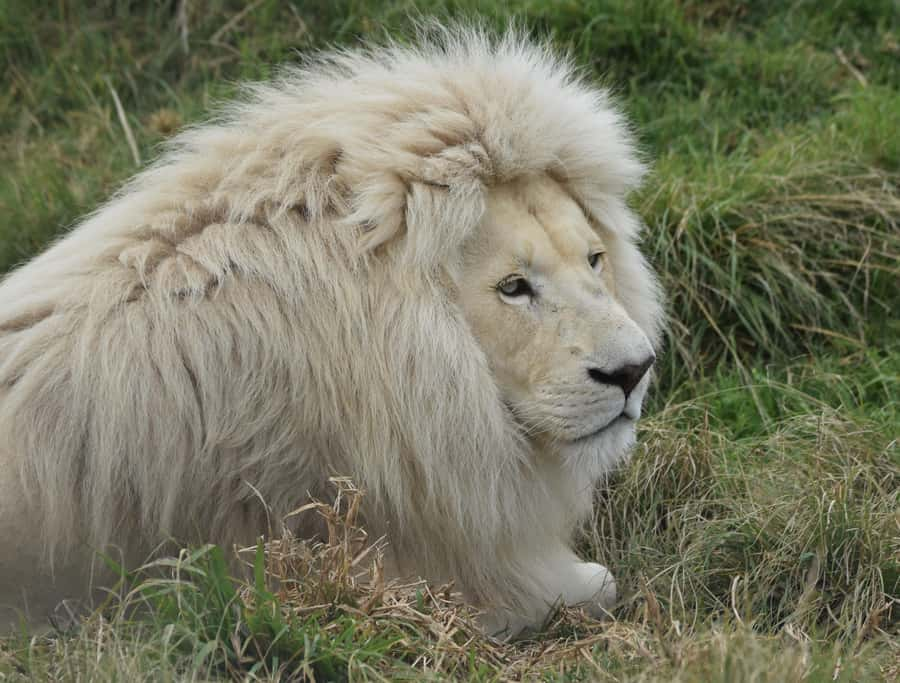
The main draw here is the chance to see South Africa’s wild cats at close range while learning why these animals live at Tenikwa rather than in the wild. The route passes through different cat habitats, with lions, leopards, cheetahs, servals, caracals, and a white lion among the stars. You may also see meerkats, marabou storks, and the Blue Crane.
I like the strong focus on animal welfare and the guides’ personal knowledge of the residents. I also like the compact one-hour format, which fits neatly into a Plettenberg Bay day. The main limitation is that this is a rehabilitation center, not an open safari: you view animals from a walkway, and you cannot touch or feed them.
Key points to know before you go
- Rescued wild cats take center stage: See lions, leopards, cheetahs, servals, caracals, and the white lion.
- The guide shapes the experience: English-speaking guides explain each animal’s story, habits, and care.
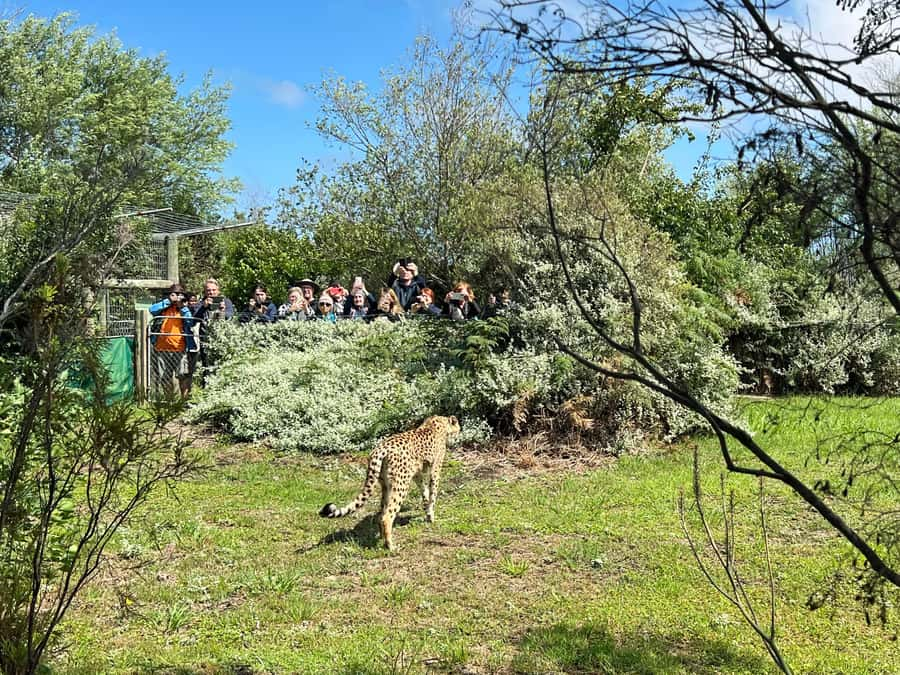
- Close, but carefully controlled: You can photograph the cats from near the enclosures, but touching and feeding are not allowed.
- More than a cat show: Meerkats, marabou storks, and South Africa’s Blue Crane may appear along the route.
- Good value at $27: The price covers a guided one-hour visit, with no hotel transport or food included.
- Allow extra time: Add about five minutes for the safety briefing, 10 minutes for the shop, and up to 30 minutes for coffee, brunch, lunch, or snacks if you buy them on site.
Why Tenikwa is different from a game drive
At Tenikwa Wildlife Rehabilitation & Awareness Centre, you are not setting out to spot free-roaming animals across a large reserve. You are visiting a place that cares for wild animals that cannot safely return to the wild. That distinction matters.
The animals may have been rescued from situations where they lost the skills needed to survive. One guide explains that the cats under Tenikwa’s care cannot simply be released because they would not know how to fend for themselves. The visit therefore has an educational purpose, not just a photo opportunity.
I find that this gives the hour more weight. You are not merely collecting pictures of a lion or cheetah. You are learning why a particular animal is at the center, what care it needs, and why keeping a rescued predator safe can be better than attempting an unsuitable release.
The setting also lets you see species that can be difficult to find in the wild. A safari may produce a thrilling glimpse of a lion, but it may not give you a clear look at a serval or caracal. Here, the different habitats give you a much better chance of seeing these less familiar cats and hearing how their lives differ.
More Wildlife in Garden Route
- Jukani Wildlife Sanctuary Admission with Guided Tour
★ 4.5 · 50 reviews - Plettenberg Bay: Private Guided Wildlife Photography Tour
★ 4.9 · 49 reviews - Guided Wildlife Tour and Forest Walk with Lunch Platter
★ 4.6 · 40 reviews
The five-minute safety briefing
Your visit starts at reception with a short safety briefing of about five minutes. It is brief, but it sets the tone for the whole walk.
You will be reminded to stay with the guide and to respect the animals’ space. The important rules are simple: do not touch the animals, do not feed them, and leave selfie sticks at home. Those rules are not just formalities. Predators can react quickly, and a quiet, controlled group is better for both animals and people.
Wear comfortable shoes. The tour is a walking experience through several habitats, so practical footwear will serve you better than sandals or stiff dress shoes. The center is wheelchair accessible, which is useful for visitors who need step-free access, though the supplied information does not describe the exact surface or route conditions.
Walking through the cat habitats
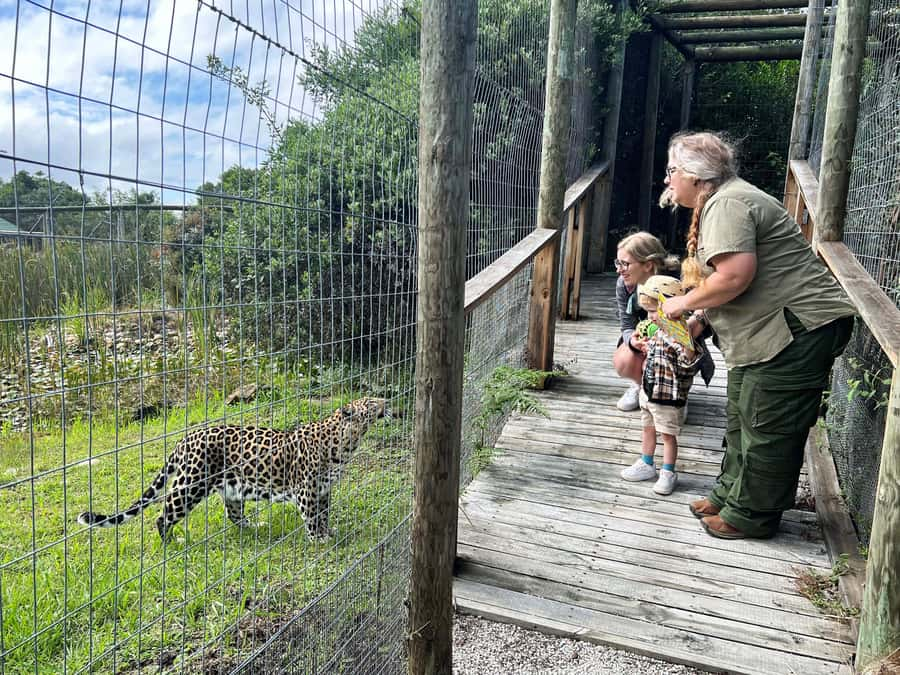
The central hour takes you through the different habitats with a live English-speaking guide. You view the animals from within a walkway, giving you a close look without entering the enclosures.
This arrangement is especially good for photography. You are near enough to take clear pictures, and the guide can help you understand what you are seeing instead of leaving you to guess which spotted cat is which. Keep your camera ready, but listen first. The stories behind the animals are a major part of the visit.
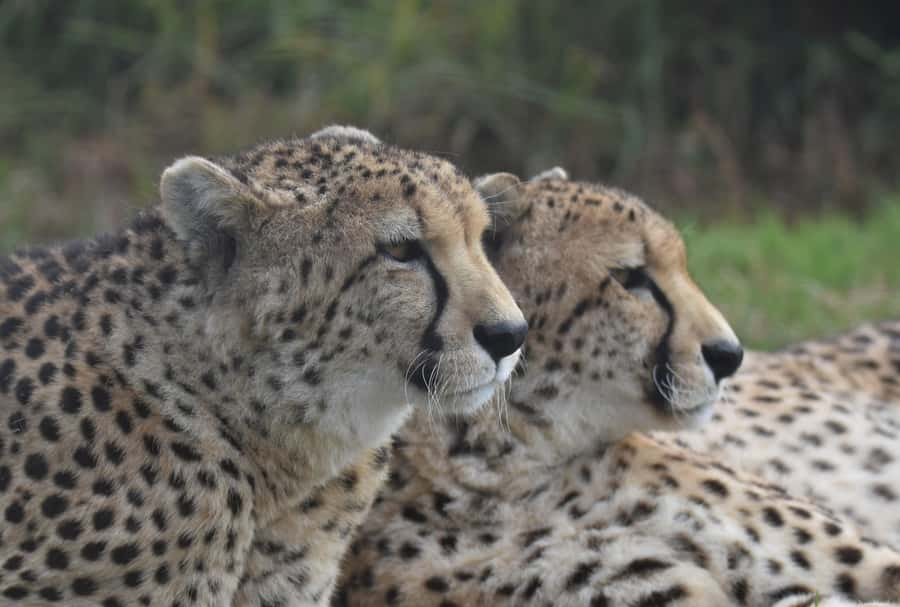
Expect the guide to point out the differences between the cats. A cheetah, built for speed, does not have the same body shape or habits as a leopard. A serval is smaller and more lightly built, while a caracal is recognizable for its tall ears. The tour is designed to bring these details to life through direct viewing.
The quality of the explanation seems to depend partly on your guide, but the available guide comments are consistently strong. Wazi is described as friendly and helpful, while Davidson is praised for patience and for making an effort to show the cats. Bongiwe receives warm praise for her engaging approach, and Daniel is noted for clear explanations and genuine care. One guide had worked at the center for 12 years and could answer a wide range of questions.
That experience matters. You are not simply moving from cage to cage. A good guide can explain how an animal came into Tenikwa’s care, why it remains there, and how its needs shape the center’s work. Some tours may even run longer than the scheduled hour when the guide has more to explain or the group has questions.
Lions, leopards, and the white lion
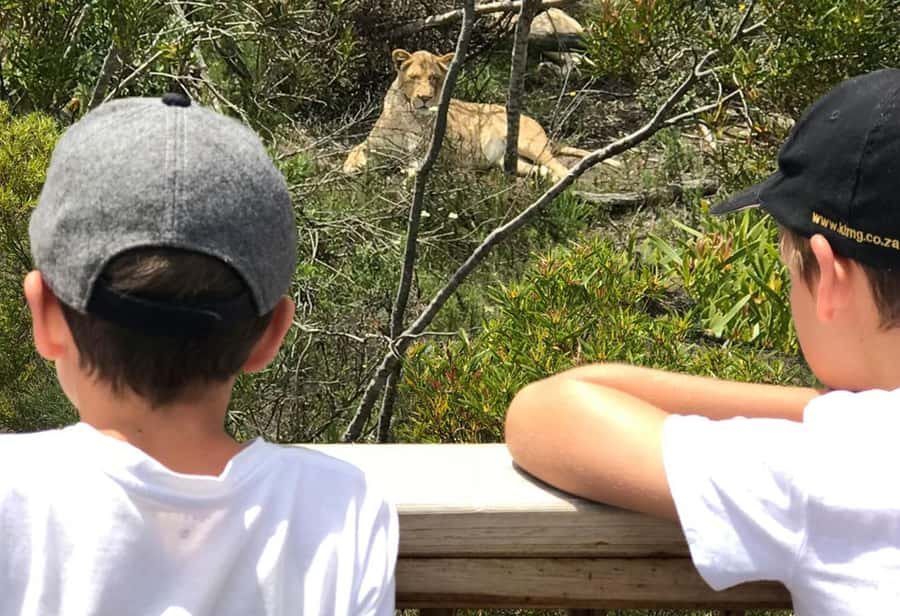
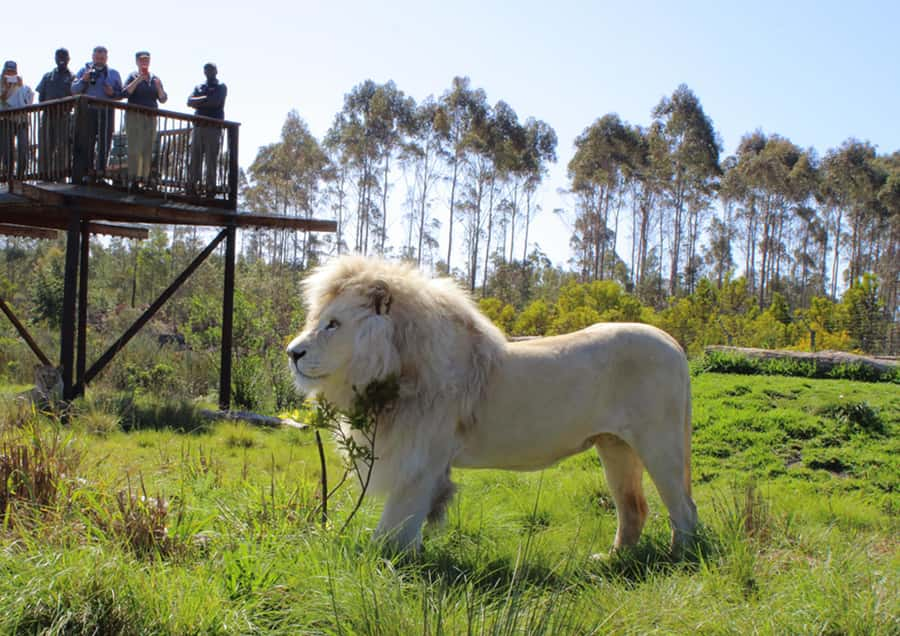
The larger cats provide the most obvious dramatic moments. Seeing a lion close up gives you a better sense of its size and power than a distant roadside sighting. The white lion is another major draw and one of the best subjects for photographs.
The white coloring is visually striking, but the useful part of the visit is the chance to hear about the individual animal rather than treating it as a novelty. The guide can put the cat’s presence at Tenikwa into the wider story of rescue and care.
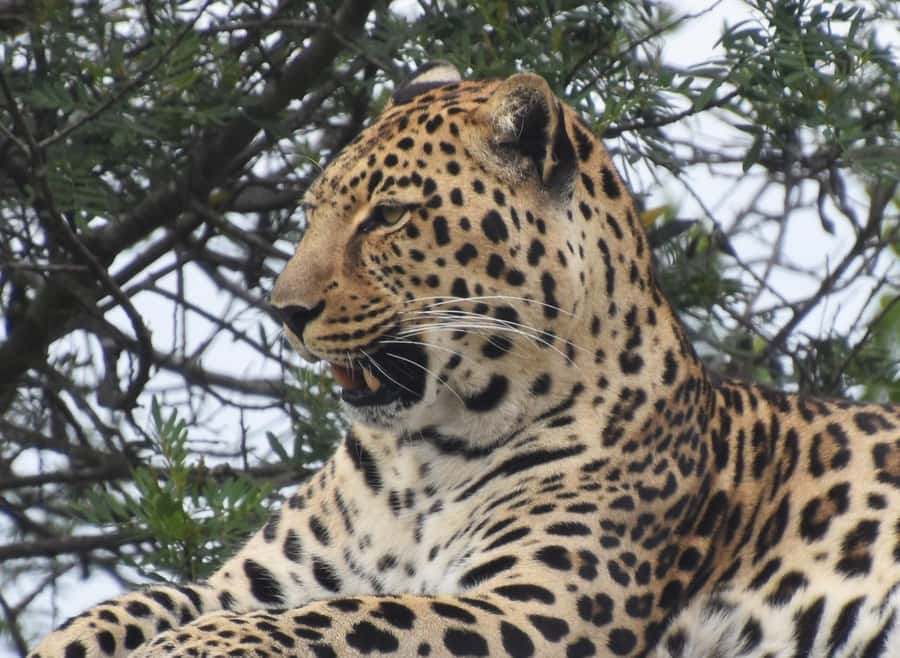
Leopards can be harder to see in many wild settings because they are elusive and often well hidden. At Tenikwa, you have a more controlled chance to observe one. That does not create the same feeling as finding a leopard in the wild, but it does make the animal easier to study and photograph.
The tour also includes cheetahs, whose slender build and markings make them easy to identify once the guide points out the key features. Seeing several species close together helps you compare them in a way that a quick sighting on a game drive may not allow.
Same part of Garden Route, a completely different kind of day:
- From Cape Town: 2-Day Safari at Garden Route Game Lodge
★ 4.8 · 928 reviews - Plettenberg Bay: Swim with Seals
★ 4.7 · 887 reviews - Knysna Ziplines Tour
★ 5.0 · 688 reviews - Little Brak River: Botlierskop Guided Game Drive
★ 4.7 · 589 reviews
Servals, caracals, and the smaller residents
I particularly like that this experience does not stop with the headline animals. Servals and caracals are often less familiar to first-time visitors, yet they are important parts of South Africa’s wild cat family.
The guide leads you through the habitats while explaining facts about each species. You may notice the serval’s long legs and distinctive markings, or the caracal’s pointed ears. These details are easier to appreciate when you are close enough to watch the animals rather than viewing them as small shapes in the distance.
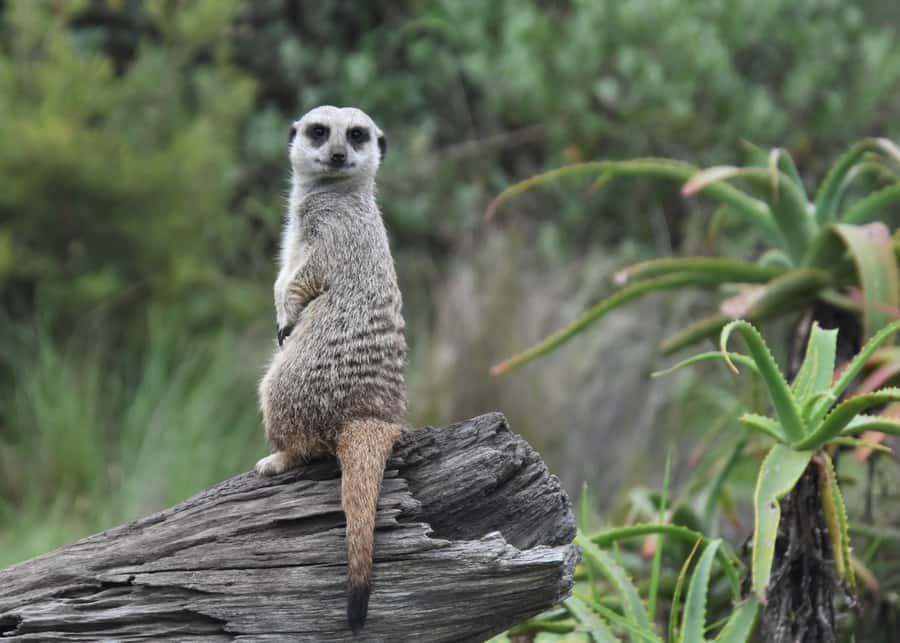
Other residents add variety. Meerkats may appear along the route, and marabou storks offer a change from the cats. The Blue Crane, South Africa’s national bird, is another notable sight. These animals help make the visit feel like a wider introduction to local wildlife rather than a single-species attraction.
Sightings are still sightings. Animals move, rest, hide, or remain out of view, and no responsible wildlife center should promise a perfect display on demand. The guide will make a real effort to help you see the cats, but patience remains part of the experience.
What the animal welfare message adds
The strongest reason to choose this tour is the chance to support a rehabilitation program while learning how it works. Tenikwa’s role is not presented as a place where visitors handle wildlife. It is a center where animals are cared for, watched, and kept at a safe distance from people.
That approach is important for families. Children can see powerful animals without being taught that wild creatures are there for touching or feeding. The experience can also change how you think about wildlife attractions, since the guide explains why the animals are at the center and what prevents their return to the wild.
I would pay close attention to this part of the tour. The welfare message is not an extra paragraph added at the end. It helps explain the fences, the walkways, and the rules. Close viewing works here because the boundary protects the animal as much as it protects you.
The center’s mission also gives your admission a practical purpose. At $27 per person, you are paying for a guided experience and helping support the work of a wildlife care facility. That is good value if you want a focused educational visit. It is less suitable if your only goal is a wild safari with animals roaming freely.
The final 10 minutes: shop and refreshments
After the guided portion, allow about 10 minutes for shopping. This gives you time to browse before leaving, though purchases are not included in the tour price.
You can also spend up to 30 minutes on coffee, brunch, lunch, or local snacks. Food and drinks cost extra, so plan your budget accordingly. This is useful if you are building a relaxed stop into a day around Plettenberg Bay, but it is not part of the one-hour admission.
The extra time can also help if your group includes children. The main walk is short enough to hold their attention, while the café stop gives everyone a chance to pause before the next activity. If you are on a tight schedule, you can treat the refreshments as optional and leave after the tour.
Getting to Tenikwa from the N2
You will need to arrange your own way to the center. Hotel pickup and drop-off are not included.
From the N2, follow the turnoff marked Tenikwa, Monkeyland, and Elephant Sanctuary. At Animal Alley, keep left where Tenikwa is signposted and drive past Kurland Village. At the fork, keep right toward the Tenikwa entrance, then check in at reception.
The directions are specific, but allow enough time to find the turnoff and complete check-in. It is sensible to arrive ready for the five-minute safety briefing rather than treating the booked hour as the moment you pull into the parking area.
How much value do you get for $27?
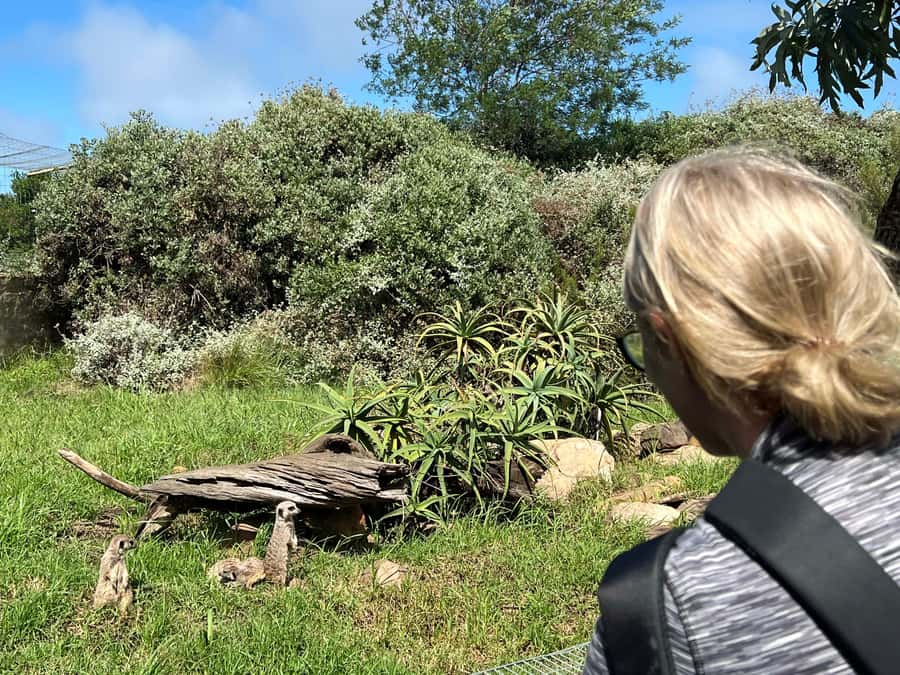
For $27, this is a reasonably priced wildlife stop. The admission includes the one-hour guided tour and an English-speaking guide. You are paying for access to several cat species, a structured explanation of their care, and the chance to take photographs from close range.
The value is strongest for people who want context. A quick photo of a lion is easy to understand, but learning why the animal is in rehabilitation and how it is cared for makes the visit more meaningful. The guide’s role is central, and the strongest experiences appear to come when visitors ask questions and take time with the explanations.
The price does not cover meals, drinks, shopping, or transport. Those costs are easy to manage if you know about them in advance. I would treat the tour as a one-hour core activity, then decide on site if you want to add lunch or snacks.
Who should book this wildlife walk?
I would recommend it to families, first-time visitors to South Africa, wildlife photographers, and anyone interested in conservation. The short format is easy to fit between other Plettenberg Bay plans, while the range of cats gives you plenty to see.
It also suits visitors who prefer a guided setting to a self-led animal attraction. The guide explains the animals, answers questions, and helps you find cats that may not be immediately visible. Children benefit from the clear structure and the chance to see familiar names such as lions alongside less familiar servals and caracals.
You should think twice if you want a true safari experience. The animals are housed in managed habitats, not encountered freely in a national park. You also need to accept that touching and feeding are forbidden, and that wildlife may not always pose for the perfect photograph.
Book ahead if the timing matters, since starting times vary with availability. You can cancel up to 24 hours before the visit for a full refund, and a reserve now, pay later option is available. These policies make it easier to fit the visit into a changing South African itinerary.
My verdict: a worthwhile close look at rescued cats
I would book this tour if I wanted an affordable, focused introduction to South Africa’s wild cats with a clear animal welfare message. The one-hour walk gives you lions, leopards, cheetahs, servals, caracals, and possibly the white lion, while the guide adds the details that turn a viewing stop into a learning experience.
The best reason to go is not simply getting close to predators. It is understanding why these particular animals are at Tenikwa and why responsible care sometimes means keeping them out of the wild. Choose it for the guide, the photographs, and the conservation lesson. Skip it only if you are looking specifically for free-roaming wildlife on a safari drive.
FAQ
How long does the Tenikwa wild cat tour last?
The guided wildlife tour lasts one hour. Allow about five minutes for the safety briefing, and consider adding 10 minutes for shopping and up to 30 minutes for coffee, brunch, lunch, or local snacks.
What animals can I see?
The tour includes indigenous South African wild cats such as lions, leopards, cheetahs, servals, and caracals. You may also see a white lion, meerkats, marabou storks, and South Africa’s national bird, the Blue Crane.
Can I touch or feed the animals?
No. You can view and photograph the animals from close range within a walkway, but touching and feeding are not allowed.
Is the tour guided in English?
Yes. The experience includes a live English-speaking guide.
Is the center wheelchair accessible?
Yes, the activity is listed as wheelchair accessible. The available information does not provide further details about the exact route or surfaces.
What is included in the $27 price?
The price includes the one-hour guided tour. Hotel pickup and drop-off, food, drinks, and shopping are not included.
Just added around Garden Route
- 7- 10 Days Tour Package Cape Town and Garden Route★ 5.0 · 6 reviews
- 7-day Cape Town, Winelands, Garden Route and Addo National Park★ 5.0 · 5 reviews
- 5 Day Cape to Addo Safari – Garden Route Small Group Tour★ 5.0 · 26 reviews
- 7 Day Garden Route to Addo, Cape Point and Winelands Combo tour★ 5.0 · 28 reviews
- 7-Day Garden Route Safari Adventure from Cape Town★ 5.0 · 20 reviews
- 4 Day Garden Route Luxe Selection Micro Group Tour from Cape Town★ 5.0 · 3 reviews
- 5 Day Garden Route Small Group Tour Fr CapeTown – Departs Mondays★ 5.0 · 3 reviews
- 3 Days 2 Nights Garden Route Private Tour from Cape Town★ 4.0 · 5 reviews
Wildlife in Garden Route, compared.
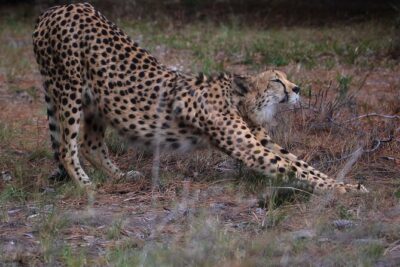
Jukani Wildlife Sanctuary Admission with Guided Tour
Read our review →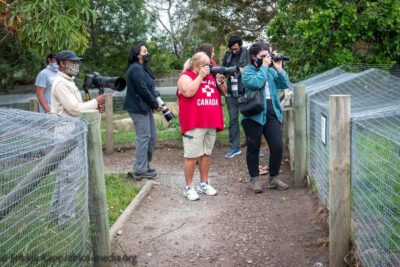
Guided Wildlife Tour and Forest Walk with Lunch Platter
Read our review →
3 Day Wildlife Safari Tour – Garden Route Small Group Tour from Cape Town
Read our review →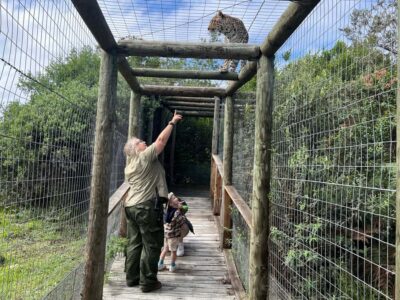
Browse the lists this tour appears in