
Reviewed · APARTHEID HISTORY TOURS
Soweto and Apartheid Museum day Tour
Soweto gives this day its emotional force. You move from Nelson Mandela’s former home to the Hector Pieterson memorial, then spend two hours at the Apartheid Museum tracing South Africa’s painful road from 1948 to 1994. It is history you can see in streets, houses, photographs, and memorials, not just read on a wall.
I like the hotel pickup and drop-off around Johannesburg and Pretoria, and I like the choice of an English or German-speaking guide. The tour also leaves room for photo stops around Orlando Towers, Soccer City, and Chris Hani Baragwanath Hospital. The main caution is that the day depends heavily on the guide and vehicle: one booking had a 90-minute delay and a car that felt too small, while other outings were praised for punctual pickup, a clean car, and friendly guiding.
Key points to know before booking

- Soweto is the heart of the day: Expect about three hours of guided sightseeing, walking, and photo stops around the township.
- Mandela House is a personal stop: The small museum focuses on Nelson Mandela, Winnie Mandela, and the family home before and after his imprisonment.
- The Apartheid Museum needs time: You get about two hours for a self-guided visit, so this is not just a quick photo stop.
- Pickup is broad but not unlimited: Johannesburg and Pretoria pickups are included, while transfers over 50 kilometers cost extra.
- Entrance fees and meals are separate: The $121 price covers transport and a professional guide, but not admission tickets, food, or drinks.
- Guide quality matters: English and German are offered, but the detail and timing of the day can vary.
Why this Soweto day matters
Soweto is not simply a stop on a Johannesburg city tour. It is a place tied to the central struggles of modern South Africa: racial separation, forced removals, resistance, police violence, and the long fight for equal rights.
The day begins with a guided visit to Soweto, where you spend around three hours seeing the township and its major sights. That time can give you a useful first look at the area, though the actual balance between driving, walking, and photo stops may depend on traffic and your guide.
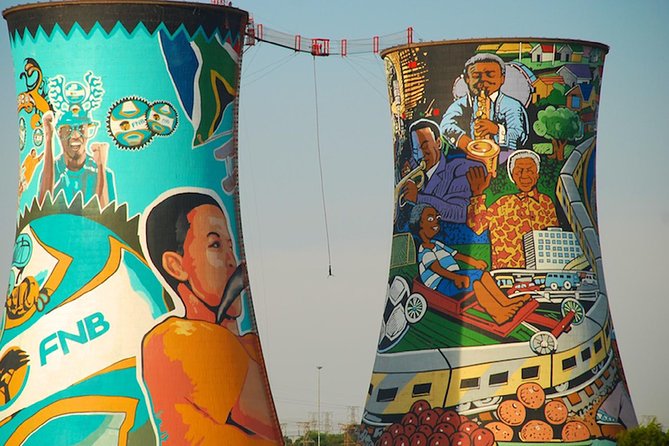
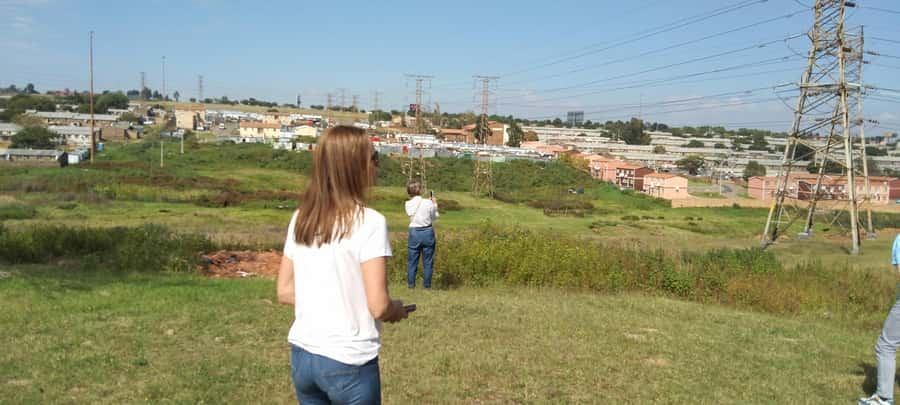
You may pass Orlando Towers, the former coal power station now recognized by its painted towers, and Soccer City, South Africa’s largest football stadium. The route also includes Chris Hani Baragwanath Hospital, described as the biggest hospital in South Africa, as well as one of Soweto’s wealthier areas.
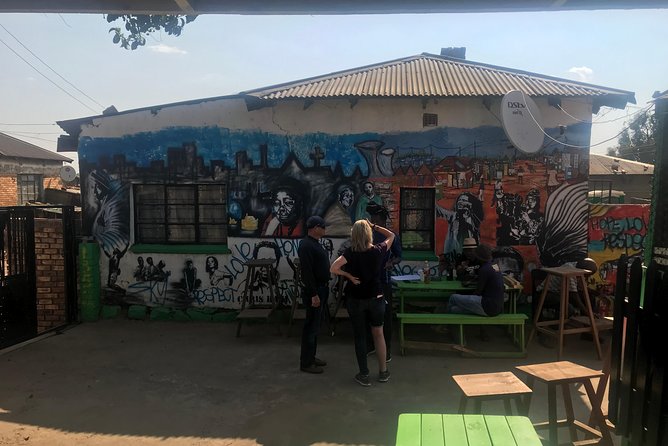
These stops help you see that Soweto is not one uniform place. It includes areas with very different levels of housing and wealth. A drive through the township is useful, but it is not the same as spending long periods on foot or meeting local residents. If you want a more intimate community visit, ask in advance how much walking and local interaction are planned.
More Apartheid History Tours in Soweto
- Soweto /Johannesburg and Apartheid Museum Guided Full Day Tour
★ 5.0 · 932 reviews - Jo’berg in 1 Day: Soweto, Apartheid Museum & City Tour
★ 4.8 · 524 reviews - Johannesburg: Full-Day Tour with Soweto and Apartheid Museum
★ 4.8 · 478 reviews
Mandela House: a close look at a famous address
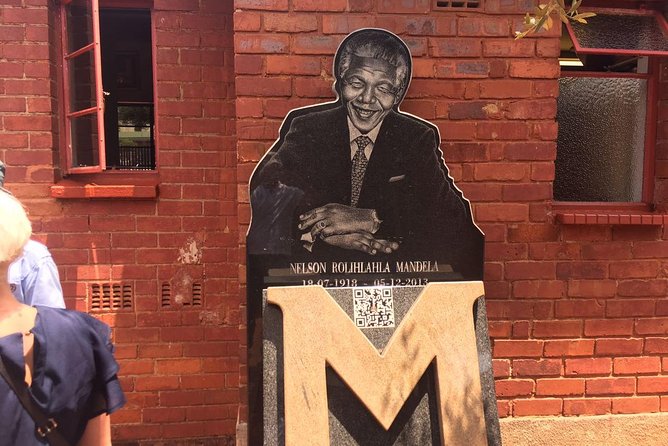
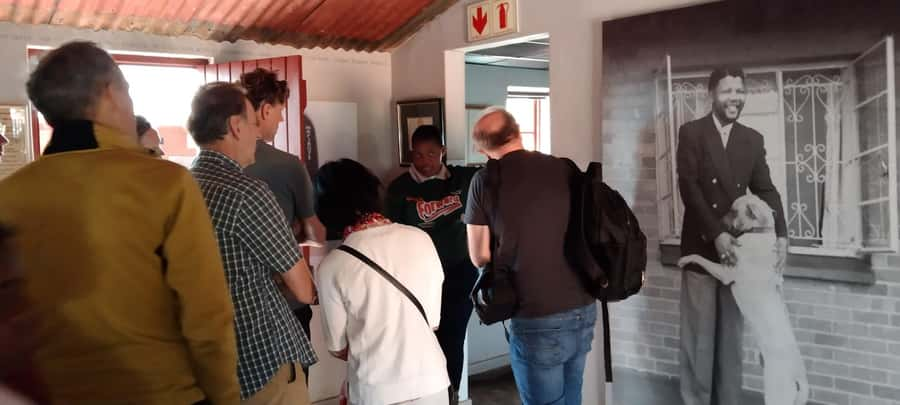
Mandela House is one of the clearest links between public history and private life. The museum presents the home of Nelson Mandela and his family, showing where he lived before his arrest and imprisonment, and what happened around the house after his release in 1990.
The visit lasts about 30 minutes, including guided sightseeing and walking. That is enough for an introduction, but it is short. You should not expect the same amount of time or detail here as at the Apartheid Museum.
The house also brings attention to Winnie Mandela’s experience. While Nelson Mandela spent years in prison, Winnie Mandela faced the pressure and danger of apartheid-era South Africa. That family story adds an important layer to the familiar public image of Nelson Mandela.
I find this stop valuable because it gives the day a human scale. Political history can feel distant when it is reduced to dates and speeches. A home, family story, and personal objects make the past easier to grasp. Still, if you are especially interested in Mandela, you may want to read ahead or allow extra time elsewhere, since the official stop is brief.
Hector Pieterson Museum and the 1976 uprising
The Hector Pieterson Museum and Memorial honors the school pupils killed by apartheid police during the 1976 Soweto uprising. The protest began after the government required Afrikaans to be used as a language of instruction in South African schools.
This is one of the most important stops on the route. It focuses on children and teenagers who resisted a policy they saw as another tool of control. The museum uses protest footage and displays about life in Soweto during apartheid, helping you understand both the immediate uprising and the wider system behind it.
The memorial is named after Hector Pieterson, a 13-year-old boy whose death became a powerful image of the uprising. The stop can be difficult, but it is also direct and essential. The photographs and video material are not background decoration. They show how quickly a school protest turned into a national crisis.
Allow yourself a little quiet time here. The schedule lists the wider Soweto portion as three hours, but the exact time at the museum is not given. If your guide moves quickly, ask for enough time to see the displays rather than treating the memorial as a short roadside stop.
The Apartheid Museum from 1948 to 1994
The Apartheid Museum is the longest single museum visit, with about two hours for a self-guided tour. Its focus is the apartheid system that formally shaped South Africa from 1948 until 1994.
The museum explains racial segregation through laws, identity controls, forced separation, political resistance, imprisonment, and the eventual movement toward a non-racial society. It also honors Nelson Mandela’s work for a non-racial and nonviolent South Africa.
The self-guided format gives you control. You can move slowly through the sections that interest you most, pause over photographs and documents, and avoid being rushed by a group lecture. The downside is that you are responsible for keeping track of time and making sense of the material yourself.
Two hours is a useful minimum, but it may feel short if you read every panel. Since admission is not included in the tour price, confirm the current entrance cost when booking and plan your budget accordingly. The museum is the part of the day most likely to reward preparation. Even a basic understanding of apartheid before you arrive will help you connect the museum displays with what you saw in Soweto.
More Museums in Soweto
- Full-Day Soweto, Apartheid Museum and Lunch Tour
★ 5.0 · 410 reviews - Half Guided Day Tour of Soweto And Apartheid Museum
★ 5.0 · 356 reviews - Ultimate Johannesburg Soweto Experience with Apartheid Museum
★ 5.0 · 313 reviews - Soweto: Hop-On Hop-Off Bus, City Tour and Apartheid Museum
★ 4.5 · 250 reviews
What the driving portion adds
The vehicle allows you to cover several places that would be hard to fit into a walking visit. Orlando Towers, Soccer City, and Chris Hani Baragwanath Hospital give you visual reference points, while the drive through different parts of Soweto shows the scale and variety of the township.
Photo stops can reportedly be adjusted, which is useful if you want to spend more time at a particular sight. Ask about this at the start of the day rather than assuming every stop will be flexible.
The vehicle itself deserves attention. One booking was praised for a clean, comfortable car and flexible pickup. Another found the car too small for the group. If you are booking for several people, ask what vehicle will be used and how many passengers it can comfortably hold. This is especially important because a large part of the day involves driving between sites.
Pickup from Johannesburg or Pretoria
Pickup and drop-off are included around Johannesburg and Pretoria, with collection available from airports, hotels, guesthouses, train stations, private addresses, and hotel lobbies. You are asked to meet at the hotel reception, and you can use WhatsApp to clarify the meeting point.
This is a real convenience for a day focused on several spread-out sights. You do not need to arrange a separate taxi to the first meeting point, and you can be dropped at a location of your choice in Johannesburg or Pretoria at the end.
The distance rule matters. Transfers beyond 50 kilometers cost extra, with the amount based on the distance. Ask for the surcharge before confirming if your accommodation is far from central Johannesburg or Pretoria.
Pickup timing also needs care. One booking involved a 90-minute wait caused by confusion over the address, which cut into the touring time. Send the full address in advance, confirm the pickup point, and keep the guide’s contact details available. A clear meeting plan is especially important if you are collecting from an airport or train station.
What the $121 price really covers

At $121 per person, this is not a low-cost sightseeing ride. The price includes transportation, a professional guide, and pickup and drop-off around Johannesburg and Pretoria. It does not include meals, drinks, or entrance fees, and long-distance transfers may add another charge.
The value depends on what you want from the day. If you want one vehicle, a guide, and a direct route connecting Soweto with the Apartheid Museum, the price can make sense. Organizing the same route independently may require several taxi or ride-hailing trips, plus careful timing.
The value is weaker if you expect admission to be included or if you are traveling with a larger group in a small car. It is also less attractive if the guiding is thin. One booking rated the experience poorly after a late pickup and limited explanation of major South African events. In contrast, other bookings praised the friendly guide, strong English and German skills, punctual hotel collection, and clear answers to questions.
Before paying, confirm three things: the entrance fees, the vehicle size, and the expected pickup time. Those details have the biggest effect on whether the price feels fair.
Language, access, and practical preparation
The tour is offered in English and German. A German-language option is useful because it is not always easy to find this combination of Soweto and the Apartheid Museum with German guiding. If language is important to you, confirm that your preferred guide is available on your date.
The activity is listed as wheelchair accessible, but the specific condition of every route, museum entrance, and walking section is not described. If you use a wheelchair, ask for a detailed accessibility check before booking, particularly for the Soweto walking portion.
Bring a camera, credit card, cash, and any student card you may have. Pensioners should bring a passport, and students should carry their student card. These documents may matter for admission discounts, though the ticket arrangements are not included in the tour price.
Smoking indoors, alcohol, and drugs are not allowed. Food and drinks are also not supplied, so plan for your own refreshments or ask the guide how the day is arranged. No meal stop is specified, and the schedule is full enough that you should not assume a long lunch break.
Free cancellation is available up to 24 hours before departure, and you can reserve now and pay later. Those terms help if your Johannesburg schedule is still moving, but they do not remove the need to check pickup details and extra transfer charges.
Who will get the most from this day
I would choose this tour if I had one day for Johannesburg and wanted the main apartheid-era sights connected by private transport. It suits first-time visitors who want a clear introduction rather than a specialist academic tour.
It also works well for couples, families, or small groups who want hotel pickup and a guide who can answer questions along the way. German speakers should give it serious consideration, provided the language is confirmed.
I would be more cautious if you want a slow, highly detailed study of Soweto. The three-hour township visit includes driving and sightseeing, and the quality of the history depends on the guide. If you want extensive walking, long conversations with residents, or detailed coverage of figures such as Steve Biko and the Sharpeville Massacre, ask direct questions before booking.
The tour is also not ideal for anyone who dislikes a full day in a vehicle or wants every cost included upfront. Admission fees, food, drinks, and possible long-distance transfers all sit outside the stated price.
Should you book the Soweto and Apartheid Museum day tour?
Book it if you value door-to-door transport, want Soweto and the Apartheid Museum in one day, and appreciate having an English or German-speaking guide. Mandela House, the Hector Pieterson Museum, and the Apartheid Museum give the day a strong historical shape, while the township drive adds useful visual context.
Before you commit, confirm the vehicle, pickup time, guide language, and entrance fees. Those checks address the main weaknesses reported from the day. If you want a convenient first look at Johannesburg’s apartheid history and do not mind paying separately for admissions, this is a practical choice. If you want the deepest possible township experience, compare it with a tour built around longer walking time and more detailed local guiding.
FAQ
Where does the tour pick up?
Pickup is available in Johannesburg and Pretoria, including airports, hotels, guesthouses, train stations, private addresses, and hotel lobbies.
Is drop-off included?
Yes. Drop-off around Johannesburg and Pretoria is included, and you can request a preferred drop-off location in those areas.
Is there an extra charge for pickup?
Transfers over 50 kilometers cost extra. The amount depends on the transfer distance.
Which languages are available?
The tour offers live guiding in English and German.
How long is the Soweto portion?
The guided Soweto visit lasts about three hours and includes sightseeing, walking, and photo stops.
How long is the visit to Mandela House?
The Mandela House portion lasts about 30 minutes and includes guided sightseeing and walking.
How long do I have at the Apartheid Museum?
The planned visit is about two hours and is self-guided.
Are entrance fees included?
No. Entrance fees are not included in the tour price. Food and drinks are also separate.
Can I cancel the booking?
You can cancel up to 24 hours in advance for a full refund. The tour also allows you to reserve now and pay later.
Just added around Soweto
- Soweto Township Tour★ 4.4 · 4 reviews
- Soweto Tuk-Tuk Food & Beer Tour★ 5.0 · 9 reviews
- Private Soweto,Mandela House,Apartheid Museum,Constitution★ 4.6 · 15 reviews
- Soweto: Sip & Paint Walking Tour & Take Home a Canvas★ 4.8 · 7 reviews
- Soweto Tour; Mandela House; Vilakazi Street; Market Culture★ 5.0 · 6 reviews
- Soweto: Hector Pieterson Memorial, to Orlando Towers Tour★ 4.0 · 31 reviews
- Soweto & Johannesburg and Apartheid Museum★ 4.7 · 41 reviews
- Johannesburg: Soweto History Tour with Hotel Pickup★ 4.8 · 14 reviews
Apartheid History Tours, compared.

Soweto /Johannesburg and Apartheid Museum Guided Full Day Tour
Read our review →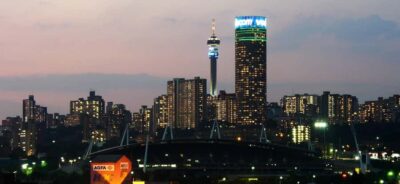
Jo’berg in 1 Day: Soweto, Apartheid Museum & City Tour
Read our review →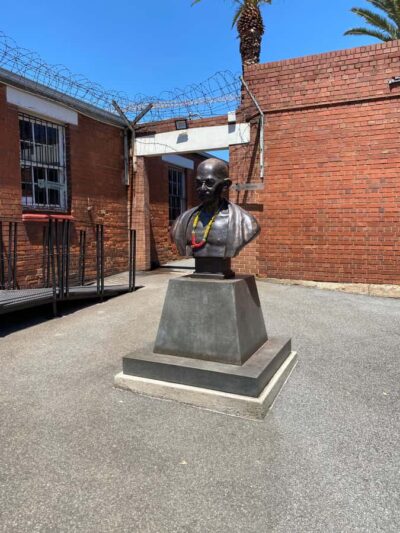
Johannesburg: Full-Day Tour with Soweto and Apartheid Museum
Read our review →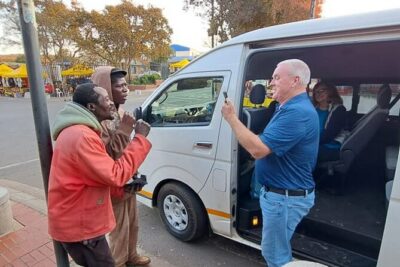
Full-Day Soweto, Apartheid Museum and Lunch Tour
Read our review →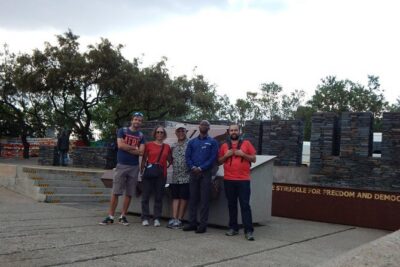
Half Guided Day Tour of Soweto And Apartheid Museum
Read our review →
Ultimate Johannesburg Soweto Experience with Apartheid Museum
Read our review →
Hop-On Hop-Off Bus, City Tour and Apartheid Museum
Read our review →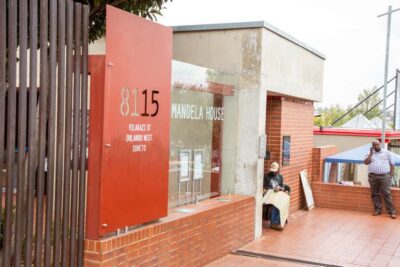
Johannesburg and Soweto Apartheid Full Day Tour w/Lunch
Read our review →Browse the lists this tour appears in