
Reviewed · CYCLING TOURS
Soweto: Bike Tour with a Local Tour Guide
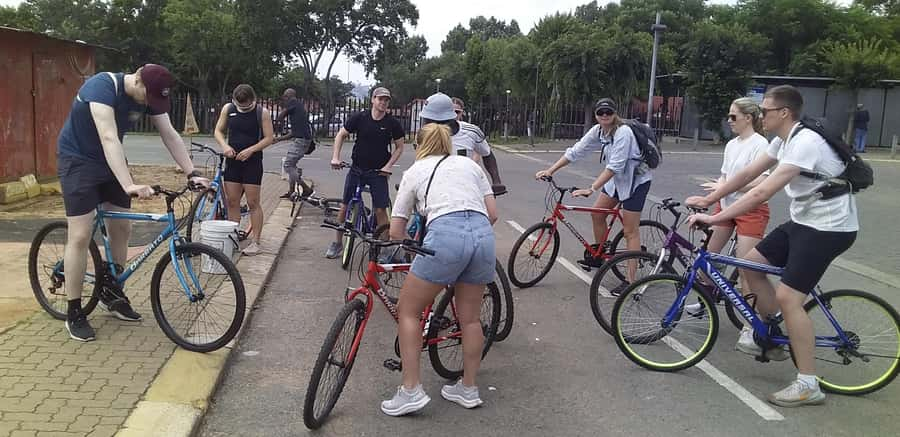
Soweto’s story is best understood at street level, and this two-hour bike ride takes you straight into it. You’ll pedal through Orlando West, visit the Hector Pieterson Memorial, and follow the road past the former homes of Nelson Mandela and Archbishop Desmond Tutu. I like the direct connection between history and daily life here, and I like that the tour keeps its group small, with no more than 10 people. The drawback is simple: the bikes may need better maintenance, so this is not a polished cycling excursion.
I also like the chance to ride along Vilakazi Street, one of Africa’s best-known streets, while supporting small local businesses along the way. Guides such as Pule bring the route to life with clear stories and plenty of detail. You should be comfortable on a bicycle, though, and remember that museum admission, food, drinks, and the Orlando Towers bungee jump cost extra.
Key points to know before you pedal away

- Hector Pieterson Memorial: Learn about the 1976 student uprising and the death of Hector Pieterson, whose story gives this tour its emotional center.
- Vilakazi Street by bicycle: Ride along the famous street linked with both Nelson Mandela and Archbishop Desmond Tutu.
- Local guides: English-speaking guides, including Pule, lead the route and explain the places you pass.
- Small-group format: With a maximum of 10 people, you can ask questions without shouting across a large crowd.
- Practical value: At $34 per person, the price includes a bicycle, helmet, and guide, but not museum entry or refreshments.
- Bike condition: Bring the right expectations. Some bicycles have been described as needing maintenance.
Why a bicycle is a good way to see Soweto
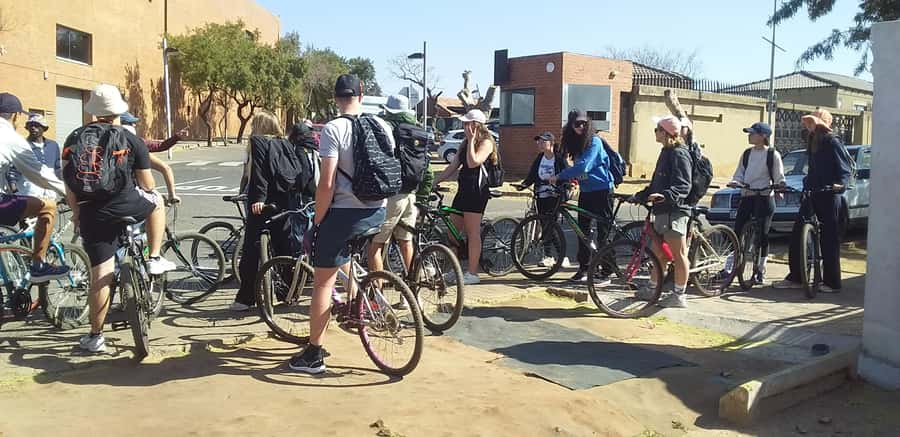
Soweto covers a broad area, and a bicycle gives you a useful middle ground between a walking tour and a vehicle ride. You move far enough to see several important places, but slowly enough to notice homes, streets, shops, and ordinary daily activity along the way.
That pace matters. From a vehicle, Soweto can become a string of sights viewed through a window. On a bicycle, you are more exposed to the place around you. You can stop, listen, ask a question, and take in the change from one part of the township to another.
This is not a demanding sports ride. The tour lasts two hours, and the description presents it as a little exercise rather than a serious cycling challenge. Still, you must be able to ride a bicycle, and you should wear comfortable clothing. Sunscreen and a hat are sensible additions, particularly because the route is outdoors.
The eco-friendly angle is another small plus. You are not adding a private vehicle trip to the experience, and the bicycle keeps the focus on the streets themselves. It also gives the tour a friendly, open feel that suits a place where personal contact is part of the point.
More Cycling Tours in Soweto:
- Soweto Food & Beer Bike Tour
★ 4.9 · 40 reviews - Stellenbosch: Historical Bike Tour & Wine Tasting
★ 4.9 · 248 reviews - Cape Town City Cycling Tour
★ 5.0 · 199 reviews
Starting behind Hector Pieterson Museum
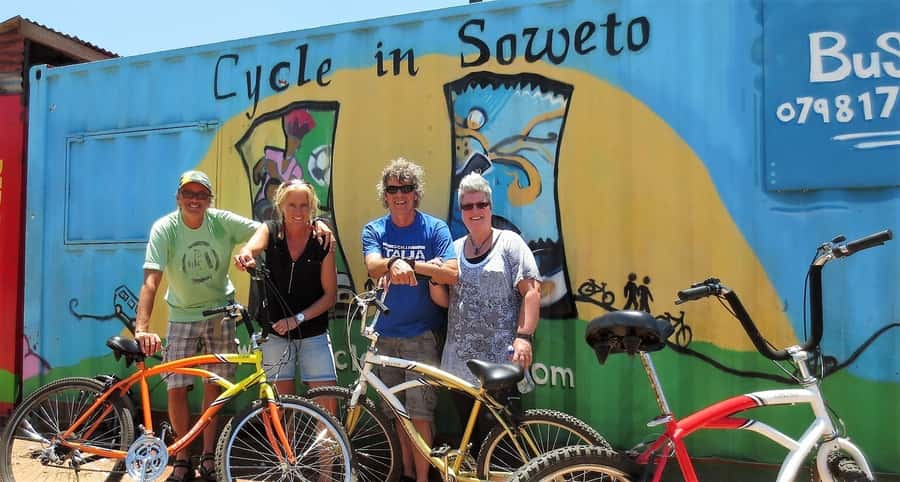
You meet the guide at the Cycle in Soweto shop, located behind the Hector Pieterson Museum beside the bus parking area. This is a practical meeting point because the memorial is one of the tour’s central stops, and you do not waste time crossing town before the history begins.
The tour has two listed starting and ending options, both identified as Cycle in Soweto. In practical terms, you should confirm the exact departure time when booking, especially if you need a different start. The provider asks you to get in touch if you want another departure time.
At the shop, you receive the bicycle and helmet before setting off. The equipment is included in the $34 price, which keeps the cost easy to understand. The main question is condition. One Swedish participant praised the guide arrangement but found the bicycles rather poor, while another French-speaking participant also pointed to bicycle upkeep as an area that could improve.
I would treat the bike as functional equipment, not high-end rental gear. Check the saddle, brakes, and tires before leaving. If something feels wrong, say so at the start rather than trying to manage it halfway through the route.
Hector Pieterson and the events of 16 June 1976
The Hector Pieterson Memorial gives the ride its most important historical stop. Here you learn about the student uprising of 16 June 1976, when young people protested against the use of Afrikaans in education and faced police violence.
Hector Pieterson was shot and killed by police during the protests. The famous photograph of his body being carried away, with his sister running beside him, became one of the defining images of the struggle against apartheid. The memorial helps connect that widely seen image with the place and people behind it.
The value of this stop is not only the information itself. It gives you a clearer sense of why Soweto matters in South African history and why a short visit can carry serious weight. The guide’s explanation is central here. You are not left to read a plaque and move on. An English-speaking local guide can explain the events in a way that connects the memorial with the surrounding streets.
Allow yourself a quiet moment at this stop. The tour is only two hours, but this is not a place to rush through for a photograph. If you want to enter a museum connected with the site, remember that museum admission is not included.
Orlando West, where famous names meet daily life
The ride takes place in Orlando West, an area closely tied to the political and cultural story of Soweto. Here, the route mixes major historical addresses with the ordinary homes and streets that make the township more than a collection of famous names.
You will see the former home of Nelson Mandela and the former home of Archbishop Desmond Tutu. Both addresses are on or near Vilakazi Street, the best-known street on the route. Seeing them from the outside gives you a useful sense of place, but do not assume that entry is part of the bike tour. Museum admission is listed separately and is not included.
Nelson Mandela’s house is connected with a major chapter in South Africa’s political story. Archbishop Desmond Tutu’s home adds another important connection, linking the street with religious leadership and the struggle against apartheid. Having both addresses in one short ride makes Vilakazi Street unusually concentrated in historical importance.
The tour does not present these homes as isolated monuments. You continue cycling through the surrounding area and have the chance to interact with local people. That contrast is one of the best reasons to choose this activity. You see where major figures lived, then return your attention to the community around those sites.
A few more Soweto days worth comparing
- Johannesburg: Hop-On Hop-Off Bus with Optional Soweto Tour
★ 4.6 · 985 reviews - Soweto /Johannesburg and Apartheid Museum Guided Full Day Tour
★ 5.0 · 932 reviews - Johannesburg Hop-On Hop-Off City Tour with Soweto Option
★ 4.5 · 768 reviews - Half-Day Tour of Soweto Tour
★ 4.5 · 712 reviews
Vilakazi Street by bike
Vilakazi Street is a major draw. It is famous for being associated with both Nelson Mandela and Desmond Tutu, and it is described as the most famous street on the African continent. Riding it gives you a different experience from simply arriving by car and stepping out at a landmark.
The bicycle lets you move along the street at a human pace. You can look around without the feel of a rushed stop, and you have a guide nearby to explain what you are seeing. The street also gives you a chance to support local small businesses, either by buying something or by offering a small donation or useful items.
Bring small change if you would like to spend locally. The tour specifically encourages support for small businesses along the way, but it does not include food or drinks. Keep your spending optional and practical. You do not need to prepare a large donation, and you should not expect purchases to be part of the tour price.
This section may be the most enjoyable part for people who want history with a social side. If your main goal is a formal museum visit, this bike ride may feel too brief. If you want to see a famous address and then watch ordinary life continue around it, Vilakazi Street is a strong match.
Orlando Stadium and the wider township view
Orlando Stadium is another named stop on the route. The information provided does not specify whether you enter the stadium, so plan to see it as part of the guided cycling route rather than as a stadium tour. Its inclusion broadens the experience beyond the memorials and famous homes.
That balance is useful. Soweto is not only a place of political history, and it is not only a place to look at landmarks. The stadium gives the route another side of local life, while the surrounding ride helps you see how major public places fit into the community.
The route’s exact order can vary, since the activity offers multiple starting and drop-off options and does not give a detailed minute-by-minute schedule. Your guide will lead the two-hour experience and shape the explanations as you go.
The guide makes the difference
The strongest part of this experience is the guide. Pule is named in several bookings, with the name also appearing in slightly different forms such as Puli and Poulet. You may meet Pule or another member of the Cycle in Soweto team, but the important point is that the tour is led in English by a local guide.
The guide does more than point out addresses. You will hear the story of 16 June 1976, learn why Hector Pieterson is remembered, and get explanations of the places along the route. The best guide interaction comes when you ask questions, so use the small-group format to do that.
The group limit of 10 people is a real advantage. You are less likely to lose the guide’s voice, and it is easier to stop for a question without holding up a large crowd. The format also suits solo participants and couples who want a more personal experience without paying for a private tour.
The experience has earned a 4.7 rating from 114 ratings, and the most consistent praise centers on the guides’ detail, planning, and local explanations. One participant singled out the value of having two guides, with one riding at the back of the group. That arrangement is not guaranteed, but it suggests that group supervision can be handled thoughtfully.
What the $34 price really covers

At $34 per person, the tour is reasonably priced for a two-hour guided activity that includes the bicycle, helmet, and English-speaking guide. You are paying for local interpretation as much as for the equipment. The route links several major sites without asking you to arrange separate transport between them.
The value is strongest if you want a quick introduction to Soweto. You get history, famous addresses, a stadium, local contact, and light exercise in one compact experience. The cost is less appealing if you plan to enter museums, eat along the way, or use the Orlando Towers bungee jump, since all of those extras are excluded.
There is also no food or drink included. Bring what you need for two hours, especially water if you prefer to carry your own. Sunscreen and a hat are specifically recommended, and comfortable clothes will make the ride easier.
Because the bicycle condition can vary, I would not choose this tour for equipment alone. Choose it for the guide and the route. The bike is the tool that connects those two things.
Who will enjoy this tour most
This tour suits you if you can ride a bicycle and want more movement than a standard walking or vehicle tour. It is a good fit for families with children aged 8 or older, provided each child can ride safely and manage the two-hour outing.
It also works well for history-minded visitors who want the Hector Pieterson story explained on site rather than encountered only in a book or museum. The route gives you a clear introduction to the 1976 uprising and the people and places tied to Soweto’s political past.
You will probably enjoy it less if you want a slow, in-depth museum visit. Museum entrances are not included, and two hours is enough for an overview rather than exhaustive sightseeing. You may also want another option if you are uncomfortable with bikes or expect premium rental equipment.
The route is likely to appeal to people who care about local business and direct contact. You can interact with local people and support small businesses, but the activity does not promise a formal craft workshop, meal, or long market stop. Keep your expectations focused on cycling, conversation, and history.
Small details that make the ride easier
Wear clothes that let you pedal comfortably. Add sunscreen and a hat, since the ride is outside. You must be at least 8 years old and able to ride a bicycle.
Arrive at the Cycle in Soweto shop behind the Hector Pieterson Museum, next to the bus parking area. If you need another departure time, contact the provider in advance rather than assuming the shop can adjust it on the day.
The tour is conducted in English. If that works for you, the small group makes it easier to follow the guide and ask questions. If you want to visit a museum, budget separately for its entrance fee.
Cancellation is flexible up to 24 hours before departure for a full refund, and you can reserve now and pay later. Those terms are useful if your Gauteng plans are still shifting.
Should you book the Soweto bike tour?
Book this tour if you want a compact, active introduction to Soweto with a strong focus on the Hector Pieterson story, Vilakazi Street, and local guide commentary. The $34 price is fair because it combines equipment, guiding, and several important places in two hours.
Go in expecting an honest community ride, not a luxury cycling product. The bicycles may be worn, and museum entry is extra. If you accept that trade-off, the chance to hear the history from a local guide, see Mandela and Tutu’s former homes, and experience Soweto at street level makes this a worthwhile choice.
FAQ
How long does the Soweto bike tour last?
The tour lasts two hours.
How much does the tour cost?
The listed price is $34 per person.
Where does the tour meet?
Meet the guide at the Cycle in Soweto shop behind the Hector Pieterson Museum, next to the bus parking area.
What is included in the price?
The price includes a bicycle, helmet, and English-speaking guide.
Is museum admission included?
No. Entrance fees for museums are not included.
Is food or drink included?
No. Food and drinks are not included.
What language is the tour conducted in?
The tour is conducted in English.
How old must participants be?
Participants must be at least 8 years old and able to ride a bicycle.
Can I cancel for a refund?
Yes. You can cancel up to 24 hours in advance for a full refund.
Just added around Soweto
- Soweto Township Tour★ 4.4 · 4 reviews
- Soweto Tuk-Tuk Food & Beer Tour★ 5.0 · 9 reviews
- Private Soweto,Mandela House,Apartheid Museum,Constitution★ 4.6 · 15 reviews
- Soweto: Sip & Paint Walking Tour & Take Home a Canvas★ 4.8 · 7 reviews
- Soweto Tour; Mandela House; Vilakazi Street; Market Culture★ 5.0 · 6 reviews
- Soweto: Hector Pieterson Memorial, to Orlando Towers Tour★ 4.0 · 31 reviews
- Soweto & Johannesburg and Apartheid Museum★ 4.7 · 41 reviews
- Johannesburg: Soweto History Tour with Hotel Pickup★ 4.8 · 14 reviews
Cycling Tours, compared.


Guided eBike Tour with Signal Hill and Clifton …
Read our review →
Browse the lists this tour appears in