
Reviewed · SOWETO TOURS
Johannesburg and Soweto: Half-Day Tour
Johannesburg’s story comes into sharp focus when you move from the city’s tall, geometric buildings to Soweto’s streets, memorials, and famous Vilakazi Street. This five-hour tour links the polished city center with the places tied to the 1976 youth uprising and Nelson Mandela’s life.
I like the clear contrast between wealthy southern suburbs, downtown Johannesburg, and Soweto. I also like that the tour includes Mandela House and the Hector Pieterson Memorial, rather than merely driving past them. The main drawback is time: five hours gives you a strong introduction, but not much room for long museum visits or wandering on your own.
Key points to know before booking

- The route covers three very different Johannesburgs: affluent southern suburbs, the central business district, and Soweto.
- Mandela House entry is included, with time on Vilakazi Street and views of nearby homes linked to Desmond Tutu and Winnie Mandela.
- The Hector Pieterson stop adds emotional weight, focusing on the 1976 student uprising and the fight against apartheid.
- Hotel pickup and drop-off make the tour practical for a short stay or a first day in the city.
- Guide quality matters here: James, Samuel, Pascal, Vincent, Patrick, Marc, and others are praised for clear explanations and attentive care.
- Bring a little cash for tips, especially for the student guide or performers around Mandela House, even though entrance costs are covered.
Why this Johannesburg and Soweto route works
This is not simply a drive around famous addresses. Its value comes from the order of the route. You begin with Johannesburg’s roads, buildings, and economic contrasts, then move into Soweto and learn how ordinary people shaped South Africa’s political story.
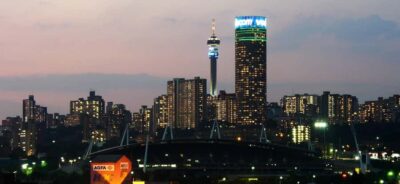
That change in scenery is part of the lesson. The tour description compares central Johannesburg’s straight lines and high-rise blocks with Manhattan, and the comparison helps you picture the city’s urban form. Yet the city is not just a collection of office towers. The guide connects those buildings to apartheid-era development, mining wealth, segregation, and the newer democratic South Africa.
The tour costs $71 per person. For that price, you get transport from your hotel, a driver-guide, bottled water, a map, and entry to Mandela House. You are paying for a broad overview rather than a specialist museum visit or a full-day excursion. For a first look at Johannesburg, especially if you have only one free morning or afternoon, that is fair value.
The strongest part of the experience depends on your guide. James is repeatedly praised for his history knowledge, friendly manner, and willingness to answer questions. Samuel, Pascal, Vincent, Marc, Patrick, and others also receive strong praise for explaining the city clearly and helping people feel comfortable. Guide assignments can vary, so you should not assume you will get a particular person, but the pattern is clear: expect the human guide to shape the day.
A few more Soweto days worth comparing
- Half-Day Tour of Soweto Tour
★ 4.5 · 712 reviews - Soweto Half Day Tour
★ 5.0 · 231 reviews - Johannesburg: Soweto Half-Day Tour
★ 4.7 · 196 reviews
From hotel pickup to Johannesburg’s southern suburbs
The tour begins with pickup at your Johannesburg hotel or in the surrounding area. You travel in a comfortable vehicle with a driver-guide, which is useful in a city where the distances between the main sights can be awkward to manage independently in half a day.
The first part takes you through southern suburbs and along wide freeways. You may see sleek cars, spacious roads, and well-kept areas before the scenery changes as you approach Soweto. That shift is important because it lets you see the sharp range of wealth and living conditions within one metropolitan area.
Your guide provides the context as you go. Ask questions early. Several people describe guides who adapted the pace to their interests and answered questions throughout the drive, so the vehicle is not just a transfer between stops. It is where much of the explanation happens.
Do not expect a long stop in every suburb. This section is mainly a moving introduction to Johannesburg’s divisions and daily life. The value is in seeing how quickly the surroundings change, not in spending time at one particular suburban address.
Johannesburg city center and its apartheid-era buildings
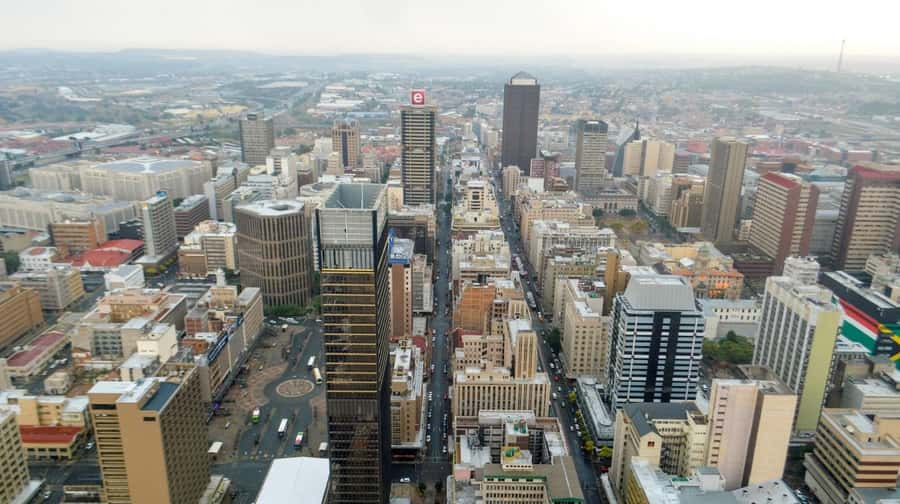
The route continues into central Johannesburg, where tall buildings give the city a strong vertical feel. Many of the major structures date from the apartheid era, and your guide explains how the city grew around gold mining, commerce, and government power.
This is one of the tour’s useful features: it does not treat downtown as a backdrop. The buildings become clues. You learn about the city’s economic rise and the changes that followed, including the complicated relationship between commercial success, urban decline, unemployment, and renewal.
The center can feel very different from the more polished parts of the city. That contrast is not smoothed over. Instead, the guide helps you understand Johannesburg as a place of very high and very low incomes, rapid change, and ongoing social pressure.
Some itineraries and guide accounts also include views of other parts of Johannesburg, such as Maboneng, the former office of Mandela, or Sandton, depending on the route and available time. Treat those as possible additions rather than guaranteed stops. The advertised core is the city center, Soweto, and the listed landmarks.
The Soweto cooling towers and the road into the township
As you leave the central areas, the tour enters Soweto. The scenery changes, and the guide explains how the township developed and why it became such an important symbol of resistance and political change.
Two large cooling towers are among the most recognizable sights along the route. They once formed part of Soweto’s power infrastructure and are now associated with bungee jumping. You normally view them from the tour vehicle or stop briefly, rather than treating them as the main activity.
They are a good reminder that Soweto is not frozen in the past. The township carries painful memories, but it also has entertainment, business, homes, schools, and everyday activity. A useful guide will show you both sides instead of reducing Soweto to a single story of hardship.
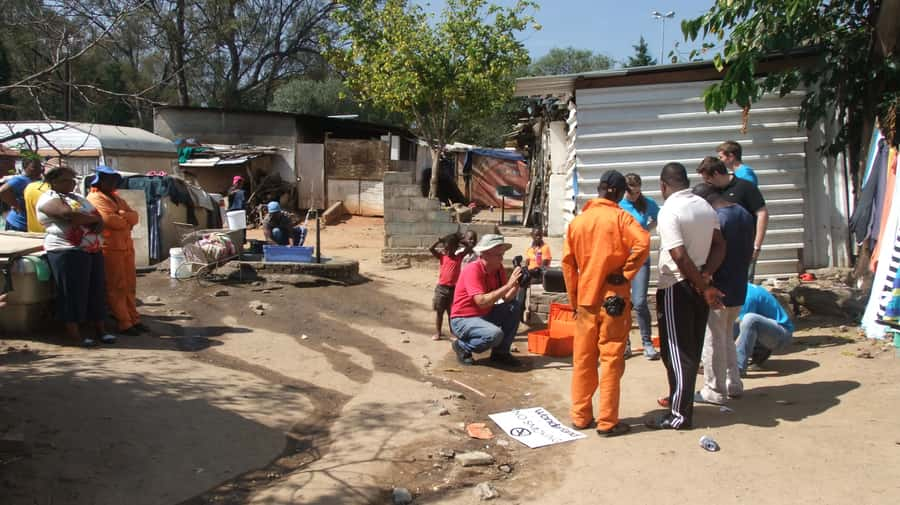
You should also expect views of Baragwanath Hospital and an informal settlement. These sights can be confronting. The point is not to treat people’s homes as scenery, so listen carefully to how your guide explains the area and keep your camera use respectful. The tour provides context, but it is still a short visit through a complex community.
Same part of Soweto, a completely different kind of day:
- Johannesburg: Hop-On Hop-Off Bus with Optional Soweto Tour
★ 4.6 · 985 reviews - Soweto /Johannesburg and Apartheid Museum Guided Full Day Tour
★ 5.0 · 932 reviews - Johannesburg Hop-On Hop-Off City Tour with Soweto Option
★ 4.5 · 768 reviews - Soweto: Walking Tour with a Local Guide and Lunch
★ 4.9 · 648 reviews
Hector Pieterson Memorial and the 1976 uprising
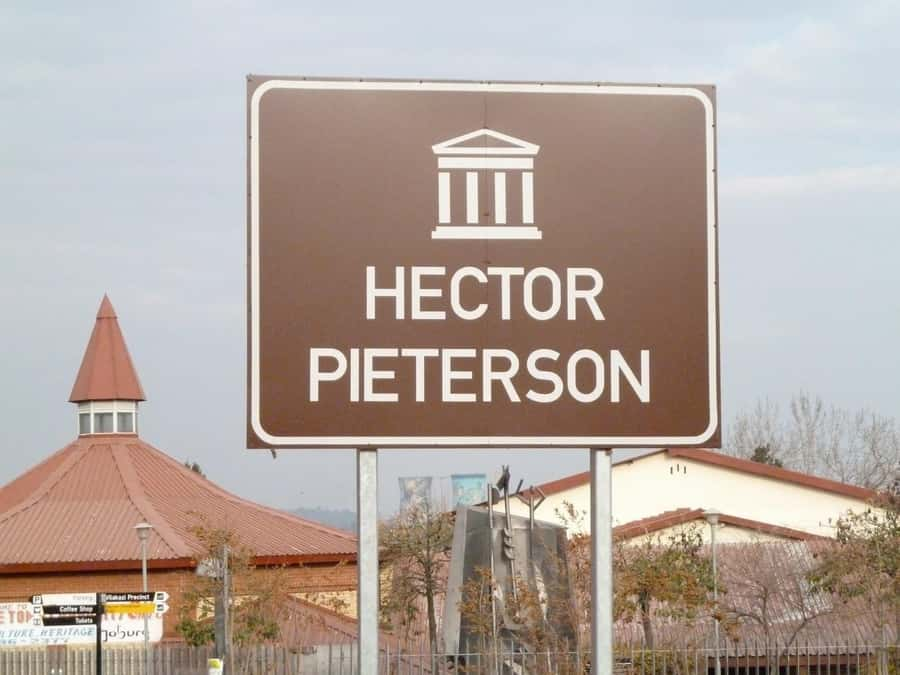
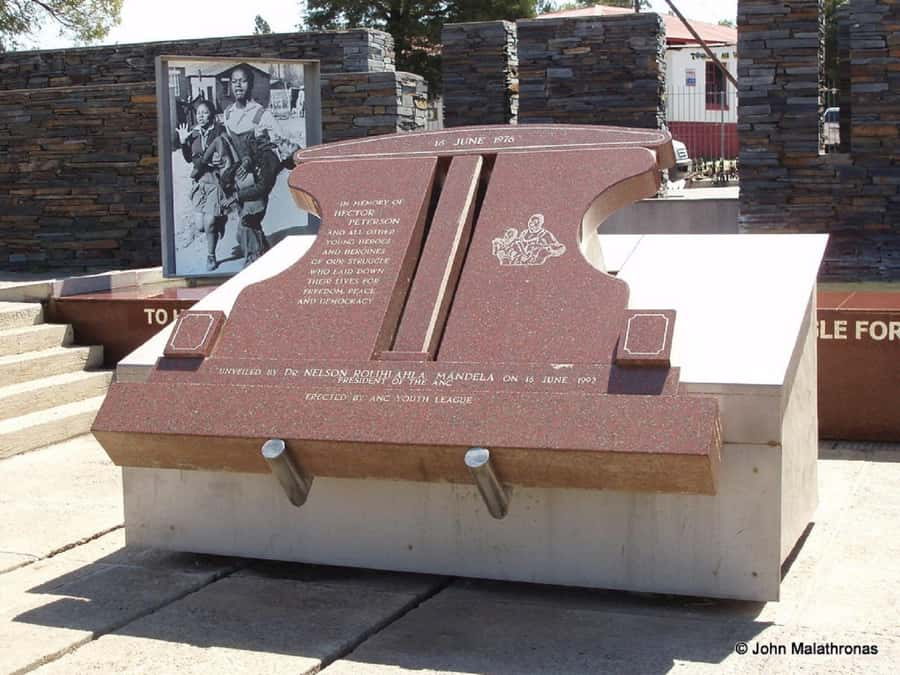
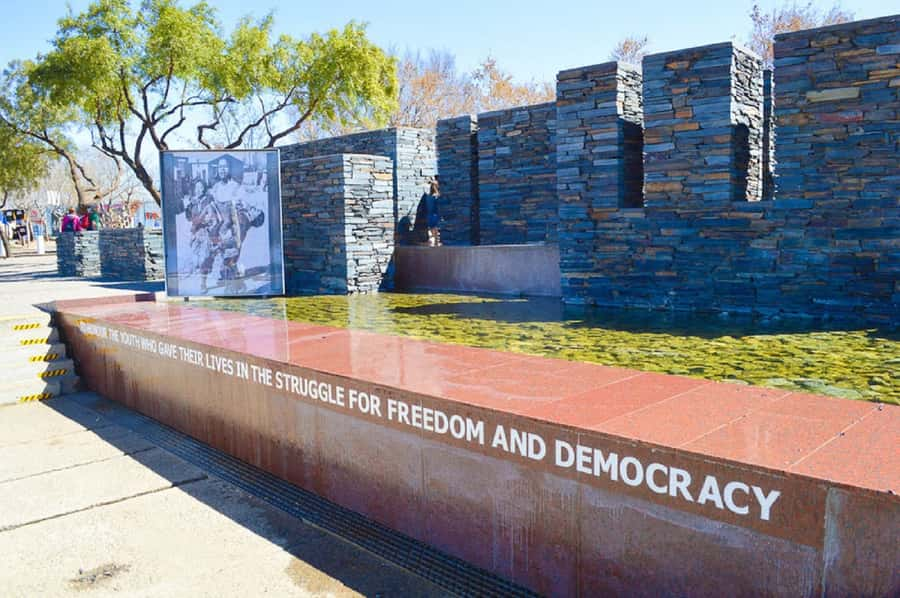
The stop at the Hector Pieterson Memorial is the most solemn part of the tour. It recalls the 1976 student uprising, when schoolchildren protested against the apartheid government’s education policies. The event became a turning point in international awareness of South Africa’s system of racial separation and state control.
The memorial gives the history a human focus. Instead of hearing only about legislation and political leaders, you confront the experience of young people caught in a protest that became deadly. Your guide sets this event within the wider struggle against apartheid and explains why Soweto became such a powerful symbol.
Some people would prefer more time at this stop. One account specifically wished for 30 to 60 minutes in the Hector Pieterson museum. That is a useful warning. The half-day format may require you to move on before you have absorbed every display.
If this subject is central to your interests, consider returning independently for a longer visit. On this tour, the memorial works best as part of a larger story. You see the site, hear the essential background, and then continue to places linked to political leadership and daily life.
Mandela House on Vilakazi Street
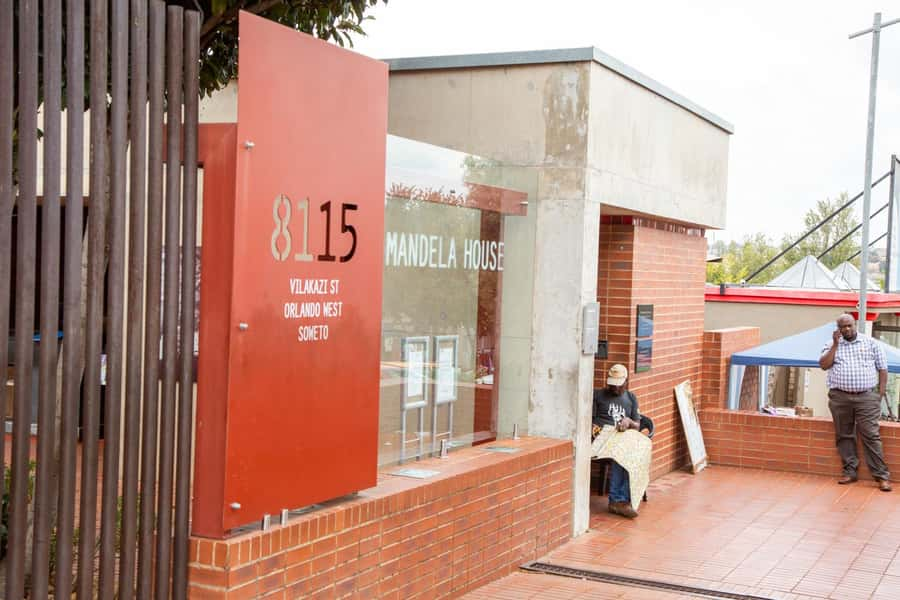
The tour then reaches Vilakazi Street, one of Soweto’s best-known addresses. This is where you visit Mandela House, the former home of Nelson Mandela, and learn more about his life and public role.
Entry to Mandela House is included, which improves the value of the tour. You are not limited to a roadside view or a quick photograph. Inside, the house offers a direct connection to Mandela’s personal life and the period when he became a central figure in the struggle against apartheid.
A museum guide provides additional explanation inside the house. That second layer matters. Your driver-guide gives the wider Johannesburg and Soweto context, while the museum guide focuses on the home and Mandela’s story.
Vilakazi Street also gives you a feel for Soweto beyond the museum. You can see the homes associated with Desmond Tutu and Winnie Mandela, both important figures in South African public life. The street brings political history into a residential setting, which makes the stop more memorable than a detached monument.
You may encounter street performers or a student guide around Mandela House. A little cash is practical if you would like to tip. Tips are not part of the listed price, and entrance fees are already covered.
Seeing Soweto as a living neighborhood
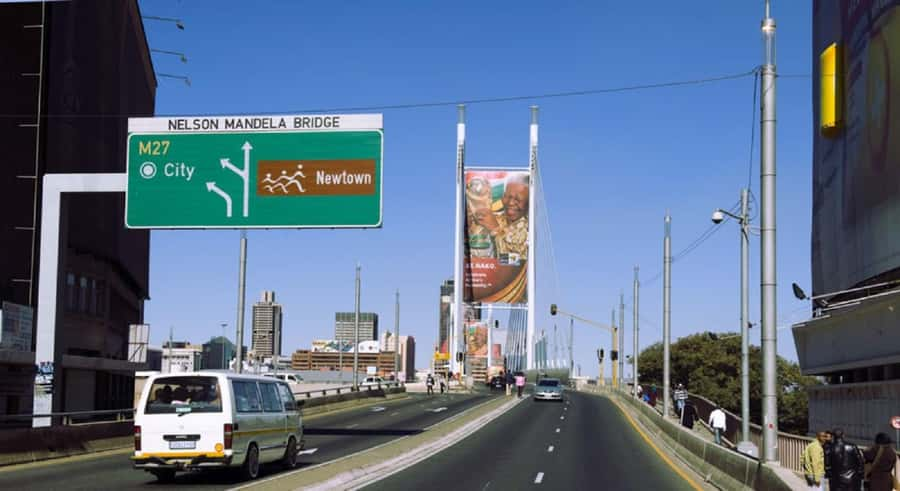
The tour includes a drive through Soweto for sightseeing, rather than only stopping at memorials. This is where you get your glimpse of neighborhood life, local businesses, homes, roads, and the differences between better-off and poorer sections.
That broader view is one of the experience’s best qualities. You do not leave thinking that Soweto is only a place of historical tragedy. You see a living township with humor, work, family life, and a strong sense of identity, while also facing serious unemployment and poverty.
At the same time, the tour is not a substitute for spending several days in Soweto. You remain with your vehicle for much of the visit, and the schedule limits spontaneous exploration. That is also part of what makes the format practical for visitors who want an introduction without arranging local transport themselves.
The return route and Soccer City
On the way back, you pass FNB Stadium, also called Soccer City or The Calabash. It hosted the opening and closing matches of the 2010 World Cup finals, giving the return journey a modern sporting landmark after the day’s focus on political history.
The stadium adds another piece to the city’s story. Johannesburg is not only defined by apartheid and the struggle for democracy. It is also a major modern city with international events, large infrastructure, and a strong place in South African popular culture.
The tour returns you to your hotel after roughly five hours. Actual timing can shift with traffic and the number of questions you ask, but several people describe tours that ran longer than expected because the guide continued explaining places along the way. Plan a little flexibility after the scheduled finish if you have a flight, meeting, or fixed lunch booking.
Guide style, comfort, and personal safety
The guide is the key practical factor. The most praised qualities are clear explanations, patience, warmth, and care with safety. James is frequently singled out, while Samuel, Pascal, Vincent, Marc, Patrick, Sam, Lilo, and Adama also receive strong approval in different departures.
You are not promised a specific guide, but the company provides English, French, and Portuguese guiding. If language is important, confirm the available language when booking.
The vehicle includes bottled water, and hotel pickup removes much of the stress of getting to a distant starting point. Do not bring luggage. This is a sightseeing vehicle, not an airport transfer, and the instructions specifically ask you to leave bags behind.
Many people describe feeling safe and comfortable, especially while moving through unfamiliar parts of Johannesburg and Soweto. That does not mean you should ignore ordinary urban caution. Keep valuables secure, follow your guide’s instructions, and ask before photographing people, homes, or informal settlements.
Who will get the most from this tour
This tour fits you best if you are in Johannesburg for a short stay and want the major historical themes explained in one morning or afternoon. It is also useful on a first visit, when you want orientation before exploring more independently.
You will likely appreciate it if you prefer a guide who explains context rather than simply naming buildings. The route is especially worthwhile for anyone interested in apartheid, the democratic transition, Mandela, the 1976 uprising, and the social contrasts of modern Johannesburg.
It is less suitable if you want long, quiet museum visits, extensive walking, or time to shop and eat in Soweto. Lunch is not included, and the schedule is built around driving between several significant places. You will see a lot, but you will not linger everywhere.
The tour can work well for families and mixed-interest groups because the route combines history, architecture, neighborhood views, and a stadium. The subject matter at Hector Pieterson Memorial is serious, so younger children may need some preparation.
Is $71 a fair price?
At $71 per person, the tour offers solid value if you count the included hotel transport, five hours of guiding, Mandela House entry, bottled water, and the convenience of covering widely separated areas in one vehicle.
A private taxi route might appear cheaper at first, but it would not automatically provide the historical explanation or the museum entry. You would also need to plan the route and decide how long to spend at each place. Here, the guide supplies the structure.
The price is less attractive if you already know Johannesburg well or plan to visit Mandela House and the Hector Pieterson site on your own. In that case, you may prefer a longer specialist visit to one area. For a first introduction, though, the combination of transport and interpretation makes the cost reasonable.
Free cancellation up to 24 hours before departure and reserve-now, pay-later booking add useful flexibility. Starting times depend on availability, so check the schedule before building the rest of your day around it.
Should you book it?
I would book this tour if you have limited time, want to understand the connection between Johannesburg and Soweto, and prefer a guide-led introduction to a complicated city. The route covers the key subjects efficiently, and Mandela House entry gives the afternoon a clear anchor.
I would skip it only if your priority is slow exploration or a long museum session. For everyone else, the mix of city views, Soweto neighborhoods, the Hector Pieterson Memorial, Vilakazi Street, and Mandela House offers a thoughtful first look at Johannesburg. Bring questions, leave your luggage behind, and keep some cash handy for optional tips.
FAQ
How long does the Johannesburg and Soweto tour last?
The tour lasts five hours, including hotel pickup, sightseeing, visits to the main landmarks, and return transportation to your hotel.
Is hotel pickup and drop-off included?
Yes. Pickup and drop-off are included from Johannesburg hotels and surrounding areas.
Is entry to Mandela House included?
Yes. Entrance to Mandela House in Soweto is included in the tour price.
Which languages are available?
Live guiding is available in English, French, and Portuguese.
Does the tour include lunch?
No. Lunch is not included, and personal expenses are also separate.
Can I bring luggage on the tour?
No. The instructions specifically ask you not to bring luggage.
Just added around Soweto
- Soweto Tuk-Tuk Food & Beer Tour★ 5.0 · 9 reviews
- Soweto Township Tour★ 4.4 · 4 reviews
- Private Soweto,Mandela House,Apartheid Museum,Constitution★ 4.6 · 15 reviews
- Soweto: Sip & Paint Walking Tour & Take Home a Canvas★ 4.8 · 7 reviews
- Soweto Tour; Mandela House; Vilakazi Street; Market Culture★ 5.0 · 6 reviews
- Johannesburg: Soweto History Tour with Hotel Pickup★ 4.8 · 14 reviews
- Soweto: Hector Pieterson Memorial, to Orlando Towers Tour★ 4.0 · 31 reviews
- Soweto & Johannesburg and Apartheid Museum★ 4.7 · 41 reviews
Soweto Tours, compared.

Johannesburg: Hop-On Hop-Off Bus with Optional Soweto Tour
Read our review →
Soweto /Johannesburg and Apartheid Museum Guided Full Day Tour
Read our review →
Johannesburg Hop-On Hop-Off City Tour with Soweto Option
Read our review →

Jo’berg in 1 Day: Soweto, Apartheid Museum & City Tour
Read our review →
Johannesburg: Full-Day Tour with Soweto and Apartheid Museum
Read our review →
Full-Day Soweto, Apartheid Museum and Lunch Tour
Read our review →Browse the lists this tour appears in