

Reviewed · WALKING TOURS
Soweto: Walking Tour with a Local Guide and Lunch
Soweto is best understood at street level, not through a bus window. This four-hour walk moves from the Hector Pieterson Memorial and the 1976 uprising to Mandela’s House, local food, a minibus taxi ride, and Nomzamo Park, where daily life is still unfolding.
I like the personal local guiding, especially with Maweza, whose talks connect national events with his own experience of Soweto. I also like the mix of famous landmarks and ordinary streets. You get Vilakazi Street, Soweto Towers, and major political history, but you also meet residents and eat a simple local lunch.
The main consideration is physical and emotional. You will walk quite a lot, sometimes through uneven neighborhood streets, and the visit to an informal settlement may feel confronting. Lunch is included, but the food choice may be limited, and drinks cost extra.
Key points at a glance

- Walk through the 1976 uprising story: Begin at the Hector Pieterson Memorial and follow Moema Street, linked to the historic student march.
- Hear Soweto from a Sowetan guide: Maweza is the main guide named in the feedback, with Teboho, Mulalo, and Thabo also leading tours.
- Visit Mandela and Tutu landmarks: Mandela’s House includes about 20 minutes inside if you pay the separate entrance fee.
- Eat a local lunch: The meal is served at a neighborhood shop, with kota-style food and a vegetarian option reported on some departures.
- Use local transport: A minibus taxi carries you from the Vilakazi Street area toward Orlando East and the Soweto Towers.
- See more than the polished sights: Nomzamo Park offers a closer look at everyday life in an informal settlement.
Why this Soweto walk is worth your time

Soweto is not one single kind of place. It includes famous political addresses, established residential streets, commercial areas, and informal settlements. This tour gives you a useful cross-section in half a day.
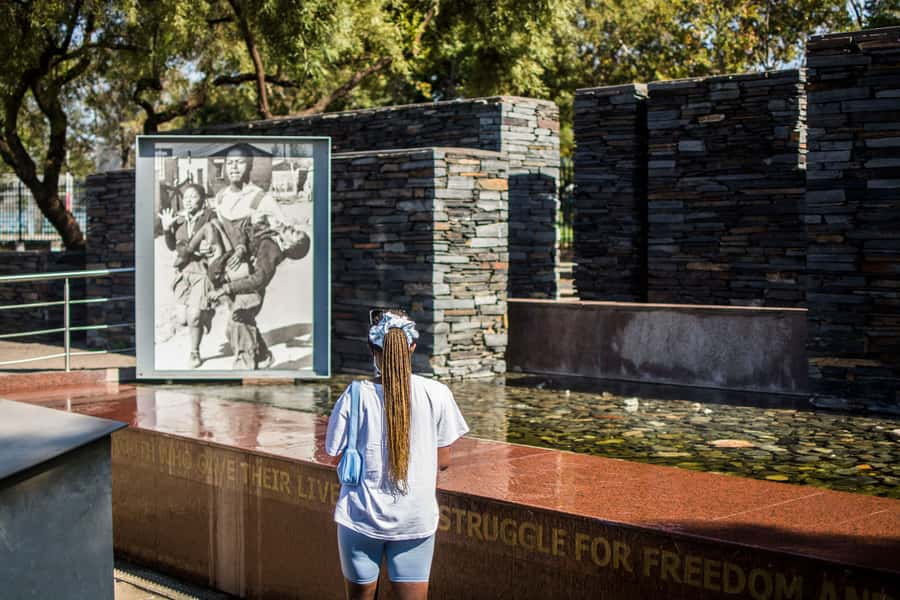
I especially value the way the route links history to geography. At the Hector Pieterson Memorial, the 1976 Soweto Uprising is not treated as a distant textbook event. You then walk down Moema Street, retracing part of the route connected with the march. That movement matters. You are not simply being told about an event in a museum room. You are seeing the streets connected to it.
The guiding is the heart of the experience. Maweza is repeatedly praised for his clear storytelling, personal connection to Soweto, and ability to answer questions about South African history and politics. He is described as an historian as much as a guide, which suits this tour. You will get more from it if you ask questions and tell him what interests you.
Other guides named for this experience include Teboho, Mulalo, and Thabo. The exact guide depends on the departure, but the strongest pattern is clear: the tour is built around a local voice rather than a recorded script.
More Walking Tours in Soweto:
- Soweto Walking Tour with Lunch
★ 5.0 · 288 reviews - Soweto Food and Beer Tasting Walking Tour with a Local
★ 5.0 · 8 reviews - Soweto: Sip & Paint Walking Tour & Take Home a Canvas
★ 4.8 · 7 reviews
Meeting at Vilakazi Espresso and starting at Hector Pieterson
Meet your guide in front of Vilakazi Espresso, opposite the Hector Pieterson Memorial. This is a practical starting point because the memorial immediately places you in the central historical story of the tour.
You spend about 20 minutes at the memorial, with time for photographs, a guided visit, and a short walk. The focus is the 1976 uprising, when students protested against the apartheid government’s education policies. The memorial gives context to the young people involved and to the wider role Soweto played in the fight against apartheid.
Expect the tone to be serious. The tour does not reduce Soweto to cheerful street scenes and photo stops. That balance is important. You will hear about political courage and community strength, but also about violence, loss, inequality, and the difficult parts of the past.
Bring sunscreen and water, even though bottled water is supplied. The tour runs in rain or shine, so light rain protection is sensible on unsettled days.
Walking Moema Street and connecting past with present

From the memorial, the walk continues down Moema Street, following the route associated with the historic student march. This is one of the most meaningful parts of the tour because the distance between the memorial and the surrounding streets helps you picture how the events unfolded.
A local guide can also explain how Soweto has changed. Several people who took this tour found the contrast between past and present especially useful, including one South African visitor who had last seen Soweto decades earlier. The area is not frozen in 1976. You will see a community that has changed while still carrying the marks of its political past.
The walking pace is generally manageable, but four hours on foot is still four hours on foot. Wear shoes with good support. Older visitors have completed the route, but the experience is not suitable for wheelchair users, and uneven surfaces may trouble anyone with limited mobility.
Vilakazi Street and Mandela’s House

Vilakazi Street is one of Soweto’s best-known addresses. It is associated with both Nelson Mandela and Desmond Tutu, making it an unusual place in South African political history.
At Mandela’s House, you have about 20 to 25 minutes for a visit and photographs. The tour price does not include the entrance fee, so decide in advance if you want to go inside. The house adds a personal scale to Mandela’s story. Instead of only hearing about the statesman, you see the place where he lived before his 27-year imprisonment.
That extra fee is worth considering if this is your first visit to Johannesburg and you want a fuller Mandela experience. If you have already visited several related museums, you may prefer to spend the time outside and ask the guide more questions. The tour allows some room for personal preference, though the exact flexibility depends on timing and the group.
The stop at Desmond Tutu’s house is shorter, about five minutes, and is mainly an exterior visit with photographs and explanation. It is not a long house tour. Think of it as a landmark stop that helps show how several major anti-apartheid figures were connected to the same street.
A few more Soweto days worth comparing
- Johannesburg: Hop-On Hop-Off Bus with Optional Soweto Tour
★ 4.6 · 985 reviews - Soweto /Johannesburg and Apartheid Museum Guided Full Day Tour
★ 5.0 · 932 reviews - Johannesburg Hop-On Hop-Off City Tour with Soweto Option
★ 4.5 · 768 reviews - Half-Day Tour of Soweto Tour
★ 4.5 · 712 reviews
A local lunch on Vilakazi Street
Lunch comes at a local shop on or near Vilakazi Street. The meal is included, which helps the $43 price feel fair, but do not expect a long restaurant meal with a broad menu.
The food is local street fare. One of the dishes associated with the stop is a kota, a substantial South African township sandwich. Another description compared the lunch to a Soweto-style chip butty. A vegetarian option has been available on at least some departures, but you should state your dietary needs when booking or at the start.
This is a useful part of the experience because food gives you another way into local life. You are eating in a neighborhood setting rather than being taken to a restaurant designed mainly for tour groups. The tradeoff is choice. If you like selecting from several dishes, the included lunch may feel basic. Bring cash if you want additional snacks or drinks, since drinks are not included.
Winnie Mandela’s house and the walk through Orlando West

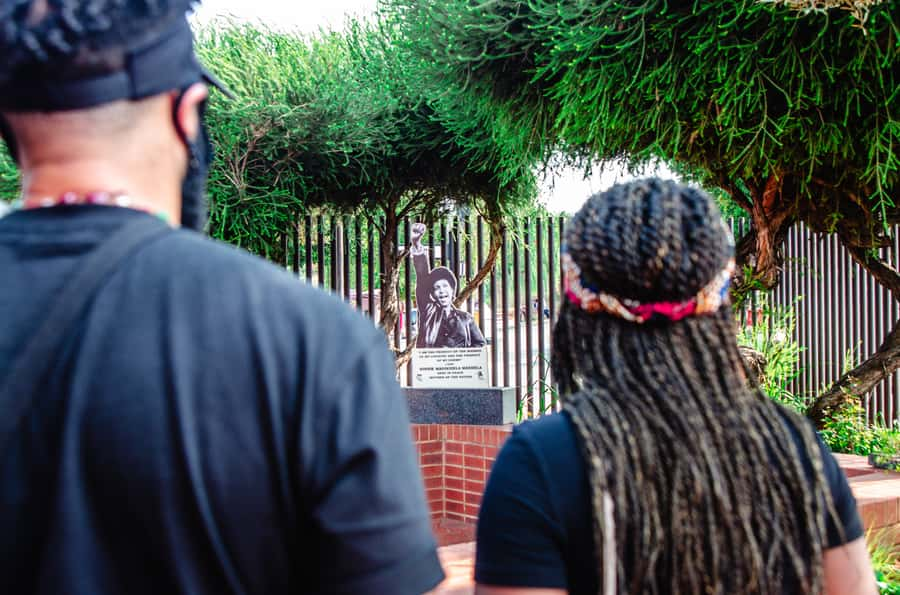
The route includes a short stop outside Winnie Mandela’s house, with about ten minutes for photographs and explanation. Like Tutu’s home, this is mainly a landmark visit rather than an extended interior tour.
These brief stops work best when you see them as part of a larger story. Mandela’s House, Tutu’s home, and Winnie Mandela’s house together show how Vilakazi Street became tied to South Africa’s liberation struggle. The guide supplies the links between the addresses, so keep listening during the walks between them.
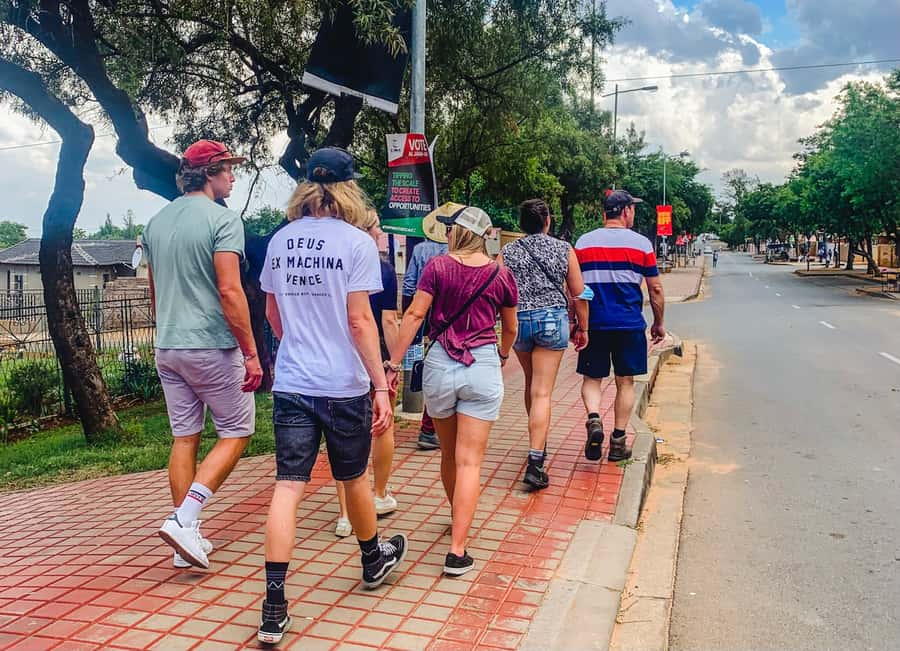
This section also gives you time to notice ordinary details: shops, homes, pedestrians, signs, and the rhythm of neighborhood streets. The tour is not a staged performance. You are moving through a lived-in community, so behave as you would anywhere else. Ask before photographing people, and follow your guide’s lead when speaking with residents.
Riding a minibus taxi toward Orlando East
After lunch and the Vilakazi Street stops, you take a minibus taxi toward Orlando East. The ride is short, but it adds something a standard sightseeing route often misses: a taste of how residents move around Soweto.
You should not expect a private vehicle or a sightseeing bus at this point. The minibus taxi is local public transport, and using it makes the tour feel less sealed off from daily life. It also breaks up the walking, which is welcome in hot weather.
This part may be less comfortable for visitors who prefer tightly controlled transport. That is also the point. Your guide handles the practical side, and one guide was praised for making sure a visitor reached an Uber safely at the end. Still, keep your belongings secure and carry some cash for small purchases and tips.
Orlando East and the Soweto Towers
In Orlando East, the tour continues on foot and then reaches the Soweto Towers. The towers are among the most recognizable modern sights in Soweto, with their painted surfaces and bold industrial form.
You get about 15 minutes here for photographs, guided commentary, and sightseeing. It is a good visual change after the memorials and political homes. The towers also help show that Soweto is not only a place of historical memory. It has contemporary public spaces and landmarks too.
The stop is fairly short, so do not book this tour expecting a long tower attraction visit or a dedicated adventure activity. The value lies in seeing the towers as part of a wider route through Orlando East.
Nomzamo Park and the difficult side of the tour

The final major stop is Nomzamo Park, an informal settlement. You may walk through or pass by parts of the area for about 25 minutes, depending on the route and the group.
This can be the most eye-opening part of the day. It offers a closer look at housing conditions and daily routines that you will not understand from Vilakazi Street alone. The visit is presented as part of the local community, and residents are accustomed to tours. Some departures include conversations with local people and children, while others may involve more observation.
Your guide should set the tone. The best approach is respectful curiosity, not poverty tourism. Ask before taking photographs, do not treat people’s homes as scenery, and let residents decide how much interaction they want. The guides have been praised for checking how comfortable people feel and for offering the choice to interact or keep some distance.
You may also want a little cash for community support or street performers. One person wished they had brought more to give tips. This is optional, not a compulsory fee, but small notes can be useful.
The guide makes the difference
The tour’s strongest feature is the guide. Maweza receives the most attention, with praise for his energy, humor, personal stories, and ability to explain difficult history without flattening it into a simple good-versus-bad tale.
Several people also appreciated that he could tailor the discussion to the group. Families with children aged 8, 12, and 15 completed the tour, while older visitors in their seventies managed the walk. That does not mean every group will find the route easy, but it suggests the pace can work for a range of abilities if you are comfortable walking.
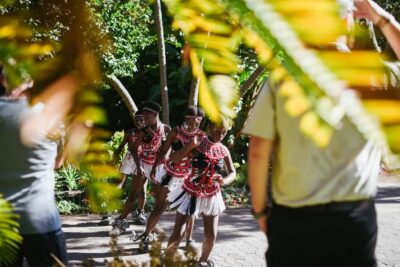
Maweza and the other guides also help with the emotional balance of the experience. You will hear about political struggle and poverty, but you will also see pride, humor, music, food, and everyday community life. One departure included dancing, and another guide helped keep a visitor comfortable while waiting for transport afterward.
What $43 includes, and what it does not
At $43 per person, this is good value if you want a guide-led introduction to Soweto rather than a quick drive past the main sights.
The price includes:
- Four hours with a live English-speaking guide
- Lunch
- Bottled water
- An English audio guide
- The minibus taxi segment
You pay separately for drinks and for entry to Mandela’s House. Hotel pickup and drop-off are not included, so arrange your own way to Vilakazi Espresso and your onward transport afterward.
The value comes from the amount covered in four hours: major historical sites, local streets, lunch, public transport, and an informal settlement. A cheaper self-guided visit could cover some landmarks, but it would not give you the same local explanation or help with the transitions between areas.
The tour currently carries a 4.9 rating from 648 bookings, which supports the idea that the guide quality is consistent. Still, the experience is not designed for someone who wants a polished, luxury outing. It is active, direct, and sometimes uncomfortable in useful ways.
Practical advice before you go
Wear comfortable walking shoes. This is not a bus tour with occasional steps onto the pavement.
Carry sunscreen, water, hand sanitizer or tissues, a camera, and cash. Water is supplied, but your own bottle is still useful. Cash helps with drinks, optional tips, and small purchases.
Use sun protection in hot weather and prepare for rain. The tour operates in all weather, and the walking route offers no promise of indoor shelter.
The meeting point is easy to identify: Vilakazi Espresso, opposite the Hector Pieterson Memorial. Plan your arrival carefully because hotel pickup is not included.
English is the tour language, and an English audio guide is included. Wheelchair users should choose another experience because the route is not suitable for wheelchairs.
Should you book this Soweto walking tour?
Book it if you want to understand Soweto through its streets, political history, and present-day communities. It is especially useful for first-time visitors to Johannesburg, families with older children, and anyone who prefers a local guide to a standard sightseeing circuit.
I would also choose it if you have visited the Apartheid Museum or Constitution Hill and want to connect that history to actual neighborhoods. The memorials and homes make more sense when you can walk between them and hear how the pieces fit together.
Think twice if you dislike walking, want a fixed restaurant lunch, or prefer to avoid informal settlements. The tour asks you to stay open, respectful, and alert. For most visitors seeking a serious, human look at Soweto, the combination of Maweza or another local guide, street food, public transport, and landmark history makes this a strong half-day choice.
FAQ
Where does the Soweto walking tour meet?
Meet your guide in front of Vilakazi Espresso, opposite the Hector Pieterson Memorial.
How long does the tour last?
The tour lasts four hours.
What language is the tour conducted in?
The live tour guide speaks English, and an English audio guide is included.
Is lunch included?
Yes. Lunch at a local shop is included. Drinks are not included.
What kind of food is served?
The tour includes local street food. A kota-style meal or a Soweto-style chip butty may be served, and a vegetarian option has been available on some departures.
Is entry to Mandela’s House included?
No. Entrance to Mandela’s House costs extra. You have about 20 to 25 minutes for the visit.
Does the tour include hotel pickup?
No. You must make your own way to Vilakazi Espresso, and hotel drop-off is not included.
How much walking is involved?
The experience is a walking tour covering several parts of Soweto, with additional walking at the memorial, Vilakazi Street, Orlando East, Soweto Towers, and Nomzamo Park. Comfortable shoes are essential.
Is the tour suitable for wheelchair users?
No. The tour is not suitable for wheelchair users.
What should I bring?
Bring comfortable shoes, sunscreen, a camera, water, cash, and hand sanitizer or tissues. A face covering may also be useful.
Does the tour operate in bad weather?
Yes. The tour takes place rain or shine, so bring suitable protection if rain is forecast.
Just added around Soweto
- Soweto Township Tour★ 4.4 · 4 reviews
- Soweto Tuk-Tuk Food & Beer Tour★ 5.0 · 9 reviews
- Private Soweto,Mandela House,Apartheid Museum,Constitution★ 4.6 · 15 reviews
- Soweto: Sip & Paint Walking Tour & Take Home a Canvas★ 4.8 · 7 reviews
- Soweto Tour; Mandela House; Vilakazi Street; Market Culture★ 5.0 · 6 reviews
- Johannesburg: Soweto History Tour with Hotel Pickup★ 4.8 · 14 reviews
- Soweto: Hector Pieterson Memorial, to Orlando Towers Tour★ 4.0 · 31 reviews
- Soweto & Johannesburg and Apartheid Museum★ 4.7 · 41 reviews
Walking Tours, compared.





Browse the lists this tour appears in