
Reviewed · SOWETO TOURS
Soweto: Guided Bicycle Tour with Lunch
Soweto makes more sense when you move through it at street level, and this four-hour bicycle tour gives you a broad look at Orlando West and nearby neighborhoods without trapping you in a vehicle. You will pass homes tied to South Africa’s political story, meet local people, and hear how Soweto grew from a planned township into a place central to the fight against apartheid.
I like two things here: the route covers far more ground than a walking tour, and the guides, especially Thabo, Teboho, and Themba, bring both history and present-day life into the conversation. The kota lunch on Vilakazi Street is another smart touch. The main drawback is physical: the ride covers about 11 kilometers, with several uphill stretches, and some bicycles may not have gears.
Key points to know before you book
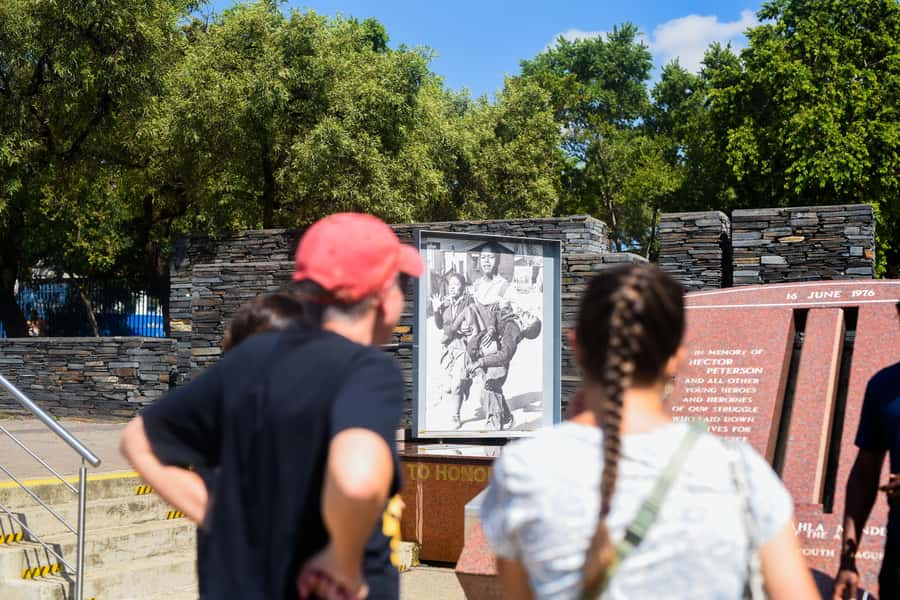
- Hector Pieterson Museum puts the 1976 Soweto uprising at the center of the tour, rather than treating apartheid as a distant textbook subject.
- You cycle through several different parts of Soweto, including Orlando East, Mzimhlophe, and Orlando West.
- Vilakazi Street links two Nobel Peace Prize figures, with Mandela House and Tutu House only a short distance apart.
- The local guide is the heart of the experience, with Thabo, Teboho, and Themba receiving repeated praise for clear explanations, humor, and care.
- The kota lunch is filling, local, and part of the experience, not just a quick snack between stops.
- You need reasonable cycling fitness, sunscreen, rain gear, and some cash for an optional gratuity during an informal settlement visit.
Why cycling gives you a better view of Soweto
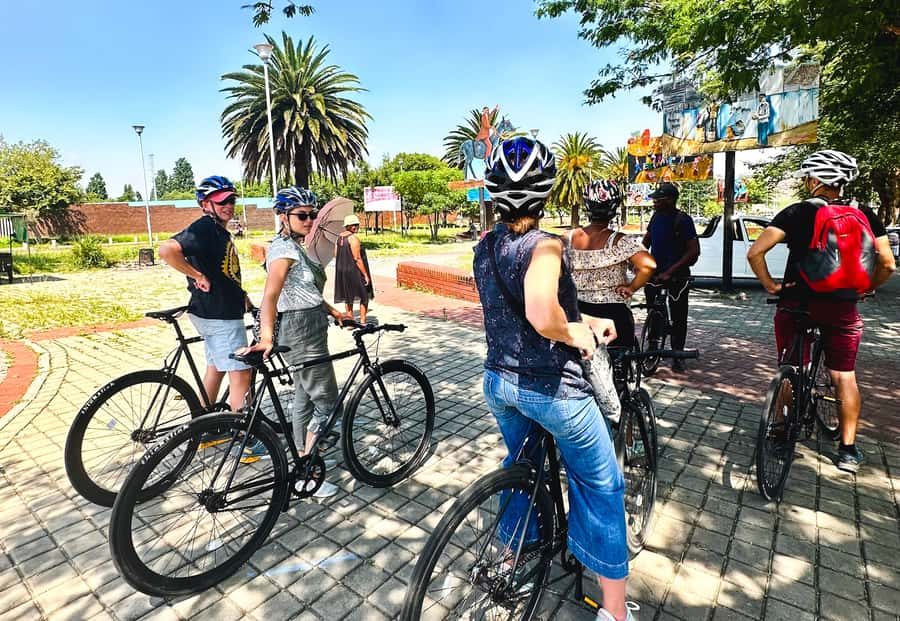
Soweto is too large to understand from a single museum or a quick stop at Mandela House. The bicycle lets you connect the landmarks with the ordinary streets between them. You see homes, community facilities, sports grounds, and changing neighborhoods while your guide explains how each part fits into the story.
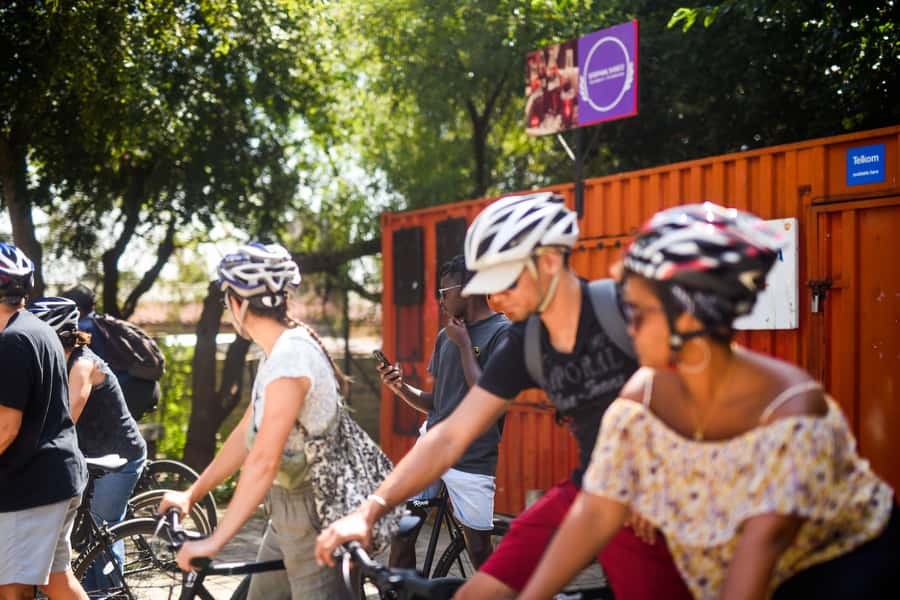
The route begins at Vilakazi Espresso, a useful meeting point on or near Vilakazi Street. You receive a bicycle and meet your English-speaking guide before setting off. The ride is not a race. The pace is described as manageable for a range of fitness levels, but the hills still matter, especially at Johannesburg’s altitude.
I would treat this as an active sightseeing tour, not a gentle pedal through a park. Several people who enjoyed the ride still pointed out the climbs. If you are used to cycling uphill, you should find it reasonable. If you rarely ride a bicycle, this may feel harder than the distance suggests.
The bicycles have generally been praised as comfortable and well maintained. One practical note: some bicycles may have limited gearing or no gears, so ask about the bike before setting out if that matters to you. An e-bike is not part of the standard experience.
A few more Soweto days worth comparing
- Johannesburg: Hop-On Hop-Off Bus with Optional Soweto Tour
★ 4.6 · 985 reviews - Soweto /Johannesburg and Apartheid Museum Guided Full Day Tour
★ 5.0 · 932 reviews - Johannesburg Hop-On Hop-Off City Tour with Soweto Option
★ 4.5 · 768 reviews
Mzimhlophe and the story of township life
The first part of the ride moves beyond the best-known tourist addresses. You pass through Mzimhlophe and stop near the Mzimhlophe Women’s Hostel, with time for a short visit and explanation. This adds important context because Soweto was not simply a collection of famous political homes. Its neighborhoods were shaped by forced removals, labor policies, family separation, and the daily work of making a life under apartheid.
The guide also discusses Soweto’s creation in 1904 and how the township developed over time. The value of this stop is its scale. Instead of hearing only about presidents and Nobel laureates, you begin to see the communities that supported political action and endured the system’s restrictions.
The route includes a stop at Mama Lilian Ngoyi’s house. Ngoyi was an anti-apartheid activist, and her home gives the tour another female voice in a story often told mainly through male leaders. The stop is brief, so do not expect a long museum visit. Its importance comes from the guide’s explanation and the way it fits into the larger ride.
An informal settlement visit may also be included with a local guide. You are welcome to offer a gratuity of R20 to R50, or more, at your discretion. Carry cash if you would like to contribute, and remember that this part of the route calls for respect. Listen first, ask before taking photographs, and allow the local guide to set the tone.
Hector Pieterson Museum and the Soweto uprising
The visit to Hector Pieterson Museum is one of the tour’s most important stops. You have about 20 minutes for a guided visit, sightseeing, and photographs. The museum focuses on the Soweto uprising of June 16, 1976, when students protested against the use of Afrikaans as a language of instruction and the wider system of apartheid control.
The famous photograph of Hector Pieterson, carried after being shot during the uprising, became an international symbol of the struggle. The museum and nearby memorial area help place that image in the setting where the events unfolded. Your guide can connect the local streets to the wider political changes that followed.
I especially value the time spent here because it gives the rest of the ride a sharper meaning. Mandela House and Tutu House are memorable addresses, but Hector Pieterson Museum helps explain why Soweto became such a powerful symbol around the world.
The visit is short, so anyone wanting a detailed museum experience may wish to allow extra time before or after the bike tour. The tour gives you an introduction and local context rather than a long, quiet museum session.
Orlando East, the stadium, and everyday Soweto
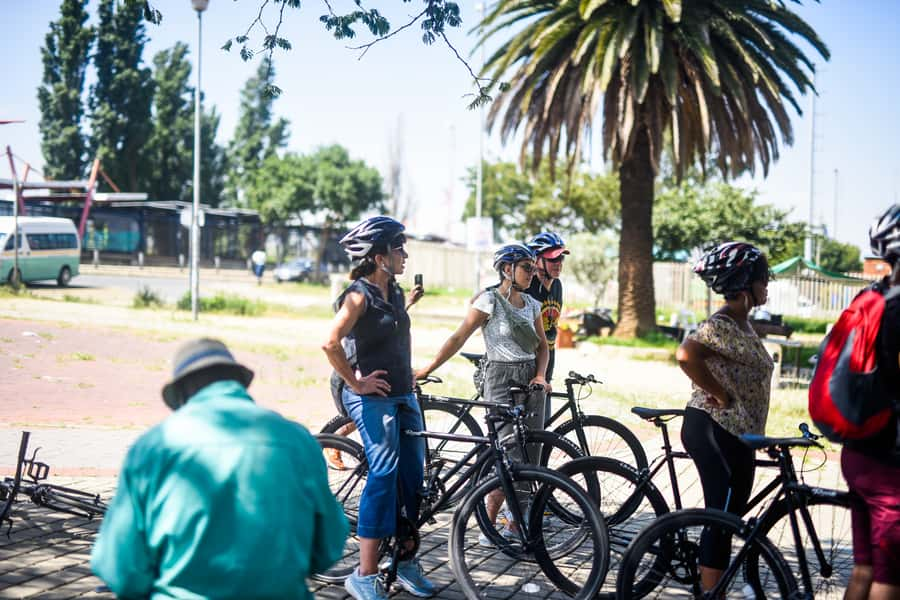
From Mzimhlophe, the ride continues through Orlando East and past Orlando Stadium. These short stops help you see parts of Soweto that can be missed on a standard sightseeing loop. Orlando Stadium is linked to the area’s sporting and public life, while the Orlando Community Centre offers another look at the institutions that serve local residents.
The route is designed to show different sides of Soweto, including areas that are more polished, areas with fewer visitor facilities, and ordinary residential streets. That variety is one reason the bicycle works well. You are not simply moving from one famous building to the next.
Your guide also helps explain contemporary Soweto, not only the apartheid period. Several guides who have led this experience, including Thabo and Themba, are praised for answering questions about social conditions, local communities, and how the area is changing. That conversation is more useful than a fixed speech because you can ask about the things you notice along the way.
You should expect some street riding and changing surfaces. Stay close to the guide, follow instructions, and keep your attention on the road as well as the scenery. Safety is a clear focus of the experience, but normal cycling awareness still matters.
Same part of Soweto, a completely different kind of day:
- Half-Day Tour of Soweto Tour
★ 4.5 · 712 reviews - Soweto: Walking Tour with a Local Guide and Lunch
★ 4.9 · 648 reviews - Jo’berg in 1 Day: Soweto, Apartheid Museum & City Tour
★ 4.8 · 524 reviews - Johannesburg: Full-Day Tour with Soweto and Apartheid Museum
★ 4.8 · 478 reviews
Vilakazi Street, Mandela House, and Tutu House
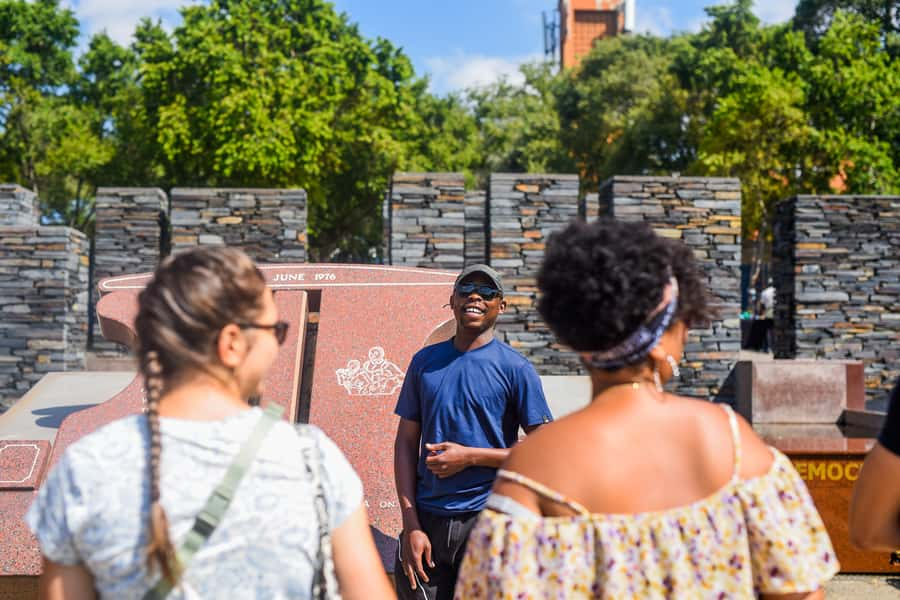
Vilakazi Street is the tour’s best-known stretch. It is famous for being associated with two Nobel Peace Prize winners, Nelson Mandela and Archbishop Desmond Tutu. Few streets can claim that connection, and the short distance between the two homes makes this an unusually concentrated piece of South African history.
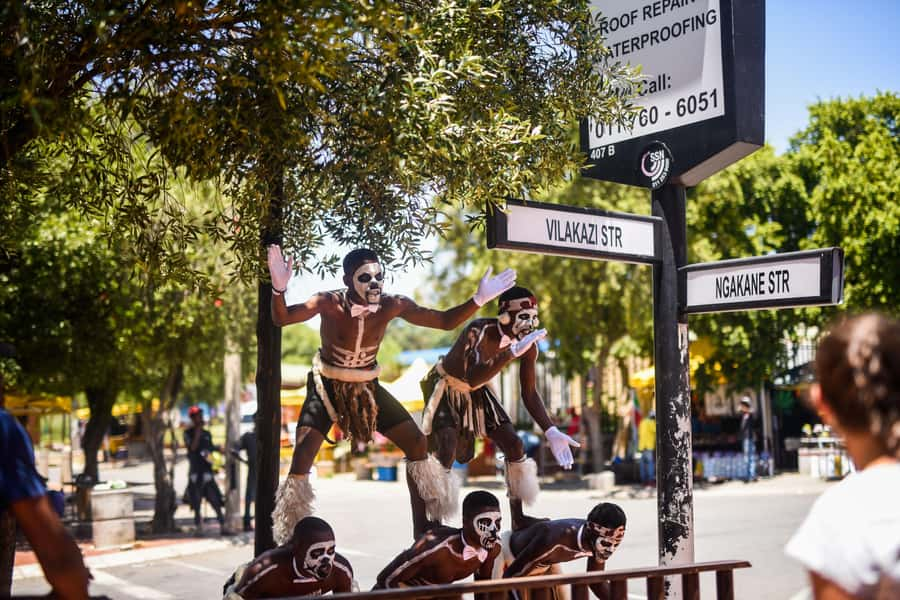
Mandela House was Nelson Mandela’s home from 1946 to 1962. The tour includes a guided stop of about 15 minutes, along with photographs and a traditional dance show. You will learn about the period before Mandela became South Africa’s first democratic president, when he was a lawyer, activist, and central figure in the anti-apartheid movement.
The stop is fairly brief, so do not expect every room and display to receive a detailed museum treatment. The advantage is that you see the house within its neighborhood and connect it to the other places visited by bicycle.
Tutu House is a shorter pass-by and photo stop. Archbishop Desmond Tutu and his family lived there, and the guide discusses his role in opposing apartheid and helping bring political change. It is not as extensive a visit as Mandela House, but its location on the same street makes the contrast and connection easy to understand.
Vilakazi Street also gives you a chance to pause and take in the setting. It is the most visitor-oriented section of the route, so it can feel different from the quieter residential areas. That is not a flaw. It simply shows another side of Soweto, where historic importance and tourism meet.
Kota lunch and the taste of local life
Lunch is included at a local restaurant or outdoor eating spot on Vilakazi Street. You receive a kota, a South African township sandwich made with a hollowed-out quarter loaf of bread and filling. The exact ingredients can vary, but the point is a hearty, informal meal rather than a polished restaurant course.
I like this part because food gives you a practical connection to the place. The kota is filling after a ride and offers something more local than a standard sandwich or hotel lunch. Several guides also use the meal as a relaxed time for questions and conversation.
Food and drinks are included, but it is still sensible to carry your own water. One past rider specifically wished for a bottle of water, and cycling in the sun can make hydration important. Bring sunscreen, and pack rain gear if the forecast looks uncertain. Johannesburg weather can change quickly, and the tour continues unless conditions require a change.
The lunch stop lasts about 25 minutes, so this is not a long food tour. You are eating as part of the wider experience, not signing up for several tastings.
How much value do you get for $52?
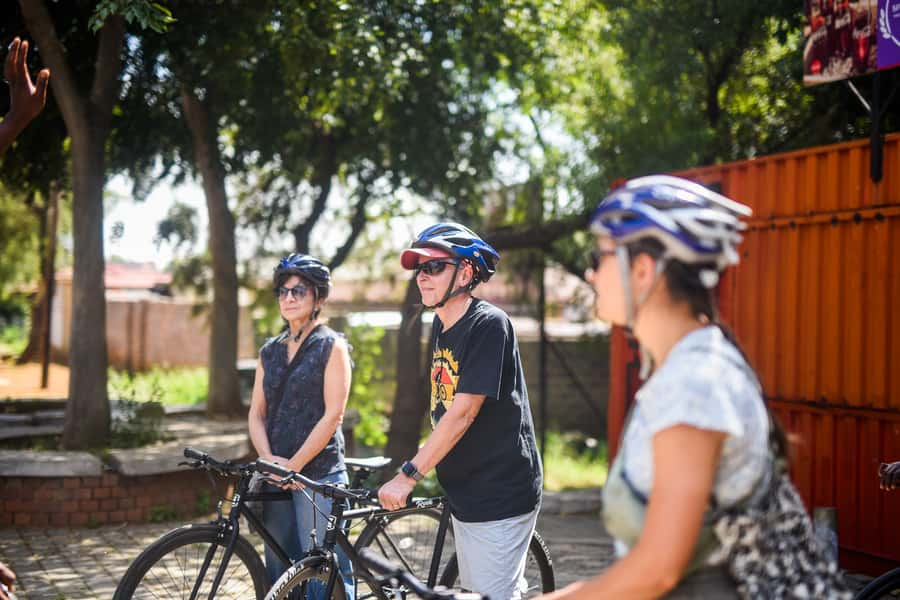
At $52 per person, the tour costs more than a simple bicycle rental but includes the bicycle, a local guide, food, drinks, and four hours of structured sightseeing. You are also paying for a route that would be difficult to plan independently, especially if you want to connect Mzimhlophe, Orlando East, Orlando Stadium, Hector Pieterson Museum, and Vilakazi Street in one outing.
The strongest value comes from the guide. A bicycle by itself will not explain why a neighborhood matters or help you read the difference between historic sites and ordinary community spaces. Guides such as Thabo, Teboho, and Themba have been singled out for strong storytelling, clear answers, humor, and attention to safety.
Hotel pickup and drop-off are not included. You need to make your own way to Vilakazi Espresso, so factor that into your budget and timing. The meeting point is convenient if you are already visiting Vilakazi Street, but less so if you are staying elsewhere in Johannesburg.
The booking terms are useful for a changing schedule. You can reserve and pay later, and cancellation is allowed up to 24 hours before departure for a full refund. Starting times depend on availability.
Who will enjoy this ride most?
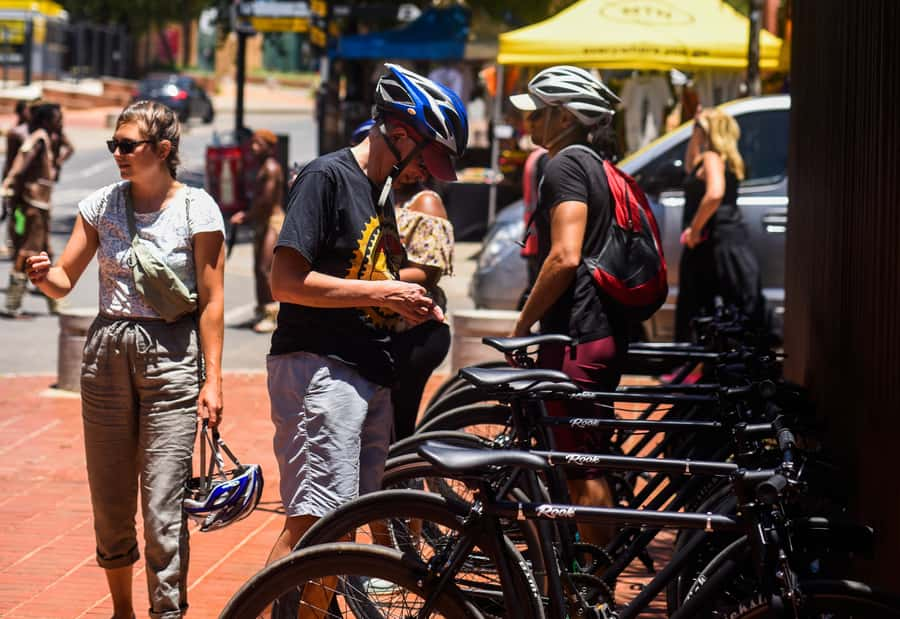
I would recommend this tour to you if you want history with movement and conversation. It suits first-time visitors to Johannesburg who want a broad introduction to Soweto without spending the entire day in a vehicle.
It also works well for families with older children, couples, solo visitors, and small groups who enjoy asking questions. One solo participant ended up with a private ride, but group size can vary, so do not book on the assumption that you will receive a private tour.
You should be comfortable riding a bicycle for several hours and handling uphill sections. The tour is not suitable for people who cannot ride, wheelchair users, or pregnant women. If you have concerns about fitness, ask about the route and bicycle before booking.
The experience is also a good fit if you care about respectful cultural tourism. The route does not reduce Soweto to hardship or political tragedy. It includes famous homes and museums, but also community spaces, residential areas, food, sport, and present-day local life.
Practical advice for a smooth four hours
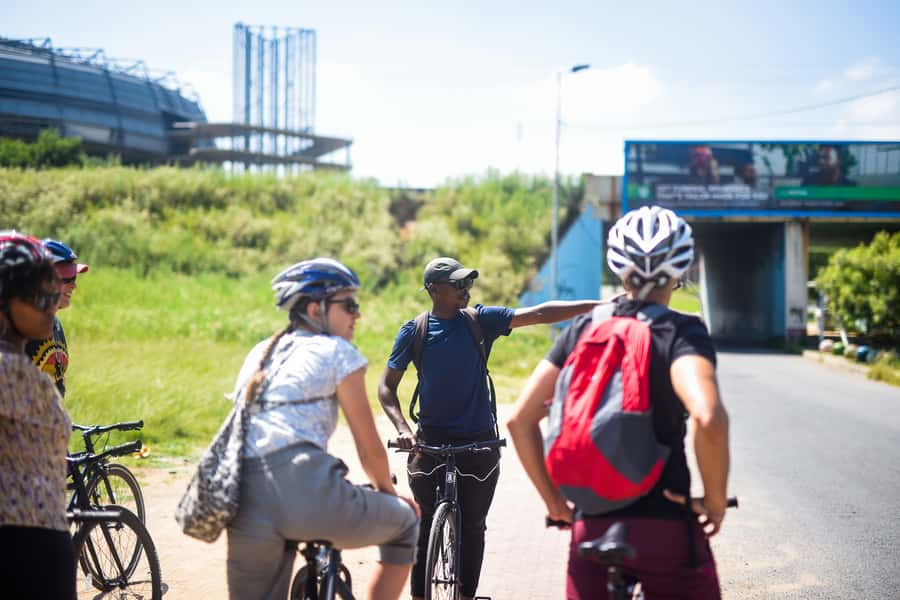
Wear comfortable clothes and shoes that work for cycling. Apply sunscreen before you arrive, bring rain gear when needed, and carry cash for an optional gratuity during the informal settlement visit.
Arrive ready to listen and ask questions. The strongest part of the tour is the guide’s ability to explain what you are seeing, so speak up if you want more detail about politics, architecture, community life, or current conditions.
Keep your camera ready for the major stops, but do not let photography take over. At homes, settlements, and residential areas, ask before photographing people. This small courtesy matters.
Finally, pace yourself. The route has several stops, but it also covers real distance. Use the easier stretches to recover, and do not turn the hills into a personal contest unless your guide suggests it and you feel comfortable.
Should you book the Soweto bicycle tour?
Book it if you want a wide-ranging, active introduction to Soweto and are fit enough for roughly 11 kilometers with some climbs. You will see more than the famous Vilakazi Street addresses, eat a local kota, and hear history from a guide who lives close to the story.
Skip it if you want a slow museum day, private vehicle transport, or a completely flat ride. For everyone else, the $52 price is fair because it combines transport within the neighborhood, guiding, food, and access to a route that is hard to arrange on your own. Check the bicycle setup, bring water and cash, and choose this tour for the chance to see Soweto as a lived-in place rather than a short list of landmarks.
FAQ
Where does the Soweto bicycle tour start?
The tour starts at Vilakazi Espresso.
How long does the tour last?
The experience lasts four hours.
How much does the tour cost?
The listed price is $52 per person.
What language is the tour conducted in?
The live tour guide speaks English.
What is included in the price?
The price includes a bicycle, a local guide, food, and drinks.
Is hotel pickup included?
No. Hotel pickup and drop-off are not included, so you need to reach Vilakazi Espresso independently.
What should I bring?
Bring sunscreen, rain gear, and cash. Cash is useful if you choose to offer a gratuity of R20 to R50 or more during the informal settlement visit.
Is the tour suitable for everyone?
No. It is not suitable for pregnant women, people who cannot ride a bicycle, or wheelchair users. The route also includes uphill sections, so reasonable cycling fitness is helpful.
Just added around Soweto
- Soweto Tuk-Tuk Food & Beer Tour★ 5.0 · 9 reviews
- Soweto Township Tour★ 4.4 · 4 reviews
- Private Soweto,Mandela House,Apartheid Museum,Constitution★ 4.6 · 15 reviews
- Soweto: Sip & Paint Walking Tour & Take Home a Canvas★ 4.8 · 7 reviews
- Soweto Tour; Mandela House; Vilakazi Street; Market Culture★ 5.0 · 6 reviews
- Johannesburg: Soweto History Tour with Hotel Pickup★ 4.8 · 14 reviews
- Soweto: Hector Pieterson Memorial, to Orlando Towers Tour★ 4.0 · 31 reviews
- Soweto & Johannesburg and Apartheid Museum★ 4.7 · 41 reviews
Soweto Tours, compared.
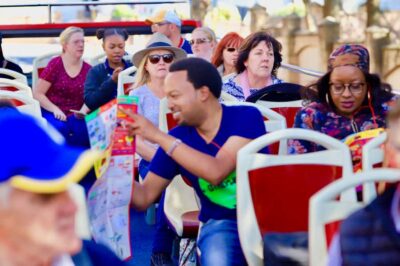
Johannesburg: Hop-On Hop-Off Bus with Optional Soweto Tour
Read our review →
Soweto /Johannesburg and Apartheid Museum Guided Full Day Tour
Read our review →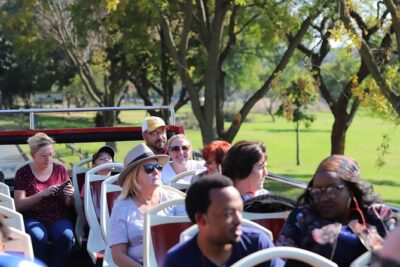
Johannesburg Hop-On Hop-Off City Tour with Soweto Option
Read our review →

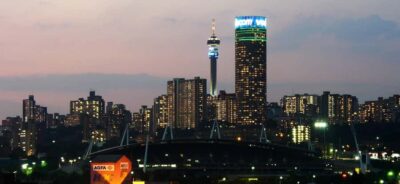
Jo’berg in 1 Day: Soweto, Apartheid Museum & City Tour
Read our review →
Johannesburg: Full-Day Tour with Soweto and Apartheid Museum
Read our review →
Browse the lists this tour appears in