
Reviewed · WALKING TOURS
Soweto Walking Tour with Lunch
Soweto is best understood at street level, where the 1976 uprising, Nelson Mandela’s years at home, and present-day township life all meet. This four-hour walk begins at the Hector Pieterson Museum and ends at Orlando Towers with a filling kota sandwich, giving you both history and a taste of daily life.
I like the local guides, especially Maweza and Mulalo Mphuma, who connect the sites to personal experience. I also like the route’s clear historical thread, from student protest to Mandela and Desmond Tutu, followed by a proper township lunch.
The main catch is practical: transport is not included, and entry to Mandela House costs extra. You also need to arrive at the correct meeting point, since unclear meeting instructions have caused delays for some people.
Key points to know before booking

- A local guide leads the walk: Guides such as Maweza and Mulalo Mphuma bring personal stories and strong knowledge of Soweto and South African history.
- The 1976 uprising anchors the tour: The Hector Pieterson Museum, memorial, and Moema Street help explain how student resistance challenged apartheid.
- Two Nobel Peace Prize winners lived nearby: Vilakazi Street is home to the former houses of Nelson Mandela and Desmond Tutu.
- The tour reaches beyond famous landmarks: Baragwanath Road and an informal settlement area help show different sides of township life.
- Lunch is a kota sandwich: This local burger is served near Orlando Towers and is included with bottled water.
- Plan your own transport: Pickups and drop-offs are not provided, and Mandela House admission is separate.
Why a walking tour makes sense in Soweto
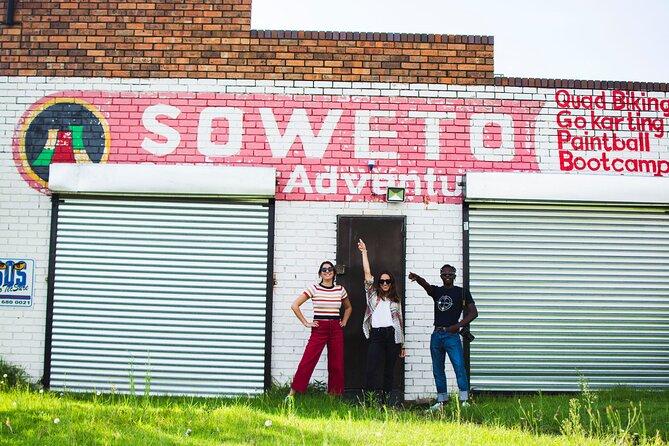
Soweto is not a single monument or museum. It is a large township shaped by forced removals, protest, family life, inequality, political change, and ordinary routines. A vehicle tour can show you the broad picture, but walking lets you pause where events happened and ask questions as the setting unfolds around you.
This route begins at the Hector Pieterson Museum and Memorial, then moves through streets tied to the 1976 Soweto uprising. From there, it reaches Vilakazi Street, Mandela House, Tutu House, Baragwanath Road, and Orlando Towers.
That order works well. You first get the political background, then walk through places connected to national leaders, and finally see parts of Soweto that are less polished and more closely tied to everyday life. The experience is not just a list of famous names. It asks you to connect the past with the township as it exists now.
The walk lasts about four hours. You can choose a morning or afternoon departure, which helps if you are fitting Soweto around other Johannesburg plans. I would allow the full half-day rather than trying to rush it into a spare hour.
More Walking Tours in Soweto:
- Soweto: Walking Tour with a Local Guide and Lunch
★ 4.9 · 648 reviews - Soweto Food and Beer Tasting Walking Tour with a Local
★ 5.0 · 8 reviews - Soweto: Sip & Paint Walking Tour & Take Home a Canvas
★ 4.8 · 7 reviews
Starting with Hector Pieterson and the 1976 uprising
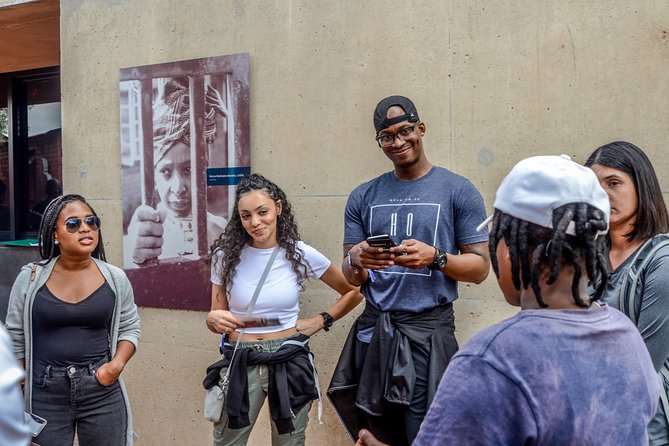
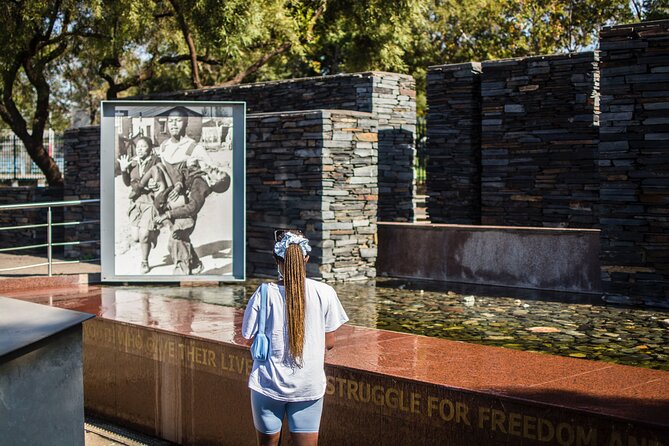
The first stop is the Hector Pieterson Museum and Memorial. Here, your guide sets out the story of the Soweto uprising, when school students protested against apartheid education policies and language rules in 1976.
The museum is named for Hector Pieterson, the 13-year-old student whose death became one of the defining images of the uprising. The memorial gives the opening talk a serious focus. You are not simply hearing a timeline of political events. You are learning how young people in Soweto became central to the fight against apartheid.
The stop is scheduled for about 30 minutes. Admission to this part of the experience is listed as free. Since the tour begins at the museum, check your meeting details carefully before setting out. The activity does not include hotel pickup, so you are responsible for reaching the start.
I value this opening because it gives the rest of the walk a purpose. Without the background, Mandela House and Vilakazi Street could feel like disconnected sightseeing stops. With it, the streets become places where political pressure, courage, and loss played out.
Walking through Moema Street
From the museum, the route continues to Moema Street. This is where the guide explains more about the footsteps of the young people involved in the 1976 protests, the shooting, living conditions, and what followed.
The scheduled time here is about 20 minutes, but the value depends on the guide’s explanation. Maweza, in particular, is praised for combining broad South African history with personal and family experiences. That kind of account can make the subject easier to understand without turning the tour into a dry lecture.
The walk also helps you grasp the physical scale of the events. Instead of hearing only about the uprising in a museum room, you move through the streets connected to it. Ask questions as you go. The guides are described as open to questions and willing to explain both the apartheid era and present-day issues.
This is also where the tour may feel emotionally heavy. Soweto’s history includes state violence, poverty, and the long effects of segregation. The experience treats those subjects directly. It is a better fit for you if you want honest context rather than a light sightseeing outing.
Vilakazi Street and two Nobel Peace Prize homes
Vilakazi Street is one of Soweto’s best-known addresses. Both Nelson Mandela and Desmond Tutu lived in this neighborhood, making the street unusual even by the standards of South African political history.
The route allows about 10 minutes on the street before moving to Mandela House and Tutu House. That may sound brief, but the guide’s commentary gives the stop its meaning. You are seeing a residential street tied to two Nobel Peace Prize winners, not visiting a grand political center.
This part of the walk is likely to attract the most attention, and it can be tempting to focus only on photographs. I would listen first. The point is not just that famous people lived here. It is that two major figures in the struggle against apartheid lived in the same township neighborhood, among the people and places shaped by that struggle.
The schedule is fairly full, so do not expect a long shopping stop here. One useful tip is to bring cash if you want to buy from vendors or support local people along the way. The tour itself does not promise dedicated vendor time, and the walking schedule may leave little room for browsing.
A few more Soweto days worth comparing
- Johannesburg: Hop-On Hop-Off Bus with Optional Soweto Tour
★ 4.6 · 985 reviews - Soweto /Johannesburg and Apartheid Museum Guided Full Day Tour
★ 5.0 · 932 reviews - Johannesburg Hop-On Hop-Off City Tour with Soweto Option
★ 4.5 · 768 reviews - Half-Day Tour of Soweto Tour
★ 4.5 · 712 reviews
Mandela House: an optional paid visit
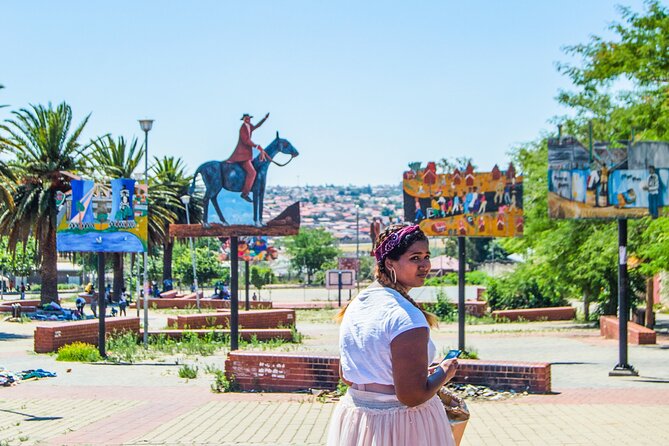
Mandela House is the former home of Nelson Mandela and Winnie Mandela. The house is listed as a 20-minute stop, but admission is not included in the tour price.
That distinction matters when you compare the advertised cost with your likely total spending. At $40.26 per person, the tour includes the guided walk, bottled water, and kota lunch, but you should budget separately if you want to enter Mandela House. The other listed historical stops are described as free.
The house adds a more personal layer to the political story. You are moving from public protest and famous speeches to a place connected with family life and Mandela’s years in Soweto. Still, the visit is short, so you should not expect a long museum session as part of the four-hour route.
If entering the house is a priority, check the available time on your chosen departure and be ready for the extra admission cost. If you mainly want the neighborhood and the guide’s explanation, the outside visit and Vilakazi Street still form an important part of the walk.
Tutu House and the role of religion
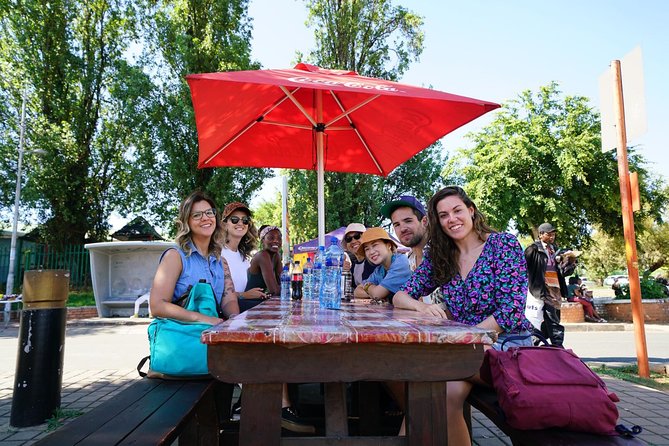
Tutu House is scheduled for about 10 minutes. Desmond Tutu was an archbishop who opposed apartheid through religious leadership and public criticism of the system.
This stop broadens the story beyond Mandela. Soweto’s struggle involved students, parents, churches, political organizers, workers, and communities. The guide’s explanation of Tutu’s role helps show how opposition to apartheid took different forms.
The stop is short, so expect a concise explanation rather than a long visit. I like its place in the route because it prevents the tour from becoming only a Mandela tour. You get a clearer sense of the range of people who challenged apartheid and the different ways they did so.
Baragwanath Road and township life
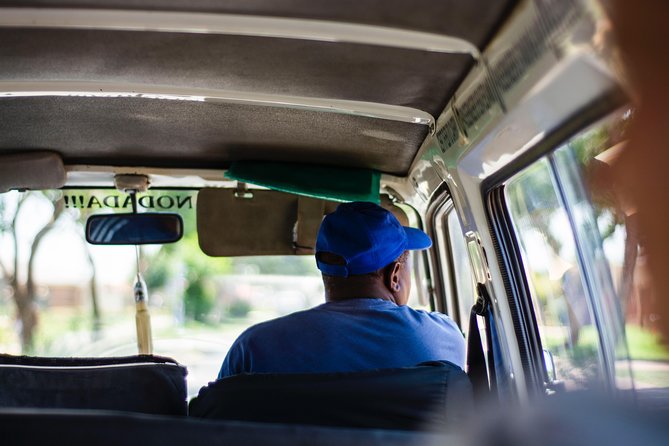
The route then reaches Baragwanath Road, described as the area of the first formal houses that helped form Soweto. The scheduled time is about 30 minutes.
This part can be especially useful if you want to understand Soweto as a living community rather than a set of historical landmarks. The tour also goes into an informal camp area, where you may see the difficult conditions faced by unemployed people. This is a sensitive section of the walk, and the guide’s approach matters.
Maweza is praised for explaining the different social classes within Soweto and for discussing present-day struggles alongside the past. That balance is important. Soweto is not frozen in the apartheid era, and it should not be presented only as a place of hardship. The route gives you a chance to see how history, housing, work, and inequality still connect.
You should approach this part with respect. It is not a backdrop for dramatic photographs. Listen to the guide, follow local cues, and remember that people live in the places you are visiting.
The walking is described as safe by several people who took the tour, and the guides are attentive to the group. One guide also accommodated elderly relatives and adjusted his approach to their needs. Still, you should be comfortable walking for much of four hours and should wear practical shoes.
Orlando Towers and the kota lunch
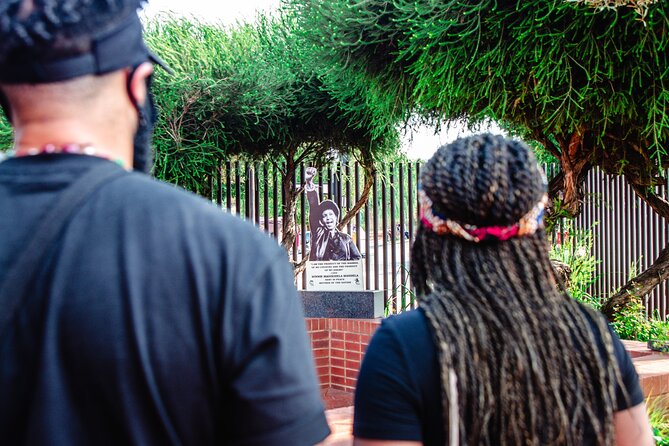
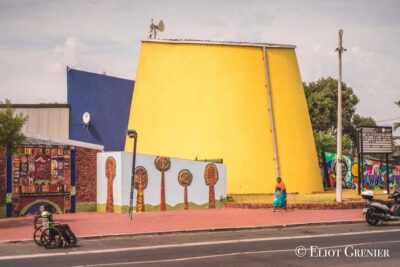
Orlando Towers is the final stop and the place where lunch is served. The stop lasts about one hour, leaving room for photographs and the included kota sandwich.
A kota is a South African township-style burger, usually served as a substantial meal. The tour lists a local burger, or kota, and bottled water as included. The lunch is a strong practical touch because it gives you a chance to try something associated with everyday local food rather than a standard restaurant meal.
Come hungry. The sandwich is described as filling, and it arrives around late morning on at least some morning departures. If you choose an afternoon tour, the exact meal timing may differ, but lunch remains part of the experience.
Orlando Towers also provides one of the route’s best photo settings. The stop changes the mood after the serious historical sections. You have time to eat, look back over the walk, and take in the colorful tower site before heading on.
Lunch is not a substitute for a full food tour. The main purpose of the experience is history and neighborhood context, with the kota as a well-chosen final meal. If you want extended market browsing or several tastings, this is not that kind of activity.
The guides make the difference
The strongest feature of this experience is the guide. Maweza is repeatedly praised for clear explanations, personal stories, friendliness, and a strong grasp of both Soweto and wider South African history. Mulalo Mphuma is also described as welcoming and well prepared.
That matters because Soweto cannot be explained well through dates alone. A local guide can show how the township’s past connects with its current streets, homes, social divisions, and challenges. The best moments are likely to come when you ask a direct question and receive an answer grounded in local experience.
One group had a younger guide shadowing the main guide, and the addition was well received. Another account notes that a second guide took over part of the route in a way that respected the different spaces being visited. The exact guide team may vary, but the experience is built around local leadership rather than a remote commentary track.
The tour can include up to 100 people, so group size is worth checking when you book. A large maximum does not tell you the usual group size, but it does mean you should not assume a private or very small walk. If you prefer close conversation, arrive ready to stay near the guide and speak up when you have questions.
Price, transport, and what the $40.26 covers
At $40.26 per person, the price is fair if you want a guided historical walk with lunch. You are paying for a four-hour route, local interpretation, bottled water, and a kota meal. The value comes mainly from the guide’s ability to explain Soweto, not from expensive attractions.
The price does not include hotel pickup or drop-off. You need to make your own way to the Hector Pieterson Museum meeting point. The area is near public transportation, but the tour information does not provide a pickup service or a detailed transfer plan, so confirm the exact meeting instructions before the day.
Mandela House admission is also extra. Other stops are listed without admission charges. Bring some cash if you want to buy from vendors or offer tips to guides who assist with different sections. That is not listed as an included cost, but it is a useful part of planning.
Mobile tickets make the booking simple. Confirmation is provided at booking, and cancellation is free up to 24 hours before the start time. Inside 24 hours, the payment is not refunded, and late changes are not accepted.
Who should book this walk?
I would choose this tour if you are visiting Johannesburg for a short time and want Soweto to be a major part of the trip. It works well for people who prefer history explained on the ground, enjoy asking questions, and want a local meal rather than a purely sightseeing-focused outing.
It is also suitable for families with older children. One 15-year-old enjoyed the historical content, and the route offers enough variety to avoid four hours in one museum. The serious subject matter is best discussed openly, especially with younger participants.
You may want another option if you need door-to-door transport, dislike walking, or want a private tour with a guaranteed tiny group. It may also disappoint you if your main goal is extensive shopping or a long visit inside Mandela House.
Should you book the Soweto Walking Tour with Lunch?
Yes, if you want a grounded introduction to Soweto and are willing to handle your own transport. The route links the Hector Pieterson Memorial, the 1976 uprising, Vilakazi Street, Mandela and Tutu landmarks, township housing, present-day hardship, and a kota lunch in one well-paced half-day.
The best reason to book is the guide. Maweza and Mulalo Mphuma bring the kind of local context that turns a list of landmarks into a connected story. Just confirm your meeting point, allow extra money for Mandela House, wear comfortable shoes, and keep your expectations focused on history and community rather than shopping.
FAQ
How long does the Soweto Walking Tour with Lunch last?
The tour lasts approximately four hours.
Where does the tour begin?
The tour begins at the Hector Pieterson Museum and Memorial in Soweto.
Is lunch included?
Yes. A local burger called a kota and bottled water are included.
Is admission to Mandela House included?
No. Entry to Mandela House is not included in the tour price.
Does the tour provide hotel pickup and drop-off?
No. Pickup and drop-off are not included. You need to reach the meeting point yourself.
Can I cancel the tour for a full refund?
Yes. You can cancel at least 24 hours before the start time for a full refund. Cancellations or changes made less than 24 hours before the start time are not refunded or accepted.
Just added around Soweto
- Soweto Township Tour★ 4.4 · 4 reviews
- Soweto Tuk-Tuk Food & Beer Tour★ 5.0 · 9 reviews
- Private Soweto,Mandela House,Apartheid Museum,Constitution★ 4.6 · 15 reviews
- Soweto: Sip & Paint Walking Tour & Take Home a Canvas★ 4.8 · 7 reviews
- Soweto Tour; Mandela House; Vilakazi Street; Market Culture★ 5.0 · 6 reviews
- Johannesburg: Soweto History Tour with Hotel Pickup★ 4.8 · 14 reviews
- Soweto: Hector Pieterson Memorial, to Orlando Towers Tour★ 4.0 · 31 reviews
- Soweto & Johannesburg and Apartheid Museum★ 4.7 · 41 reviews
Walking Tours, compared.


Browse the lists this tour appears in