
Reviewed · SOWETO TOURS
Guided Bicycle Tour of Soweto with Lunch
Soweto makes the most sense at street level. On this four-hour bike tour, you pedal through neighborhoods shaped by apartheid, stop at the Hector Pieterson Memorial, hear about women such as Lillian Mgoyi, and finish with a hefty kota sandwich. It is a more personal way to see Soweto than passing through in a vehicle.
I like the focus on women’s resistance, which is often pushed aside in tours of South African history. I also like the chance to ride through everyday streets, visit Vilakazi Street, and hear local stories from guides such as Themba, Thabo, Thato, and Mulalo.
The main catch is the exercise. Soweto has hills, and some bikes have been single-speed. You should be ready to work your legs, carry sunscreen and a cap, and ask about the current bikes if gears matter to you.
Key points to know before you book

- A street-level view of Soweto: Cycling lets you cover more ground than walking while staying close to homes, shops, memorials, and local streets.
- Women’s history gets proper attention: The former Mzimhlophe women’s hostel and Lillian Mgoyi’s home add important detail to the apartheid story.
- The hills are real: Several riders found the route a solid workout, especially on older single-speed bikes.
- The kota lunch is substantial: This deep-filled local sandwich is included, along with bottled water.
- Guides shape the day: Themba, Temba, Thabo, Thato, Mulalo, and Murulla Mohuma are all named in the tour feedback as warm, flexible, and strong storytellers.
- Small groups help: The tour accepts no more than 15 people, so it should feel more manageable than a large bus outing.
Why cycling gives you a better feel for Soweto
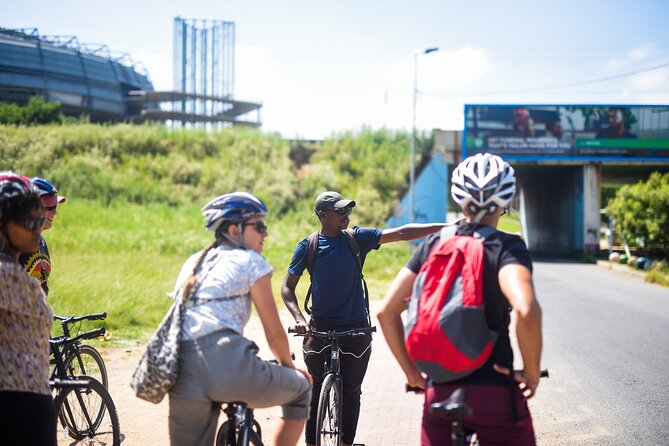
Soweto is too large and varied to understand from one famous street. A bike gives you a useful middle ground. You move farther than you would on foot, but you still notice children waving, neighborhood activity, street corners, and the changing feel from one section to the next.
The pace also leaves room for conversation. Guides stop to explain how apartheid affected families across generations, not just political leaders. That local angle matters. You hear about daily life, work, housing, and the long effects of laws that controlled where Black South Africans could live and work.
The route is not a gentle park ride. It includes hills, and your legs will notice them. Some earlier bikes were single-speed, while more recent feedback says upgraded bikes with gears may now be in use. Equipment can change, so ask the operator about the current bicycles before booking if you are not comfortable with hill riding.
A few more Soweto days worth comparing
- Johannesburg: Hop-On Hop-Off Bus with Optional Soweto Tour
★ 4.6 · 985 reviews - Soweto /Johannesburg and Apartheid Museum Guided Full Day Tour
★ 5.0 · 932 reviews - Johannesburg Hop-On Hop-Off City Tour with Soweto Option
★ 4.5 · 768 reviews
Phomolong puts family stories before famous names
The opening stop at Phomolong is brief, about 15 minutes, but it sets the tone. Instead of starting with a monument or a speech about Nelson Mandela, the guide talks about different family generations and the way apartheid touched ordinary households.
I find this a useful beginning because Soweto’s story is not only about dates and leaders. It is also about parents, children, work, movement, and the changes that continue today. You get a short introduction to how the township has developed and how residents view it now.
This is a listening stop rather than a major sightseeing stop. If you want grand views or a long museum visit right away, it may feel modest. Its value comes from giving the rest of the ride a human frame.
Mzimhlophe reveals the hidden story of domestic workers
At Mzimhlophe, you visit the only former women’s residential hostel in Soweto. It housed domestic workers employed in Johannesburg’s suburbs, making it an important place for understanding the economic and social structure of apartheid.
This stop adds a perspective that many visitors might otherwise miss. The history of Johannesburg often focuses on political leaders and student protests, but domestic workers were also central to the city’s daily life. The hostel helps you think about where women lived, how they supported families, and how work connected Soweto with the wealthier suburbs.
You spend about 30 minutes here. That is long enough for the guide to explain the site without turning the tour into a full museum visit. Come prepared for a serious subject. The stop is not meant to be polished entertainment, and that is part of its value.
Lillian Mgoyi’s home brings women’s protest into focus
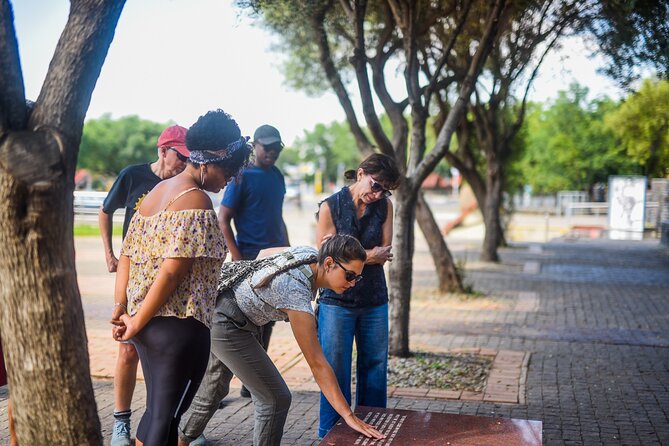
The visit to Mama Lillian Mgoyi’s home is short, about 10 minutes, but the story carries weight. Mgoyi was an anti-apartheid activist and president of the Women’s League. She helped lead a march of 20,000 women to Pretoria’s Union Buildings in protest against the requirement that women carry passbooks.
That detail gives you a clearer view of how pass laws affected women. The protest was not a side note to the wider struggle. Women organized, marched, and placed their own safety at risk to oppose a system that controlled movement and family life.
I especially like this part of the tour because it corrects the usual shortcut of treating apartheid resistance as a story led only by men. The stop is small, and the amount of time depends on the guide, but it gives the tour a strong social focus.
Same part of Soweto, a completely different kind of day:
- Half-Day Tour of Soweto Tour
★ 4.5 · 712 reviews - Soweto: Walking Tour with a Local Guide and Lunch
★ 4.9 · 648 reviews - Jo’berg in 1 Day: Soweto, Apartheid Museum & City Tour
★ 4.8 · 524 reviews - Johannesburg: Full-Day Tour with Soweto and Apartheid Museum
★ 4.8 · 478 reviews
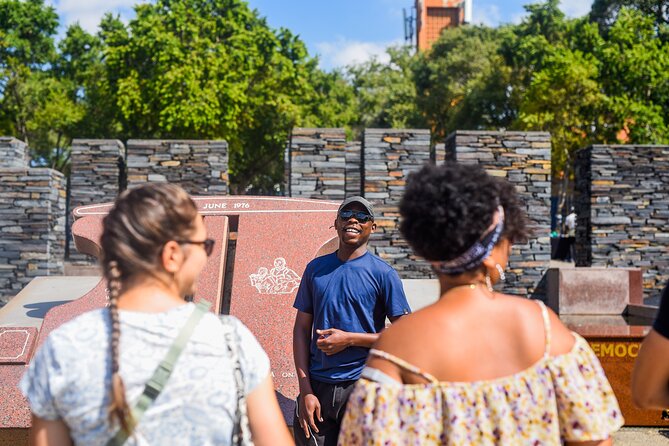
The Hector Pieterson Memorial connects you to the 1976 uprising

The Hector Pieterson Museum and Memorial is one of the most important stops. It focuses on the 1976 youth uprising, when students in Soweto protested against the apartheid government’s education policies.
You have roughly 30 minutes here. The time allows for context and reflection, though it may not be enough for a slow museum visit if you want to study every display. The guide’s explanation is especially useful because the memorial can feel overwhelming without a clear account of what happened and why young people took to the streets.
This is a serious part of the ride. Give it your attention rather than treating it as a quick photo stop. The memorial helps connect the neighborhood you are cycling through with the wider political changes that eventually helped bring apartheid to an end.
Orlando Stadium shows Soweto’s sporting identity
Orlando Stadium is a short stop, around 10 minutes. The stadium dates to 1959 and has long been linked with Soweto’s football culture. The rebuilt venue holds more than 37,000 people and is associated with Orlando Pirates, one of South Africa’s major football clubs.
You may not go inside. Admission is not included, and the stop is mainly about the stadium’s place in local life. Still, it is a useful change of pace after the memorials and political history.
Football here is not just a sport to be checked off a sightseeing list. Orlando Stadium represents community pride, major events, and the public life of Soweto. If you are a football fan, you will likely want more time than the schedule allows. If not, ten minutes is enough to understand why the building matters.
Mandela House and Vilakazi Street are the best-known stops
Mandela House on Vilakazi Street is the tour’s most recognizable address. Nelson Mandela lived in the house, and the visit brings the national story back to one ordinary residential street.
The entrance fee is extra, listed as R60. That matters when you are comparing tour prices. Ask your guide how the visit will work on your date, since the schedule allows about 30 minutes and that may be a short window for a detailed interior visit.
Vilakazi Street gets about 40 minutes. It is famous for being associated with two Nobel Peace Prize winners, Nelson Mandela and Desmond Tutu. The street gives you a chance to see how a local neighborhood became a major historical address without losing its everyday character.
I like the contrast here. You move from a modest home and a residential street to the global story of two Nobel laureates. At the same time, this is the part most likely to feel busy or commercial compared with the quieter residential stops. The bike ride helps keep it grounded in the surrounding neighborhood.
Orlando Police Department is an unusual itinerary detail
The schedule includes a ten-minute stop at Orlando Police Department. The supplied description says the department was formed in 1875 and refers to officers serving the citizens of Orlando, which does not clearly match Soweto.
Because of that mismatch, I would confirm with One Day Africa what this stop means before booking. It may be a naming or description error, and the stop may simply be a brief point of local interest. Do not plan your day around entering a police facility, since admission is not included and no interior visit is promised.
The main experience remains the cycling route and its historical sites. This item is worth clarifying, especially if you are carefully planning your four hours.
The kota lunch is more than a quick snack
Lunch is a local burger called a kota. It is a deep-filled sandwich and is included in the price, along with bottled water.
A kota is filling, so do not think of this as a small bite between sightseeing stops. It gives you a chance to try a familiar local meal and pause after the hills. One account also mentions the option of Soweto Brewery beer, but beer is not listed as included, so expect to pay separately for any additional drink or food.
The lunch adds social value to the tour. You are not simply cycling past Soweto and leaving. You stop, eat, and have another chance to talk with the guide. If you have dietary restrictions, ask before booking, since the supplied details do not explain substitutions.
What the guides add to the ride
The guide is the main reason this tour works. Names connected with the experience include Themba, Temba, Thabo, Thato, Mulalo, and Murulla Mohuma. I would not assume a particular guide will lead your departure, but the repeated praise for these guides points to the importance of a local voice.
The best guides on this route do more than recite dates. Themba is described as funny, flexible, and good with teenagers. Temba is noted for adapting the program when someone wanted to visit the cooling towers. Thabo is praised for making people feel safe and welcome, while Mulalo is described as patient and professional.
That flexibility matters because the route has several short stops and a lot of ground to cover. A guide who can adjust the pace, explain a question, or spend more time on a topic will make the history easier to follow.
Bikes, hills, safety, and what to pack
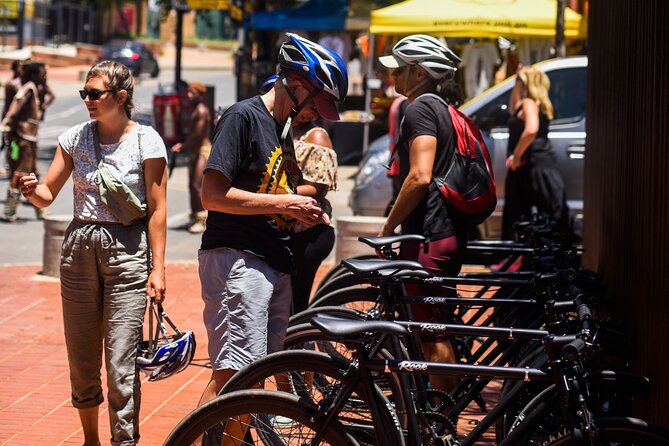
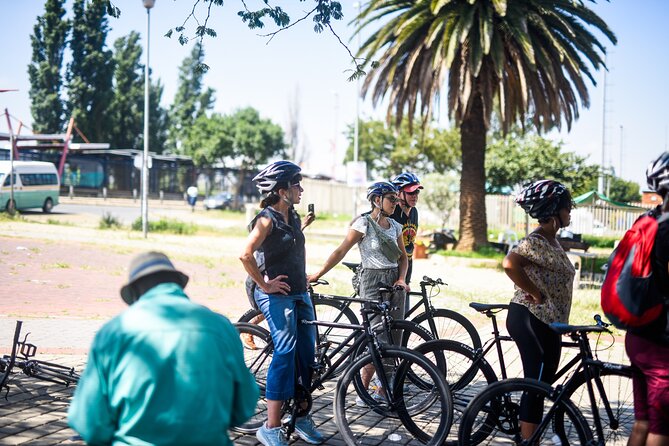
You receive a bicycle, helmet, and bottled water. The group size is capped at 15, which is small enough for the guide to keep an eye on the group and explain stops without shouting across a crowd.
The route includes repeated climbs and descents. Several people found it manageable, but also called it a workout. Casual cyclists can likely take part if they are comfortable riding hills, yet this is not the right choice if you want a flat, effortless outing.
Bike quality appears to have changed over time. Some feedback describes narrow-wheel, single-speed bikes, while later comments refer to upgraded bikes with gears. I would ask before you go, especially if you have knee trouble or rarely cycle.
Bring sunscreen and a cap. Wear clothes suited to exercise, and use the helmet provided. The tour starts at 7346 Kumalo Street in Orlando West and ends back there. Pick-up and drop-off are not included, so plan your own way to the meeting point and allow time to arrive before the start.
Is $45.70 a fair price?
At $45.70 per person, the price is reasonable for a four-hour guided outing that includes a bicycle, helmet, water, and lunch. You are paying not only for transport on two wheels, but also for a local guide, several historical stops, and access to a side of Soweto that is hard to cover on foot in half a day.
The extra R60 for Mandela House slightly changes the calculation. You should also budget for anything else you buy, including possible drinks at lunch. Still, the included kota is substantial, and the small group limit adds value.
The tour is especially good value if you want history and neighborhood life together. It is less attractive if you plan to spend a long time inside museums, since the schedule moves through several sites in one morning or afternoon.
Who should book this Soweto bike tour?
I would choose this tour if you want a broad introduction to Soweto, enjoy active sightseeing, and prefer local stories to a standard vehicle tour. It suits adults, older children, and teenagers who can handle hills and stay with a group.
It is also a strong choice if you want women’s history included in your South Africa itinerary. The domestic workers’ hostel and Lillian Mgoyi’s story make the route more complete than one focused only on Mandela and the 1976 uprising.
I would think twice if you dislike cycling, struggle with hills, or want a slow museum-centered day. The route has a firm four-hour shape, and some stops are brief. Morning and afternoon departures give you useful planning flexibility, but neither option turns this into a relaxed half-day stroll.
Should you book it?
Book this tour if you want to cover a lot of Soweto while staying close to its streets and residents. The strongest parts are the local guides, the attention to women’s resistance, the Hector Pieterson stop, and the simple pleasure of ending with a kota lunch.
Before paying, confirm the current bike type, the exact plan for Mandela House, and the odd Orlando Police Department description. If you are ready for hills and have four hours to give the experience your full attention, this is a good-value way to meet Soweto through history, food, and movement rather than only through famous names.
FAQ
How long does the Soweto bicycle tour last?
The tour lasts approximately four hours.
How much does the tour cost?
The listed price is $45.70 per person.
What is included in the tour?
A bicycle, helmet, bottled water, and a local kota burger lunch are included.
Is entry to Mandela House included?
No. Entry to Nelson Mandela House is listed separately at R60.
Does the tour include hotel pick-up and drop-off?
No. Pick-up and drop-off are not included. The tour starts and ends at 7346 Kumalo Street, Orlando West, Johannesburg.
How many people can join the tour?
The maximum group size is 15 people.
Are morning and afternoon departures available?
Yes. You can choose between morning and afternoon tours.
Is the ride difficult?
The route includes hills and can be a workout. Some bicycles have been single-speed, although more recent information refers to upgraded bikes with gears.
Can I cancel for a full refund?
Yes. You can cancel at least 24 hours before the experience start time for a full refund. Cancellations or changes made within 24 hours are not refunded or accepted.
Just added around Soweto
- Soweto Township Tour★ 4.4 · 4 reviews
- Soweto Tuk-Tuk Food & Beer Tour★ 5.0 · 9 reviews
- Private Soweto,Mandela House,Apartheid Museum,Constitution★ 4.6 · 15 reviews
- Soweto: Sip & Paint Walking Tour & Take Home a Canvas★ 4.8 · 7 reviews
- Soweto Tour; Mandela House; Vilakazi Street; Market Culture★ 5.0 · 6 reviews
- Johannesburg: Soweto History Tour with Hotel Pickup★ 4.8 · 14 reviews
- Soweto: Hector Pieterson Memorial, to Orlando Towers Tour★ 4.0 · 31 reviews
- Soweto & Johannesburg and Apartheid Museum★ 4.7 · 41 reviews
Soweto Tours, compared.

Johannesburg: Hop-On Hop-Off Bus with Optional Soweto Tour
Read our review →
Soweto /Johannesburg and Apartheid Museum Guided Full Day Tour
Read our review →
Johannesburg Hop-On Hop-Off City Tour with Soweto Option
Read our review →

Jo’berg in 1 Day: Soweto, Apartheid Museum & City Tour
Read our review →
Johannesburg: Full-Day Tour with Soweto and Apartheid Museum
Read our review →
Browse the lists this tour appears in