
Reviewed · SOWETO TOURS
Johannesburg & Soweto (Half-day Tour)
Johannesburg’s past comes into sharp focus in Soweto, where a single half-day takes you from the adoption of the Freedom Charter to the 1976 student uprising. The tour also brings you to Regina Mundi Church and Vilakazi Street, giving you both political history and a look at daily life in one of South Africa’s best-known townships.
I like the private group format and the hotel pickup, since five hours goes a long way when you are not waiting for strangers or sorting out transport. I also like the chance to ask the guide about local food and the city’s changes over time. The main drawback is pace: much of the tour is spent in the vehicle, so you should not expect a long walking tour through Soweto.
Key points to know before booking
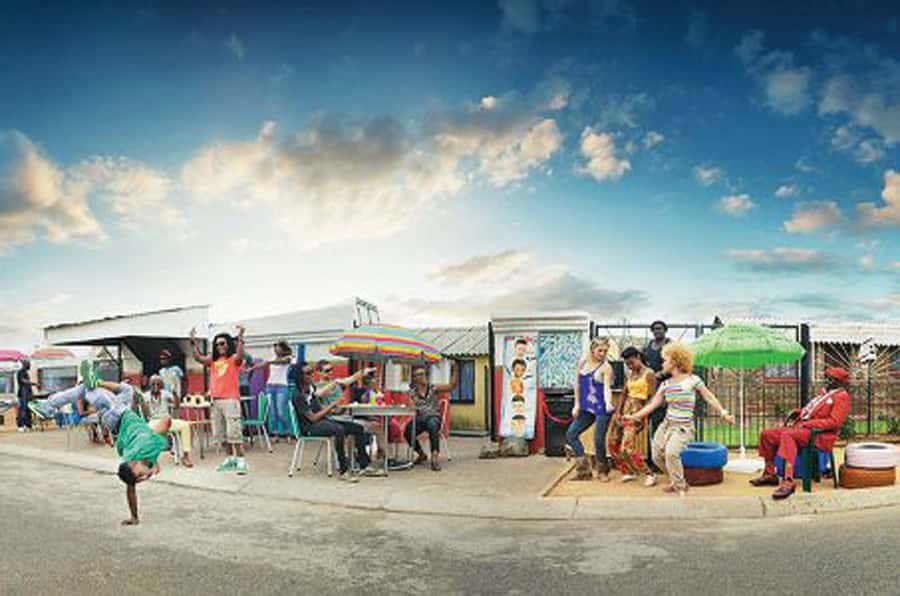
- The route links Soweto and central Johannesburg: You see major sites across both areas rather than focusing on one neighborhood.
- Hector Pieterson Museum explains the 1976 protests: This is the tour’s clearest look at the student uprising that changed South African politics.
- Regina Mundi Church offers a different view of the struggle: The church is known as the People’s Parliament and adds a strong community perspective.
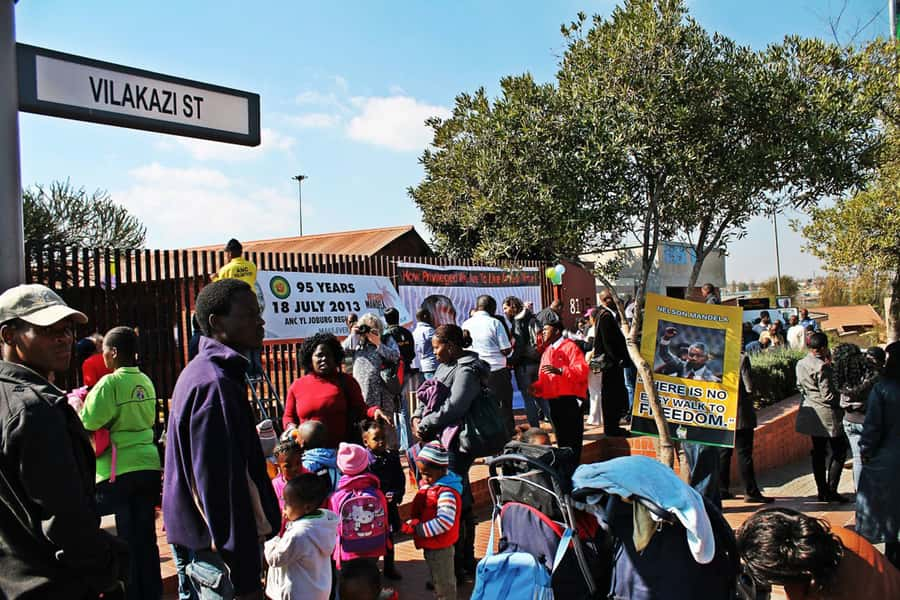
- Vilakazi Street brings together two Nobel Peace Laureates: You can see the homes associated with Nelson Mandela and Desmond Tutu on the same street.
- A private guide can make the history personal: Emmanuel, also spelled Emanuel in one account, has been praised for explaining South Africa from personal experience.
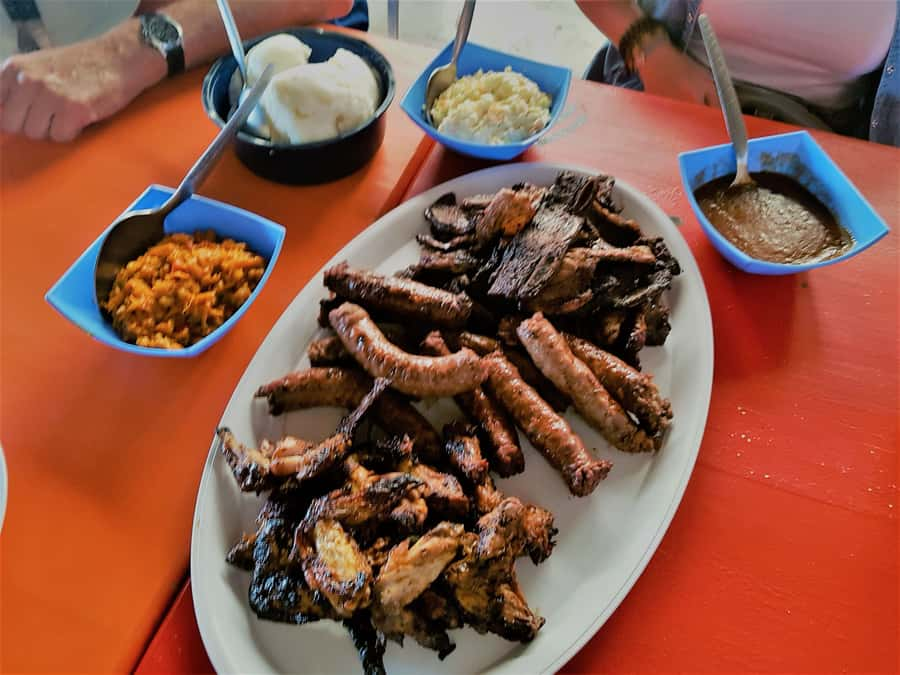
- Food is not included: Ask for a local restaurant or snack stop, but budget separately for lunch or a bite to eat.
A five-hour route through Soweto and Johannesburg
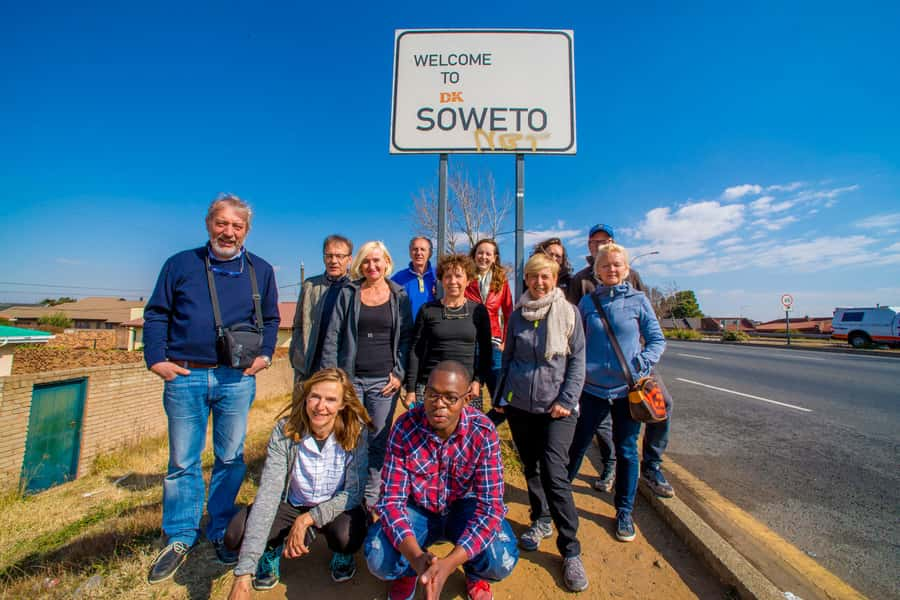
This is a history-led sightseeing tour rather than a long walking excursion. Your guide collects you from your hotel, drives through Soweto and Johannesburg, and stops at important places tied to South Africa’s political past.
That distinction matters. You will see a good number of major sites in five hours, but the schedule does not promise extended time in each place. One visitor found the tour interesting but felt that too much of it was viewed from the vehicle. I would book it as a well-organized introduction, not as a slow, street-by-street exploration of Soweto.
The private setup helps. You can ask questions as they arise, request more explanation at a particular stop, and ask for a local cuisine suggestion. The guide’s language options include English, Zulu, Sesotho, and Xhosa, which can add useful local context.
A few more Soweto days worth comparing
- Half-Day Tour of Soweto Tour
★ 4.5 · 712 reviews - Johannesburg and Soweto: Half-Day Tour
★ 4.8 · 439 reviews - Soweto Half Day Tour
★ 5.0 · 231 reviews
Starting in Soweto at Baragwanath Hospital
The Soweto portion begins with a look at Chris Hani Baragwanath Hospital, described as the largest hospital in the Southern Hemisphere. Even if you only see it from the vehicle, its scale helps you understand the size and importance of Soweto.
This is a sightseeing stop rather than a hospital visit. You should not expect an interior tour or a medical presentation. Instead, it gives the route an immediate sense of place and shows you a major institution serving the community.
I like this kind of opening because it moves beyond the standard list of famous political names. Soweto is not only a collection of struggle-era monuments. It is also a large, lived-in part of Johannesburg, and the hospital helps make that clear.
Freedom Square and the 1955 Freedom Charter

The tour then heads to Freedom Square, where the Freedom Charter was adopted in 1955. The charter became a major statement of the anti-apartheid movement, setting out a vision for a democratic South Africa.
Your guide is important here. A quick stop can feel bare without context, while a good explanation can connect the square to the wider political story. If Emmanuel is your guide, ask him to explain how the charter shaped later events and why this location remains important.
Do not expect a museum-style presentation at every stop. The value comes from the route as a whole. Freedom Square gives you the political ideals, while later stops show the pressure, protest, and sacrifice that followed.
Regina Mundi Church, the People’s Parliament
Regina Mundi Church adds an especially meaningful layer to the tour. Known as the People’s Parliament, it became a place where people could gather and speak during the struggle against apartheid.
The church is valuable because it shifts the story from formal political meetings to the role of ordinary communities and religious spaces. It also helps explain how public discussion continued when many other places were restricted or unsafe.
I would give this stop your full attention, even if the schedule moves briskly. Ask about the church’s role during the struggle and listen for details about how it served as a gathering place. The tour description promises a chance to learn about this history, but the amount of time available may depend on the day’s traffic and timing.
Same part of Soweto, a completely different kind of day:
- Johannesburg: Hop-On Hop-Off Bus with Optional Soweto Tour
★ 4.6 · 985 reviews - Soweto /Johannesburg and Apartheid Museum Guided Full Day Tour
★ 5.0 · 932 reviews - Johannesburg Hop-On Hop-Off City Tour with Soweto Option
★ 4.5 · 768 reviews - Soweto: Walking Tour with a Local Guide and Lunch
★ 4.9 · 648 reviews
Hector Pieterson Museum and the 1976 student protests
For many people, Hector Pieterson Museum will be the emotional center of the day. It covers the 1976 student protests, an uprising that changed the direction of South African politics.
The museum is named for Hector Pieterson, a schoolboy whose death became one of the most widely recognized images of the uprising. The supplied information does not promise a specific length of visit, so plan for a focused museum stop rather than assuming you will have hours to read every display.
This is where the history becomes especially direct. You are not simply hearing about broad political change. You are looking at the role of students, education, protest, and state power in a moment that drew international attention.
If you prefer to take your time at museums, keep your expectations measured. The half-day route has several other stops, and the tour may leave you wishing for more time. Still, the museum gives essential context that a drive through Soweto alone could not provide.
Vilakazi Street and two famous homes
The route continues to Vilakazi Street, where the houses associated with Nelson Mandela and Desmond Tutu are located on the same street. That unusual detail makes this one of the easiest stops to remember.
You should be clear about what is included. The experience promises sightseeing at the houses, not a full interior visit to both homes. It is also described as a chance to experience the cultural character of Vilakazi Street, so you may want to look beyond the famous names and notice the street itself.
This is a good place to ask your guide about the connection between the two Nobel Peace Laureates and the wider history of Soweto. You may also ask where to eat. Food is not part of the tour price, but the guide can recommend a local cuisine stop if timing allows.
Johannesburg from the vehicle
After Soweto, the route passes through downtown Johannesburg. The tour presents the city as a place shaped by gold mining, political change, and rapid urban growth.
The vehicle-based format is useful for covering ground. Johannesburg is spread out, and the tour can connect sites that would be difficult to combine on foot in five hours. Hotel pickup and drop-off also remove the need to arrange separate transport between your accommodation and Soweto.
The trade-off is limited time on the pavement. You will get views of the city and short visits at selected points, but this is not designed around long walks through downtown streets. If your main goal is street photography, shopping, or extended time in local neighborhoods, you may want a separate activity.
Still, the driving time is not wasted if you use it well. Ask questions about what you are seeing. The strongest part of this experience may be the conversation between stops, especially with a guide who can explain how Johannesburg and Soweto have changed.
How the private format affects the experience
A private group can make this tour more comfortable than a large coach outing. You do not have to follow a crowd from one stop to another, and you can focus questions on the subjects that matter most to you.
The guide’s personal connection can also make a difference. Emmanuel has been praised for speaking from his experience as a South African and for answering questions about the country. Another account describes Emmanuel as attentive and willing to show lesser-known parts of Johannesburg and Soweto.
That said, private does not automatically mean highly flexible. The advertised route has several fixed points, and the total duration is five hours. If you want extra time at Hector Pieterson Museum or a longer meal stop, ask early in the tour rather than waiting until the final hour.
Pickup is included, but you should wait in your hotel lobby 15 minutes before the scheduled time. One serious complaint involved a one-hour wait for the guide, so I would keep your phone available and confirm the pickup details in advance. That issue appears to be an exception, but it is worth planning around when your day includes other reservations.
Is $112 a fair price?
At $112 per person, this is not the cheapest way to see Johannesburg and Soweto. The price makes more sense if you value private transport, hotel pickup and drop-off, a five-hour route, and a guide who can explain the historical setting in several languages.
It is less compelling if you mainly want a quick drive past the sights. Since food and drinks are extra, add money for anything you buy during the day. The tour does not include lunch, although you can ask the guide for a local recommendation.
For a solo visitor or a small group, the private format may justify the cost. For a larger group sharing the experience, the per-person price may feel more reasonable. I would compare the price with the value of safe, direct transport and access to a guide, not just with the number of stops.
The biggest question is how much time you will spend outside the vehicle. If you want a detailed museum visit and long walks in Soweto, the value drops. If you want a compact introduction with several major historical sites covered in one morning or afternoon, the price is easier to defend.
Who will enjoy this half-day tour?
I would recommend it to first-time visitors who want a clear introduction to Johannesburg’s modern history without arranging separate transport. It also suits people with limited time in Gauteng, since the route covers Soweto and downtown Johannesburg in one five-hour outing.
It is a good match for anyone interested in the Freedom Charter, the anti-apartheid struggle, the 1976 student protests, Nelson Mandela, or Desmond Tutu. The mix of a private guide and major sites gives you a useful framework for exploring more on your own later.
Families and older visitors may appreciate the vehicle-based format and hotel pickup. The experience is wheelchair accessible, which is useful for anyone who needs that option, though the information provided does not describe the exact conditions at every stop.
I would be more cautious about booking it if your priority is independent walking, extended museum time, or a long meal with local food. You can ask for a food recommendation, but the tour remains a sightseeing route with several scheduled stops.
Practical details that shape the day
The tour lasts five hours and runs rain or shine. Wear clothing suited to the weather, since you may move between the vehicle and outdoor areas, but the available information does not specify a required dress code.
English, Zulu, Sesotho, and Xhosa are offered. The private group format means the guide can speak with your party directly, which is helpful when the subject matter raises difficult or personal questions.
Alcohol and drugs are not allowed. Free cancellation is available up to 24 hours before the start, and you can reserve now and pay later if that option is offered at booking.
Because the tour covers serious history, I would avoid treating it as a simple city drive. The best use of your time is to listen, ask questions, and take note of places you may want to revisit at a slower pace.
Should you book Johannesburg and Soweto?
Book this tour if you want a private, efficient introduction to the political history of Soweto and Johannesburg. The route covers Freedom Square, Regina Mundi Church, Hector Pieterson Museum, and Vilakazi Street, while the guide adds the explanation that connects them.
Book with realistic expectations. You will see a lot in five hours, but much of the route is by vehicle, and food is not included. I would also confirm the pickup arrangements and keep a little flexibility in your schedule.
For first-time visitors, the tour offers a useful starting point. For repeat visitors or anyone wanting a slow, detailed look at Soweto, choose it only if you are comfortable using this half-day as an overview rather than the final word.
FAQ
How long does the Johannesburg and Soweto tour last?
The tour lasts five hours.
What places are included on the route?
The route includes Chris Hani Baragwanath Hospital, Freedom Square, Regina Mundi Church, Hector Pieterson Museum, Vilakazi Street, and sightseeing through Johannesburg.
Does the tour include hotel pickup and drop-off?
Yes. Hotel pickup and drop-off are included. You should wait in the hotel lobby 15 minutes before the scheduled pickup time.
Is food included in the tour price?
No. Food and drinks are not included. You can ask the guide for a local cuisine recommendation and possibly stop to buy something to eat.
Is this a private tour?
Yes. The activity is offered for a private group.
What languages can the guide speak?
The available guide languages are English, Zulu, Sesotho, and Xhosa.
Is the tour wheelchair accessible?
Yes, the activity is listed as wheelchair accessible.
Can I cancel the tour for a refund?
You can cancel up to 24 hours in advance for a full refund.
Does the tour operate in bad weather?
Yes. The tour takes place rain or shine.
Just added around Soweto
- Soweto Township Tour★ 4.4 · 4 reviews
- Soweto Tuk-Tuk Food & Beer Tour★ 5.0 · 9 reviews
- Private Soweto,Mandela House,Apartheid Museum,Constitution★ 4.6 · 15 reviews
- Soweto: Sip & Paint Walking Tour & Take Home a Canvas★ 4.8 · 7 reviews
- Soweto Tour; Mandela House; Vilakazi Street; Market Culture★ 5.0 · 6 reviews
- Soweto: Hector Pieterson Memorial, to Orlando Towers Tour★ 4.0 · 31 reviews
- Soweto & Johannesburg and Apartheid Museum★ 4.7 · 41 reviews
- Johannesburg: Soweto History Tour with Hotel Pickup★ 4.8 · 14 reviews
Soweto Tours, compared.

Johannesburg: Hop-On Hop-Off Bus with Optional Soweto Tour
Read our review →
Soweto /Johannesburg and Apartheid Museum Guided Full Day Tour
Read our review →
Johannesburg Hop-On Hop-Off City Tour with Soweto Option
Read our review →

Jo’berg in 1 Day: Soweto, Apartheid Museum & City Tour
Read our review →
Johannesburg: Full-Day Tour with Soweto and Apartheid Museum
Read our review →
Browse the lists this tour appears in